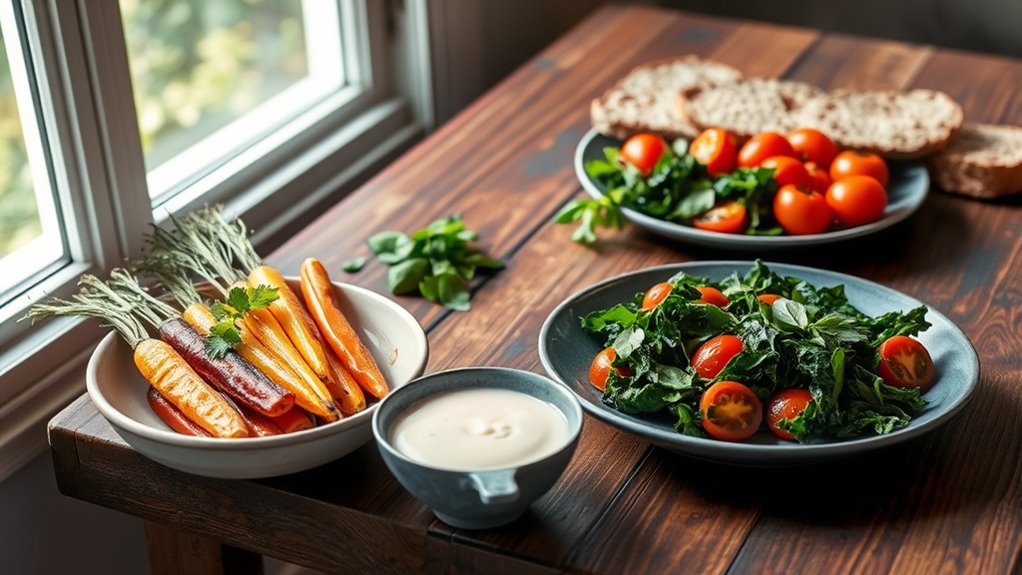

You can embrace plant-forward eating by prioritizing more plant-based foods while still enjoying some animal products. Try batch-cooking beans, grains, and roasted vegetables so meal prep is quick and easy. Incorporate plant proteins like lentils and chickpeas, and make simple swaps like replacing part of your meat with mushrooms or tofu. Focus on colorful vegetables, whole grains, and seasonal produce to add variety and flavor, making sustainable eating both enjoyable and accessible as you explore new habits.
Key Takeaways
- Incorporate more plant-based proteins like beans, lentils, and chickpeas gradually alongside your usual diet.
- Plan meals ahead and batch-cook ingredients to easily add vegetables and grains to any dish.
- Replace a portion of meat with plant-based options such as tofu, tempeh, or mushrooms for sustainability and variety.
- Use seasonal, locally sourced produce to boost flavor, nutrition, and support eco-friendly farming practices.
- Enhance meals with herbs, spices, and colorful vegetables to increase enjoyment and encourage ongoing plant-forward habits.

Plant-forward eating emphasizes prioritizing plant-based foods in your diet, offering a delicious and sustainable way to improve health and reduce environmental impact. You don’t have to go fully vegan to reap these benefits; instead, you can gradually incorporate more plant-based meals into your routine. One effective way to do this is by planning your meals ahead of time with meal prep tips that focus on versatile, nutritious ingredients. Batch-cooking beans, grains, and roasted vegetables allows you to assemble quick, satisfying meals during busy weekdays. Preparing a variety of plant proteins, like lentils or chickpeas, ensures you have options that are both cost-effective and rich in essential nutrients. By allocating a little time each week to meal prep, you minimize reliance on last-minute takeout, which often involves less sustainable options and less control over ingredients. Incorporating plant-based ingredients into your meals can also inspire more creative and flavorful dishes, making it easier to stick with your new habits. As you explore plant-forward eating, it’s important to contemplate the origins of your food. Choosing ingredients that come from sustainable farming practices helps reduce your ecological footprint. Look for locally sourced produce, which tends to be fresher and grown with methods that conserve water and soil health. Supporting farms that prioritize crop rotation, composting, and reduced pesticide use ensures that your dietary choices align with environmentally responsible principles. Incorporating seasonal produce not only enhances flavor but also promotes biodiversity and supports local economies. You can also make small swaps that make a big difference. For instance, replace a portion of your meat with plant-based options like tofu, tempeh, or mushroom-based dishes. These alternatives are often more sustainable and require fewer resources to produce. Experimenting with different herbs and spices can make plant-based meals exciting and flavorful, encouraging you to stick with your new habits. Using vibrant vegetables and whole grains in your meals not only boosts nutrient intake but also adds color and variety, making plant-forward eating enjoyable rather than restrictive.
Frequently Asked Questions
Can Plant-Forward Eating Improve Athletic Performance?
You might wonder if plant-forward eating can boost your athletic performance. It definitely can, especially when you focus on nutrient-dense foods and proper protein supplementation. Plant-based diets provide antioxidants and fiber that aid recovery and endurance. With strategic choices, you can enhance your performance, build strength, and recover faster without going fully vegan. Embracing plant-forward eating supports your goals and keeps your energy levels high during training and competition.
What Are Easy Plant-Based Protein Sources?
Imagine fueling your body with a powerhouse of plant-based proteins that make meat alternatives and protein supplements seem like child’s play. You can easily incorporate beans, lentils, tofu, tempeh, and quinoa into your meals. Snack on nuts or seeds, and consider plant-based protein powders for a quick boost. These sources are simple, effective, and keep you energized without sacrificing flavor or convenience—making plant-based eating effortless and exciting.
How Do I Ensure Balanced Nutrition Without Veganism?
To guarantee balanced nutrition without veganism, focus on smart meal planning by including a variety of protein sources like lean meats, dairy, eggs, and plant-based options. Incorporate nutrient supplementation if needed, such as multivitamins or omega-3s, to cover potential gaps. Balance your meals with plenty of vegetables, whole grains, and healthy fats. This approach helps you meet your nutritional needs while enjoying diverse, satisfying foods.
Are Plant-Forward Diets Suitable for Children?
You might worry about children’s nutrition on plant-forward diets, but they can thrive with careful planning. Incorporate a variety of plant-based snacks rich in protein, iron, and calcium, like nuts, seeds, and leafy greens. These diets support growth and energy levels while teaching healthy eating habits. As long as you balance meals with essential nutrients, plant-based eating is suitable for children and promotes lifelong health.
How Can I Transition Gradually to Plant-Forward Eating?
You can shift gradually to plant-forward eating by starting with simple steps like meal prep. Prepare tasty, plant-based meals ahead of time to make healthy choices easier. Try flavor substitution—use herbs, spices, or sauces to enhance taste and make familiar dishes more appealing. Incorporate more vegetables and plant-based proteins slowly, and gradually reduce meat portions, making the shift seamless and enjoyable without feeling overwhelming.
Conclusion
By embracing plant-forward eating, you’re not just making a healthy choice—you’re revolutionizing your entire life! Imagine transforming into a powerhouse of energy, releasing boundless vitality with every bite. Even if you don’t go full vegan, shifting your focus to plants can turn you into an unstoppable force of wellness. Don’t settle for average—dive into this delicious, life-changing movement and watch as your body and mind reach heights you never thought possible!