You can easily tackle common plumbing issues at home with a few simple DIY fixes. Start by identifying the type of faucet you have when fixing leaks—be it compression, cartridge, or ball. Use a plunger for clogged drains or a plumbing snake if that doesn’t work. For toilet troubles, check the flapper valve or float arm to stop running. With some basic tools and techniques, you’ll save time and money, and there’s more to explore on these projects.
Key Takeaways
- Identify faucet types (compression, cartridge, ball) to effectively troubleshoot and repair leaks.
- Use a plunger or plumbing snake to clear clogged drains efficiently.
- Inspect and replace faulty flapper valves and adjust float arms to resolve toilet running issues.
- Keep essential tools like wrenches, pliers, and screwdrivers handy for plumbing repairs.
- Turn off water supplies before any repair to prevent leaks and water damage.
Have you ever tackled a plumbing project and found yourself overwhelmed by the details? You’re not alone. Many homeowners face the intimidating world of plumbing fixes, but with a bit of guidance, you can manage common issues without calling a professional. Whether it’s a leaky faucet or a clogged drain, understanding a few basic techniques can save you time and money.
When dealing with a leaky faucet, you’ll first want to identify the type of faucet you have. Most likely, it’s either a compression, cartridge, or ball faucet. Shut off the water supply under the sink, and then disassemble the faucet, paying close attention to the order of the parts. This’ll help you reassemble it later. Inspect the washers and O-rings for wear and replace them if necessary. Reassemble the faucet, turn the water back on, and check for leaks. You’ll feel proud knowing you’ve tackled this issue head-on.
Identify your faucet type, disassemble it carefully, replace worn parts, and reassemble to conquer that leaky faucet with confidence!
Clogged drains can be another frustrating problem. Before reaching for harsh chemicals, try using a plunger. Make sure there’s enough water in the sink or tub to create a seal. A few firm plunges can often dislodge the blockage. If that doesn’t work, consider using a plumbing snake. Insert the snake into the drain and turn it to break apart or retrieve the clog. If all else fails, you might need to remove the drain trap beneath the sink. Just have a bucket ready to catch any water that spills out.
Toilet issues also plague many homeowners. A running toilet often stems from a faulty flapper valve or a misadjusted float. Remove the tank lid and inspect the flapper for any signs of wear. If it looks damaged, replacing it is a simple task. Adjust the float arm if the water level is too high, causing the toilet to run continuously. These small adjustments can eliminate the irritating sound of water running.
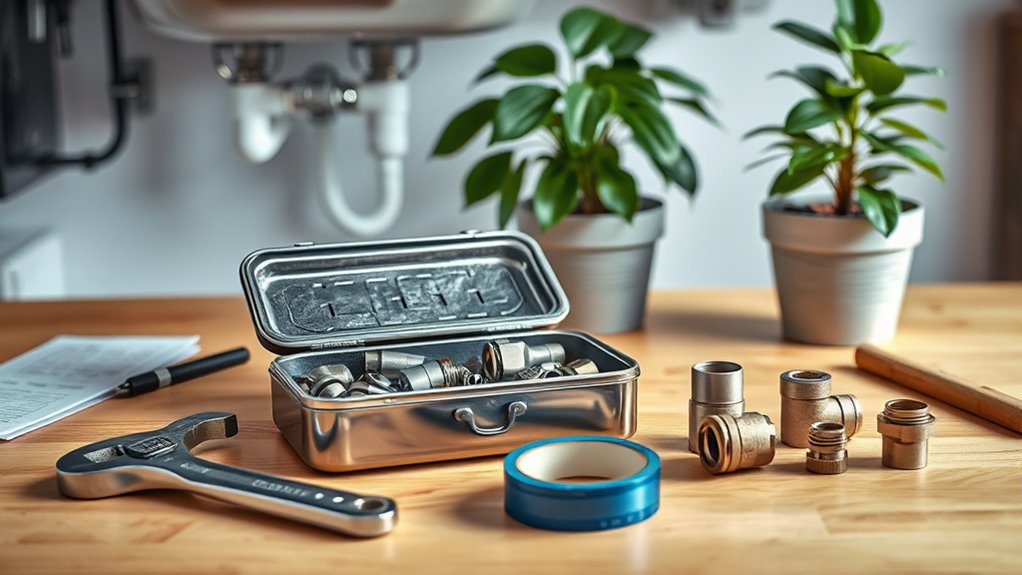
Lastly, always keep a basic toolkit handy for your plumbing projects. A wrench, pliers, screwdrivers, and Teflon tape can make a world of difference. You don’t need to be a plumbing expert to handle these tasks; with practice, you’ll build confidence in your DIY skills. Additionally, understanding basic plumbing techniques can greatly enhance your ability to tackle repairs efficiently.
Frequently Asked Questions
What Tools Do I Need for Basic Plumbing Repairs?
For basic plumbing repairs, you’ll need a few essential tools. Start with a pipe wrench, adjustable wrench, and a basin wrench for gripping and turning pipes. You’ll also want a plunger for clogs, a screwdriver set for various screws, and Teflon tape for sealing joints. Don’t forget a bucket to catch any water and rags to clean up spills. Having these tools ready will make your repairs much easier and more efficient.
How Can I Prevent Plumbing Issues in My Home?
Think of your plumbing system as a delicate garden; with proper care, it flourishes. To prevent issues, you’ll want to regularly inspect pipes for leaks, clean your drains to avoid clogs, and monitor the water pressure. Don’t forget to insulate exposed pipes in colder months, too. By nurturing your home’s plumbing, you’ll cultivate a worry-free environment, allowing you to focus on what truly matters—creating memories with family and friends.
When Should I Call a Professional Plumber?
You should call a professional plumber when you encounter persistent leaks, clogs that won’t budge, or low water pressure that DIY methods can’t fix. If you notice unusual sounds from your pipes or foul odors, it’s best to seek expert help. Additionally, if you’re planning major renovations or suspect a sewer issue, don’t hesitate to reach out to a pro. They’ve got the tools and expertise to handle complex plumbing problems effectively.
Are Plumbing Codes Different in Each State?
Yes, plumbing codes differ in each state. In fact, about 60% of states adopt the Uniform Plumbing Code, but many also modify it to fit local needs. You’ll find variations in materials, installation practices, and safety requirements, so it’s essential to check your state’s regulations before starting any plumbing work. Understanding these codes not only guarantees compliance but also helps you avoid potential fines and safety hazards down the line.
How Do I Find a Reputable Plumber in My Area?
To find a reputable plumber in your area, start by asking friends and family for recommendations. You can also check online reviews on platforms like Yelp or Google. Make sure to verify their licenses and insurance, and don’t hesitate to ask for references. Once you’ve narrowed down your options, contact them for estimates. Compare their responses and choose someone who communicates well and makes you feel comfortable.
Conclusion
In tackling these DIY plumbing projects, remember that “a stitch in time saves nine.” By addressing common issues promptly, you can prevent larger headaches and costly repairs down the line. You’ve got the tools and knowledge to make these fixes yourself, so don’t hesitate to jump right in! With a little effort, you can keep your plumbing in top shape and enjoy the satisfaction of a job well done. Happy fixing!