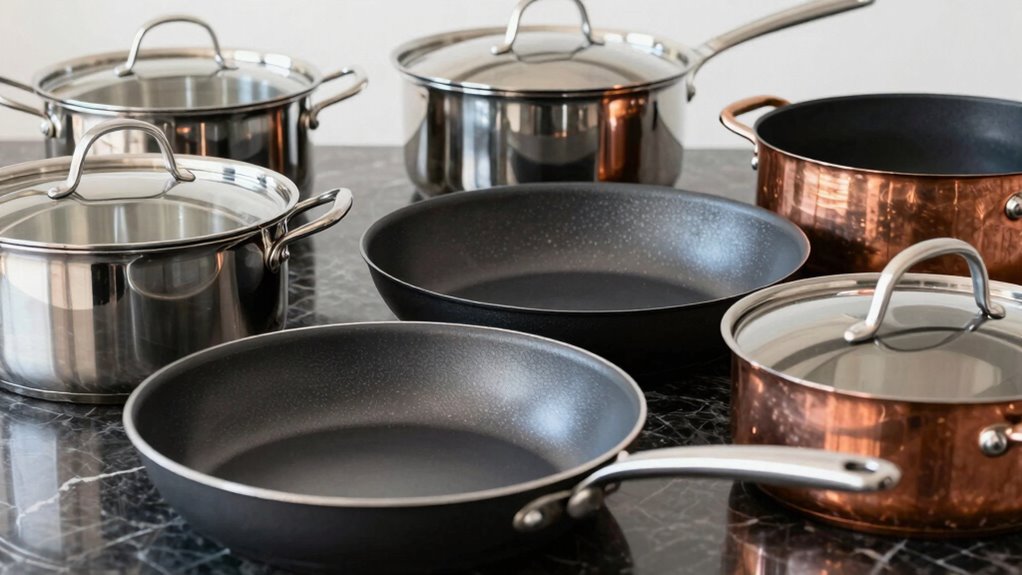

When comparing premium cookware materials, you’ll find that aluminum and copper offer fast, precise heat control, making them ideal for delicate dishes. Cast iron provides slow, even heating and great heat retention, perfect for hearty cooking. Stainless steel—with layered cores—balances durability with good heat conduction. Hard-anodized aluminum resists scratching and warping for long-term use. Each material has unique strengths suited to your cooking style, and exploring further can help you choose the best set for your kitchen needs.
Key Takeaways
- Non-stick coatings like porcelain or ceramic last longer on sturdy bases such as hard-anodized aluminum.
- Aluminum and copper offer superior heat conduction for precise temperature control.
- Layered construction in premium cookware enhances durability, heat distribution, and performance.
- Hard-anodized aluminum and stainless steel resist warping and scratching, increasing longevity.
- Cast iron provides excellent heat retention, ideal for slow, even cooking, while other materials offer quick response.
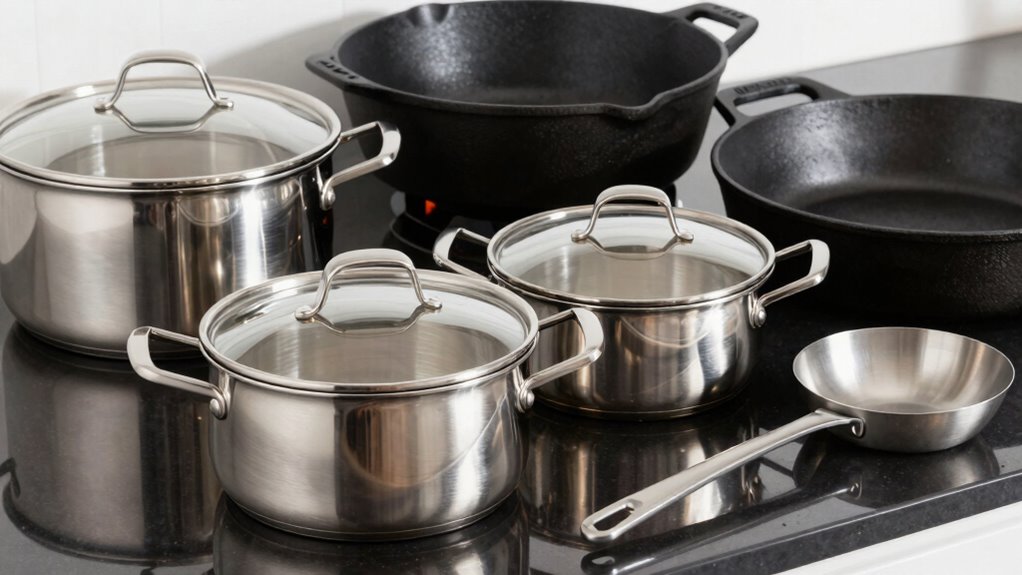
Have you ever wondered what makes some cookware sets more durable or better suited for specific cooking tasks? The materials used in manufacturing play a significant role in this. When choosing a premium cookware set, understanding how different materials affect performance can help you make smarter decisions. One key factor is non-stick surface durability. High-quality non-stick coatings, like porcelain or ceramic, tend to last longer if they’re applied to sturdy bases made from materials such as hard-anodized aluminum. These coatings resist scratching and peeling better over time, ensuring your cookware remains effective without frequent replacements. Conversely, cheaper non-stick surfaces may degrade quickly, especially if you use metal utensils or cook at high temperatures. So, if you want cookware that keeps its non-stick properties longer, look for sets with durable coatings paired with resilient bases.
Another critical aspect is heat conduction efficiency. Different materials transfer heat at varying rates, affecting how evenly your food cooks. Aluminum and copper are known for their excellent heat conduction, allowing you to control cooking temperatures more precisely. Aluminum, often used in premium cookware, heats quickly and distributes heat uniformly, reducing hot spots that can burn or unevenly cook your food. Copper, while more expensive, offers superior heat conduction, providing even more precise temperature control—ideal for delicate dishes. On the other hand, stainless steel has moderate heat conduction, but when combined with an aluminum or copper core, it enhances overall performance. Cast iron, while slower to heat up, retains heat remarkably well and provides steady, even warmth once hot. Choosing the right material depends on your cooking style: if you prefer quick heat response, aluminum or copper are excellent options; for slow, even cooking, cast iron works beautifully. Additionally, understanding the manufacturing process behind these materials can help you evaluate their overall quality and longevity. Properly manufactured cookware often features layered construction, which improves durability and performance over time. Furthermore, the corrosion resistance of certain materials can significantly impact their lifespan, especially in humid or acidic cooking environments.
Durability isn’t just about non-stick surfaces or heat conduction; it also involves resistance to warping, scratching, and corrosion. Hard-anodized aluminum and stainless steel are particularly resilient, making them ideal for everyday use. Cast iron, though heavy, is incredibly durable and can last for generations if properly cared for. Meanwhile, non-stick coatings, regardless of their quality, tend to wear over time, especially if you’re not gentle with them. That’s why investing in high-quality materials and understanding their properties helps you select cookware that endures the rigors of regular cooking. When you choose the right combination of non-stick surface durability and heat conduction efficiency, you’ll find your cooking becomes more consistent, enjoyable, and long-lasting.

Calphalon® Hard-Anodized Nonstick 10-Piece Cookware Set
Kitchen Tested Over 100,000 Times: Superior cooking performance backed by rigorous durability testing.
As an affiliate, we earn on qualifying purchases.
As an affiliate, we earn on qualifying purchases.
Frequently Asked Questions
Which Cookware Material Is the Most Eco-Friendly?
You’ll find that cast iron is the most eco-friendly option because it’s durable, requires minimal energy to produce, and is fully recyclable. Look for cookware made from sustainable sourcing materials and recyclable options to reduce environmental impact. Cast iron cookware can last for generations, which means less waste over time. Plus, it’s free from harmful chemicals, making it a safe and sustainable choice for eco-conscious cooks.
How Do Different Materials Affect Cooking Flavor?
Think of your cookware as a flavor canvas—materials like stainless steel and cast iron act as artists’ brushes, influencing taste. Non-stick surfaces keep flavors pure by preventing sticking and burning, while excellent heat conduction ensures even cooking, preserving delicate flavors. Different materials subtly transfer heat and moisture, affecting your dish’s depth. So, choose your cookware wisely; it’s like selecting the right palette for a masterpiece that tastes just as beautiful as it looks.
Are Premium Materials Safer for Health?
Yes, premium materials are generally safer for health. They often feature non-toxic coatings and chemical-free options, reducing your exposure to harmful substances. Quality cookware made from stainless steel, cast iron, or ceramic typically avoids toxic chemicals found in lower-grade products. By choosing these materials, you guarantee your food cooks safely, without risking chemical leaching, giving you peace of mind while preparing meals for yourself and your family.
Which Cookware Lasts the Longest With Proper Care?
You’ll find that cast iron and stainless steel cookware last the longest with proper care. Durability testing shows these materials withstand frequent use and high temperatures. To guarantee longevity, follow maintenance tips like avoiding metal utensils on non-stick surfaces and cleaning with gentle scrubbers. Regular seasoning of cast iron and proper drying of stainless steel prevent rust. By practicing these tips, your cookware will stay in excellent condition for years.
How Do Materials Impact Energy Efficiency?
Materials greatly impact energy efficiency because they influence heat retention and cleaning ease. For example, stainless steel and cast iron retain heat well, reducing the need for constant reheating and saving energy. Non-stick surfaces are easier to clean, meaning less water and detergent usage. By choosing cookware with good heat retention and easy cleaning, you can cook more efficiently, saving energy and effort in the kitchen.

All-Clad Copper Core 5-Ply Stainless Steel Fry Pan 8 Inch Induction Oven Broiler Safe 600F Pots and Pans, Cookware Silver
A kitchen staple featuring a flat base and flared, mid-sized sides that allow for easy flipping and tossing
As an affiliate, we earn on qualifying purchases.
As an affiliate, we earn on qualifying purchases.
Conclusion
Choosing the right material for your cookware set depends on your cooking style and preferences. While some worry about durability or heat distribution, rest assured that high-quality options like stainless steel or cast iron can last a lifetime with proper care. Think of your cookware as an investment—each meal made with the right set will remind you why it’s worth choosing quality. So go ahead, pick the material that suits your needs and enjoy countless delicious dishes.

CAROTE 21-Piece Ceramic Pots and Pans Cookware Set, Non Stick Induction Cook Ware Kitchen Cooking Set Non-Toxic Health, PFAS Free
Ceramic nonstick coating with durability of perfection is free of PFOA, PFOS, and the other harmful chemicals. You…
As an affiliate, we earn on qualifying purchases.
As an affiliate, we earn on qualifying purchases.

Lodge Seasoned Cast Iron Skillet Set 8, 10.25 & 12 Inches – PFAS-Free, Non-Toxic Cookware – Use with an Oven, Stove, Grill, or Campfire – Naturally Non-Stick & Oven Safe
Quality Cast Iron Frying Pan: The Lodge Seasoned Cast Iron Skillet is loved for its great heat retention,…
As an affiliate, we earn on qualifying purchases.
As an affiliate, we earn on qualifying purchases.