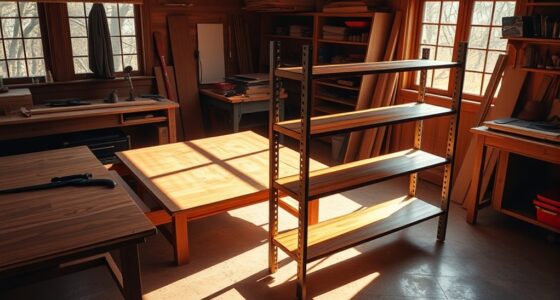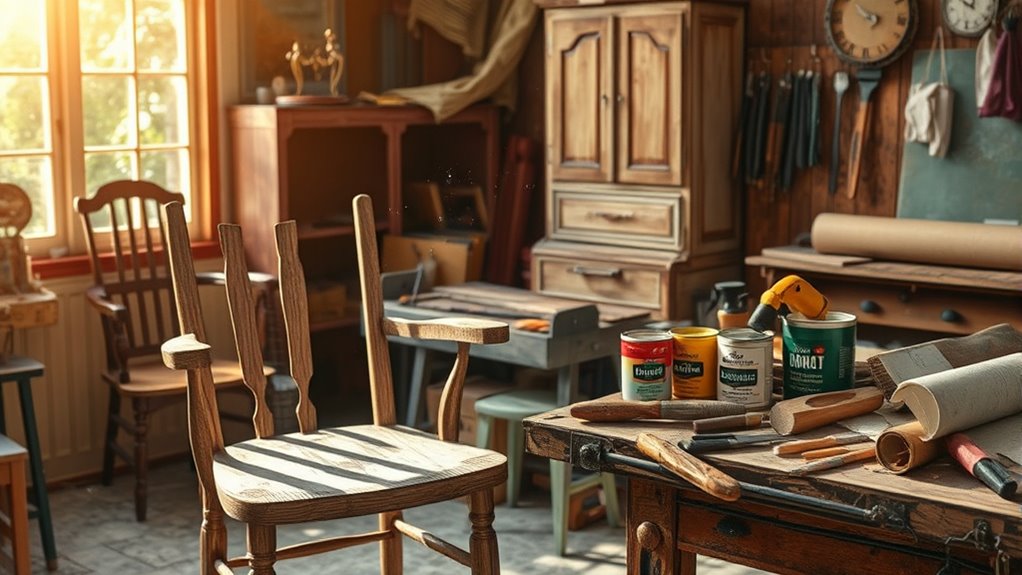

Refurbishing old furniture lets you save money and express your creativity. Start by evaluating pieces for structural integrity and identifying any flaws. Gather essential tools like sandpaper, paintbrushes, and wood glue. Clean and sand surfaces thoroughly for better finish adhesion. Experiment with paint, stain, or upholstery to give your furniture new life. Don’t forget to add personal touches to truly make it your own. Keep going, and you’ll discover more techniques to transform your space.
Key Takeaways
- Assess furniture for structural integrity and unique features before starting refurbishment.
- Gather essential tools like sandpaper, paintbrushes, and wood glue for the project.
- Clean and sand surfaces thoroughly to ensure proper adhesion of finishes.
- Choose a finishing technique such as paint, stain, or decoupage to personalize the piece.
- Inspect the final product for touch-ups and consider recovering upholstery for added style.
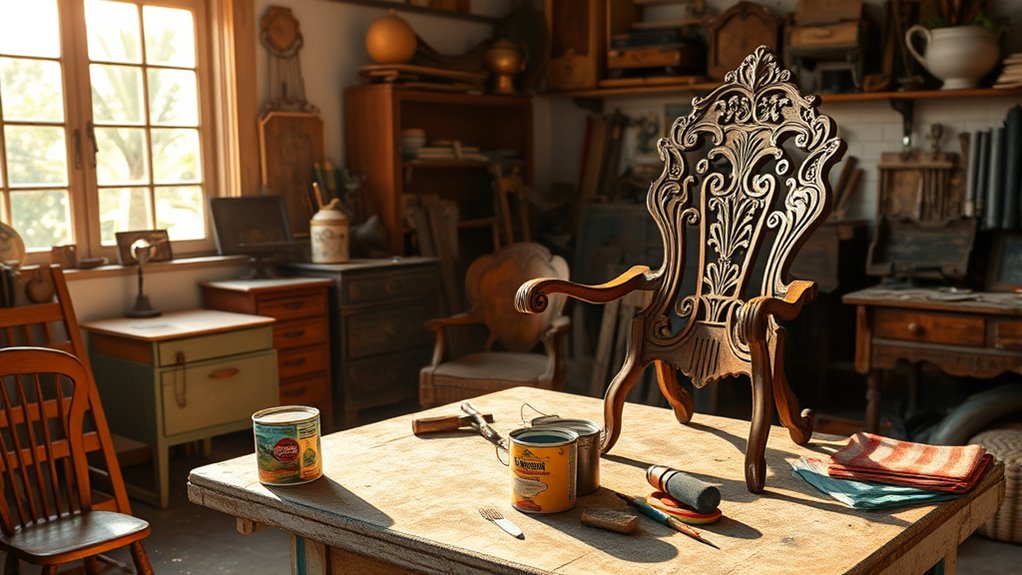
Have you ever considered giving new life to that old furniture collecting dust in your garage? Refurbishing old pieces can transform them into stunning focal points in your home, while also saving you money and reducing waste. It’s a fun project that not only taps into your creativity but also allows you to express your unique style.
First, take a good look at the furniture you want to refurbish. Identify the areas that need attention, such as scratches, dents, or outdated finishes. You’ll want to choose a piece that has good bones—solid construction or interesting details that can shine through after some TLC. Once you’ve picked your project, gather your tools. Basic tools like sandpaper, paintbrushes, a screwdriver, and a staple gun will come in handy. Depending on your chosen method, you might also need wood glue, a sander, or a paint sprayer.
Take a moment to assess your furniture; look for potential and gather essential tools for a rewarding refurbishing project.
Next, it’s time to prep the furniture. Start by cleaning it thoroughly to remove dirt and grease. If you’re painting or staining, you’ll want to sand the surface to guarantee good adhesion. This step can be therapeutic, and you’ll notice immediate improvement in the surface’s appearance. If the piece is particularly rough, consider using a power sander to speed things up. After sanding, wipe it down with a damp cloth to remove dust.
Once it’s prepped, decide how you want to update it. A fresh coat of paint can work wonders. Choose a color that fits your space, and don’t be afraid to experiment with bold hues or patterns. If you prefer a more natural look, staining the wood can highlight its grain and enhance its character. You might even consider decoupage or adding new hardware for a modern twist. Exploring global flavors through techniques can inspire unique designs for your refurbished pieces.
After applying your chosen finish, let it dry completely. This is vital, as rushing the process can lead to smudges or uneven surfaces. Once dry, inspect your work and touch up any areas that need it. If your piece has upholstery, you can recover it with new fabric, which is a great way to add a pop of color or texture.
Finally, step back and admire your handiwork. You’ve not only refurbished old furniture but also created something uniquely yours. The satisfaction of transforming a forgotten piece into a beloved part of your home is truly rewarding. So, roll up your sleeves and get started—your next masterpiece awaits!
Frequently Asked Questions
What Types of Wood Are Best for Refinishing Furniture?
For refinishing furniture, hardwoods like oak, maple, and cherry are your best bets. They’re durable and take stain well, giving you a beautiful finish. Pine is also popular due to its affordability and ease of sanding, though it’s softer and more prone to dents. If you want a unique look, consider exotic woods like mahogany or teak, which offer rich colors and grain patterns. Choose wisely, and your piece will shine!
How Can I Remove Stubborn Paint From Furniture?
You’d think stubborn paint would just give up, right? Unfortunately, it doesn’t. To tackle it, start by using a heat gun to soften the paint, then scrape it off gently with a putty knife. If that doesn’t cut it, try a chemical stripper—just remember to work in a well-ventilated area! Finish up by sanding the surface for a smooth finish. With patience, you’ll have that furniture looking brand new in no time!
Is It Necessary to Sand Furniture Before Painting?
Yes, it’s necessary to sand furniture before painting. Sanding helps create a smooth surface and allows the paint to adhere better. If you skip this step, the paint might peel or chip easily, leading to a less durable finish. You don’t need to sand down to bare wood; just a light scuffing will do. After sanding, wipe off the dust, and you’ll be ready for a fresh coat of paint that lasts.
What Are Eco-Friendly Options for Furniture Refinishing?
Did you know that around 9 million tons of furniture waste ends up in landfills each year? For eco-friendly refinishing, consider using water-based paints, natural oils, or soy-based strippers. You can also opt for non-toxic sealers made from plant-derived materials. Reclaimed wood and vintage pieces are great for reducing waste. By choosing these options, you’re not only giving your furniture a new life but also helping the environment.
Can I Refurbish Upholstered Furniture Myself?
Yes, you can refurbish upholstered furniture yourself! Start by removing the old fabric and inspecting the frame for any damage. You’ll need basic tools like a staple gun, scissors, and a seam ripper. Choose a fabric you love and cut it to size before attaching it securely. Don’t forget to add padding for comfort. With some patience and practice, you’ll transform your piece into something beautiful and unique!
Conclusion
Refurbishing old furniture isn’t just about saving money; it’s about breathing new life into forgotten pieces. With a little creativity and the right tools, you can transform what seems like junk into a stunning centerpiece. Think of each scratch and dent as a story waiting to be told, and your hands are the storytellers. So why let those treasures gather dust? Jump in, set free your inner artisan, and watch as your furniture evolves into something truly extraordinary!