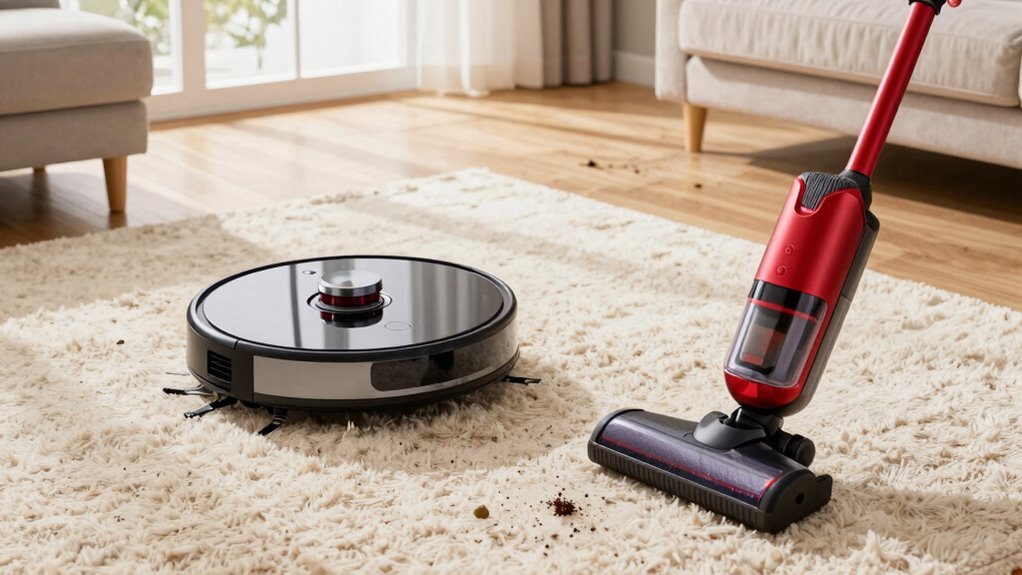
If you want hands-free, automatic cleaning that handles furniture and obstacles, a robot vacuum might be best for your home. It’s ideal if you prefer maintenance-free floors and have a busy lifestyle. On the other hand, cordless vacuums offer more power for deep or targeted cleaning, especially in tight spots or for quick spot cleans. Thinking about your home’s layout and your cleaning habits will help you choose. Keep exploring to find out which option suits you best.

Get your next haul delivered free — and shop member deals
- Fast, free delivery on millions of items
- Access to Prime Big Deal Days deals on October 6–7
- Prime Video, Amazon Music and more included
Key Takeaways
- Robot vacuums are ideal for automatic, hands-free cleaning, while cordless vacuums suit quick, targeted spot cleaning.
- Choose a robot vacuum for convenience on regular cleaning; a cordless vacuum offers more power for deep cleaning.
- Consider home size and flooring type: robot vacuums excel in large, open spaces; cordless vacuums are better for tight areas.
- Battery life and suction power differ: robot vacuums typically have longer run times; cordless vacuums provide stronger suction.
- Your lifestyle and cleaning routine determine the best fit: automation vs. portability and cleaning intensity.
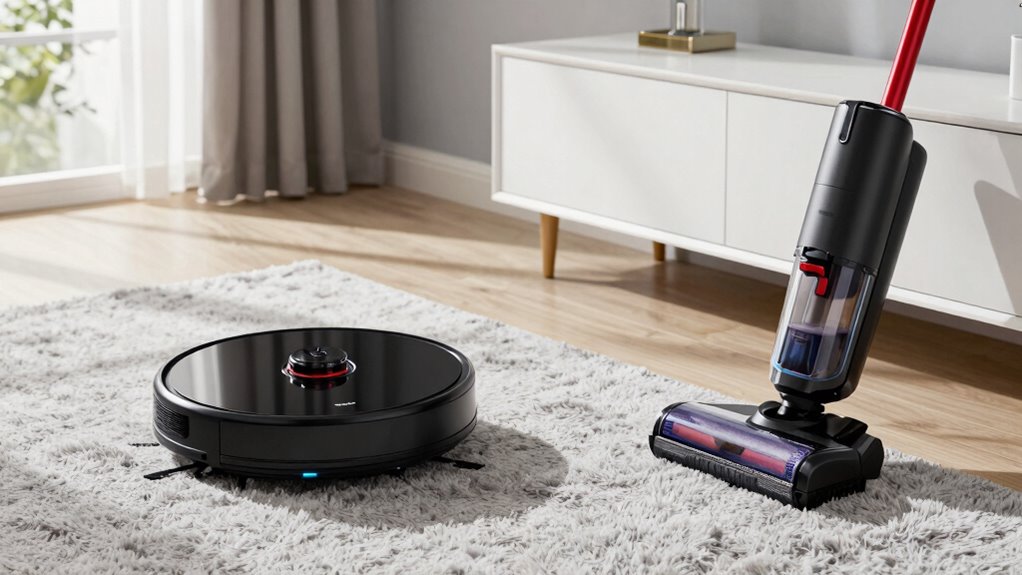
When choosing between a robot vacuum and a cordless vacuum, understanding their differences can help you make an informed decision. You’ll want to weigh how each type performs in terms of robot suction and battery life because these factors directly impact cleaning efficiency and convenience. Robot vacuums are designed to navigate your home automatically, making them perfect for maintaining clean floors without much effort on your part. They typically feature intelligent sensors and algorithms that allow them to move smoothly around furniture and obstacles. However, their robot suction power can vary, so if you have thick carpets or stubborn debris, choosing a model with strong suction capabilities is essential.
Robot vacuums automatically navigate and clean, but check their suction power for thick carpets or tough debris.
Battery life is another critical aspect. Most robot vacuums operate on rechargeable batteries that last anywhere from 60 to 120 minutes, depending on the model and cleaning mode. Longer battery life means the robot can cover more ground in a single session, reducing the need for frequent recharging. Keep in mind that some advanced models automatically return to their charging station when the battery runs low and then resume cleaning once recharged. This feature guarantees your floors stay consistently clean without manual intervention. Additionally, battery longevity is a key factor to consider, as it influences how often you’ll need to replace or service the batteries over time. Understanding the battery health of your device can help ensure it remains effective over its lifespan. Incorporating maintenance tips can also extend the overall lifespan of your vacuum. Regularly cleaning the filters and brushes can further optimize performance and preserve the device’s efficiency.
Cordless vacuums, on the other hand, are handheld or stick-style units that offer portability and versatility. They’re excellent for quick cleanups, spot cleaning, or reaching tight spaces that a robot vacuum might miss. While they usually have less sophisticated navigation compared to robot vacuums, cordless models often deliver more powerful suction, making them better suited for intensive cleaning tasks or homes with pet hair and larger debris. Battery life for cordless vacuums tends to be shorter than robot vacuums, often ranging from 20 to 60 minutes, but many models come with quick-charging features that get them ready for use faster. Additionally, some cordless models feature filter systems that trap allergens and fine dust, improving indoor air quality.
Choosing between the two depends on your cleaning needs. If you prefer a set-it-and-forget-it solution that maintains your floors automatically, a robot vacuum with strong robot suction and decent battery life is ideal. But if you want a flexible tool for deep cleaning or targeted messes, a cordless vacuum might serve you better. Think about how often you need to clean, the types of flooring in your home, and whether you value convenience over power or vice versa. Both options have their advantages, so understanding these differences will help you select the device that best fits your lifestyle and home environment.
robot vacuum with strong suction
As an affiliate, we earn on qualifying purchases.
As an affiliate, we earn on qualifying purchases.
Frequently Asked Questions
Which Vacuum Type Is Better for Allergy Sufferers?
A robot vacuum is generally better for allergy sufferers because it improves air quality by consistently cleaning your floors. It often features advanced dust containment systems, trapping more allergens and dust particles than some cordless vacuums. With regular use, a robot vacuum helps reduce airborne allergens, making your home healthier. Plus, its automated cleaning guarantees you maintain better air quality without extra effort, which is ideal for allergy sufferers.
How Do Maintenance Costs Compare Between Robot and Cordless Vacuums?
Think of maintenance costs as a garden—some tools need more tending. Robot vacuums often have a longer battery lifespan but may require costly replacement parts like brushes and sensors over time. Cordless vacuums usually have cheaper parts but might need more frequent battery replacements. Overall, robotic models can be pricier long-term due to parts, while cordless vacuums might cost less upfront but need ongoing battery care.
Can Robot Vacuums Handle High-Pile Carpets Effectively?
Robot vacuums can handle high-pile carpets, but their effectiveness depends on vacuum suction power. You’ll want models with strong suction to lift dirt from thick fibers. Keep in mind, some robot vacuums might struggle with deeply embedded debris or very plush carpets. Regular maintenance and choosing a robot with adjustable suction settings can improve performance, ensuring your high pile carpet gets a thorough clean without you lifting a finger.
Are Cordless Vacuums Suitable for Deep Cleaning Tasks?
Cordless vacuums are suitable for deep cleaning tasks if they have ample battery life and strong cleaning power. Look for models with longer battery life to tackle larger areas without interruption. While they may not match the power of corded units, many cordless vacuums offer excellent suction and versatility, making them a good choice for targeted deep cleaning. Just make certain your chosen model balances battery life and cleaning performance effectively.
What Are the Safety Concerns With Robot Vacuums?
Think of robot vacuums as careful dancers on your floor. Their safety concerns mainly involve battery safety—avoiding overheating or leaks—and obstacle detection, which prevents collisions or falls. You should guarantee your device has reliable sensors and quality batteries. By doing so, you keep your home safe while enjoying hands-free cleaning. Proper maintenance and regular updates further reduce risks, making your robotic helper both convenient and secure.
cordless stick vacuum for pet hair
As an affiliate, we earn on qualifying purchases.
As an affiliate, we earn on qualifying purchases.
Conclusion
Ultimately, choosing between a robot vacuum and a cordless vacuum depends on your cleaning needs, lifestyle, and home layout. If you want effortless, consistent cleaning with minimal effort, a robot vacuum is your go-to. If you prefer hands-on control and powerful suction for deep cleaning, a cordless vacuum suits you best. Both options offer convenience, flexibility, and efficiency—so consider what fits your routine, matches your space, and elevates your cleaning game. Your ideal vacuum is waiting—choose what works best for you.
As an affiliate, we earn on qualifying purchases.
handheld cordless vacuum for tight spaces
As an affiliate, we earn on qualifying purchases.
As an affiliate, we earn on qualifying purchases.
Halloween Picks
halloween
As an affiliate, we earn on qualifying purchases.