
TL;DR

Get your next haul delivered free — and shop member deals
- Fast, free delivery on millions of items
- Access to Prime Big Deal Days deals on October 6–7
- Prime Video, Amazon Music and more included
Research from trading platform eToro found that 14 of 15 smaller formats of popular foods cost more per gram, litre or item than standard packs. The report links rising interest in smaller treats to GLP-1 weight-loss drugs, while the extent of their effect on food companies and shoppers remains uncertain.
Fourteen of 15 smaller food formats examined in research from trading platform eToro cost more per gram, litre or item than their regular-size equivalents, according to a report published October 5. The findings come as food companies develop smaller treats amid changing eating habits linked by the report to GLP-1 weight-loss drugs such as Ozempic and Mounjaro.
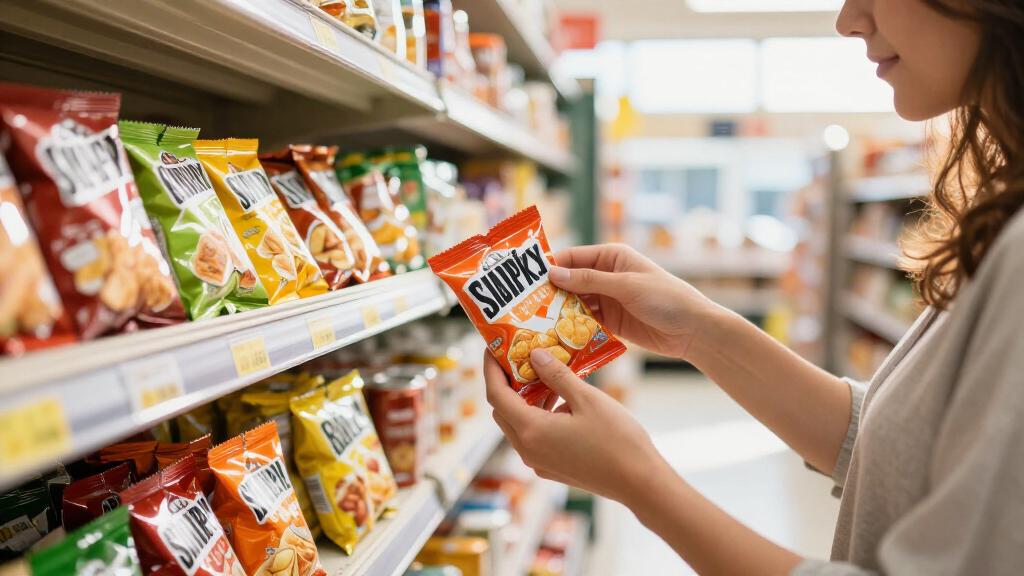
The report describes manufacturers’ move toward smaller packs as “package downsize,” a form of shrinkflation in which a customer buys less product in one pack. Its examples include crisps, ice cream and soft drinks. Smaller portions may appeal to people who want less food at a time, while the higher unit prices can protect or increase manufacturers’ margins, the report says.
One example is Walkers Ready Salted crisps: a 32.5-gram pack costs £1.10, while a 150-gram pack costs £1.50. The report calculates that the smaller pack is 238% more expensive by weight. A 40-gram pack of Pringles costs £1.15, which the report says is 90% more per gram than a 165-gram pack priced at £2.50.
In soft drinks, a four-pack of 330-millilitre Coca-Cola Original bottles costs £4.35, compared with £2.65 for a 1.75-litre bottle. The report puts the multipack’s price per litre 118% above the larger bottle. The products and prices are examples cited by the report, rather than a broad survey of every retailer or brand.
Smaller Portions, Higher Unit Prices
For shoppers, the figures show why comparing pack prices alone can be misleading: a smaller snack may have a lower checkout price but cost more for the amount of food or drink inside. Unit-price labels can help consumers compare sizes, though buying a larger pack is not necessarily practical or desirable for someone seeking a smaller portion.
For food producers, the trend could offer a way to retain customers who want controlled portions or occasional treats, while maintaining revenue per unit of product. But the business case depends on whether shoppers accept the price difference. eToro’s Sam North said investors would watch for signs that consumers felt they were “being taken for a ride.”
The development also matters to investors because weight-loss medicines are creating questions about future demand for snacks and other calorie-dense products. The report presents smaller formats as one company response, not proof that the medicines have already caused a sector-wide shift in sales or profits.
As an affiliate, we earn on qualifying purchases.
Food Firms Adapt to GLP-1 Demand
The report says about 2.4 million people in Britain are already taking GLP-1 medicines and cites an expectation that the number could rise to 7 million by the end of 2027—about one in eight people. These are figures and a forecast reported in the source; the article does not provide further detail on the underlying estimate or its assumptions.
It also points to product changes at major food businesses. Magnum, spun off from Unilever the previous year, has introduced bite-sized products such as Magnum bonbons. The report gives Tesco prices for two Gold Caramel Billionaire ice cream formats: a 204-millilitre carton at £5, or £24.51 per litre, and three 85-millilitre sticks at £4.25, or £16.67 per litre. In this example, the smaller sticks cost less per litre than the carton, illustrating that smaller packaging does not automatically mean a higher unit price.
Mondelez, which owns brands including Cadbury and Toblerone, is described as offering “mindful indulgences.” The report also says privately owned biscuit maker Pladis reported profits falling from £181 million to £49 million, partly attributing the decline to Ozempic’s impact. It provides no breakdown quantifying how much of the fall was caused by the drug.
““It will be fascinating to see how this development plays out, as more people start to use weight-loss medications and inflation weighs on purchasing choices.””
— Sam North, eToro
As an affiliate, we earn on qualifying purchases.
How Shoppers Will Respond
The report does not establish how much of the growth in smaller packs is directly caused by GLP-1 medicines, rather than inflation, changing preferences or other factors. It also does not identify the full set of products, retailers and price data behind eToro’s comparison of 15 smaller formats, so the finding should not be treated as a measure of the entire food market.
It remains unclear whether consumers will keep buying the smaller versions at their current prices, switch to larger packs or choose different products. The report gives examples of retail prices but does not say when each price was checked or whether they are consistent across stores and locations. It also does not quantify the effects of weight-loss drugs on industry sales or establish how much they contributed to Pladis’s reported profit decline.
mini snack packs for weight management
As an affiliate, we earn on qualifying purchases.
As an affiliate, we earn on qualifying purchases.
Retail Prices and Demand Ahead
eToro’s report points to consumer response as the key signal for investors and food companies. Future sales data and changes in pack sizes or pricing may show whether smaller treats become a lasting product strategy, or whether shoppers resist paying more per unit.
The forecast cited in the report puts the number of people in Britain taking GLP-1 medicines at 7 million by the end of 2027. Whether that projection is reached, and how it affects purchasing habits, remains to be seen. For shoppers comparing products now, the practical next step is to check the unit price as well as the amount charged at checkout.
As an affiliate, we earn on qualifying purchases.
Key Questions
What did the eToro research find?
It found that 14 of 15 smaller formats of popular foods cost more per gram, litre or item than regular-size versions. The source does not provide a full product list or detailed methodology in the supplied report.
Which smaller snack example had the biggest price difference?
The report says a 32.5-gram pack of Walkers Ready Salted crisps at £1.10 costs 238% more per gram than a 150-gram pack priced at £1.50.
Are smaller packs always more expensive per unit?
No. The report’s Magnum example shows three 85-millilitre ice cream sticks costing less per litre than a 204-millilitre carton. Compare unit prices for the specific products rather than assuming pack size determines value.
Is there proof that weight-loss drugs caused the pricing trend?
The report links the rise of smaller snack formats to changing habits associated with GLP-1 medicines, but it does not establish how much of the trend is caused by those drugs or separate their effects from other influences.
Source: rss
Halloween Picks
halloween
As an affiliate, we earn on qualifying purchases.