
Garden irrigation zones are sections of your yard that you tailor with specific watering needs based on soil type, plant types, and sunlight. Proper zoning ensures each area gets the right amount of water, which promotes healthy growth and conserves resources. By evaluating soil, selecting suitable sprinklers, and creating a watering schedule, you can prevent over- or underwatering. Keep going to discover how to set up your zones effectively and optimize your garden’s watering plan.
Key Takeaways
- Dividing your garden into zones based on plant water needs ensures efficient and targeted watering.
- Proper zoning prevents overwatering or underwatering, promoting healthier plant growth.
- Different zones require customized irrigation methods, such as drip for beds and spray for lawns.
- Assessing soil type, plant roots, and climate helps determine optimal watering schedules per zone.
- Strategic sprinkler placement and scheduling maximize coverage while conserving water resources.
What Are Garden Irrigation Zones and Why Do They Matter?
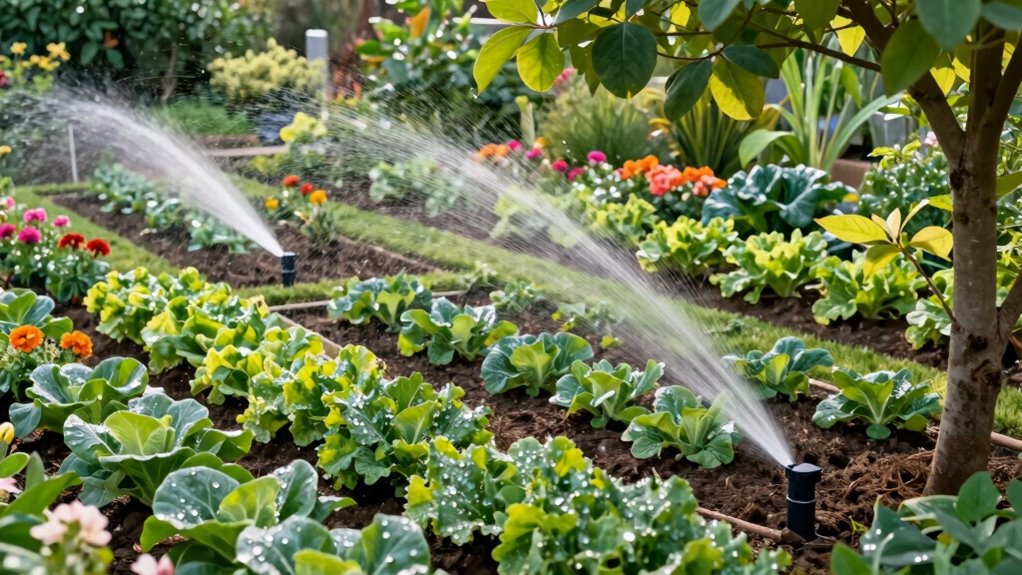
Have you ever wondered why some parts of your garden stay lush while others remain dry? That’s where garden irrigation zones come in. These zones divide your garden based on water needs, ensuring each area gets the right amount of moisture. When choosing between drip versus spray systems, zone prioritization helps determine which method suits each section best. Drip irrigation is ideal for flower beds and vegetables, delivering water directly to roots, while spray systems work well for lawns and larger areas. By creating specific zones, you prevent overwatering or underwatering, promoting healthier plants. Proper zone setup guarantees efficient water use, saves you money, and keeps your garden thriving. Using zone management techniques can further optimize water distribution and efficiency. These techniques often incorporate watering schedules that adapt to seasonal changes for better results. Understanding why zones matter makes managing your irrigation system much simpler and more effective. Effective zone management enhances water conservation and ensures consistent plant health throughout your garden. Additionally, implementing smart irrigation controllers can automate adjustments based on weather conditions, further improving efficiency. Moreover, integrating watering system components such as valves and timers ensures precise control over each zone, maximizing water savings.
How Do You Figure Out Your Garden’s Watering Needs?
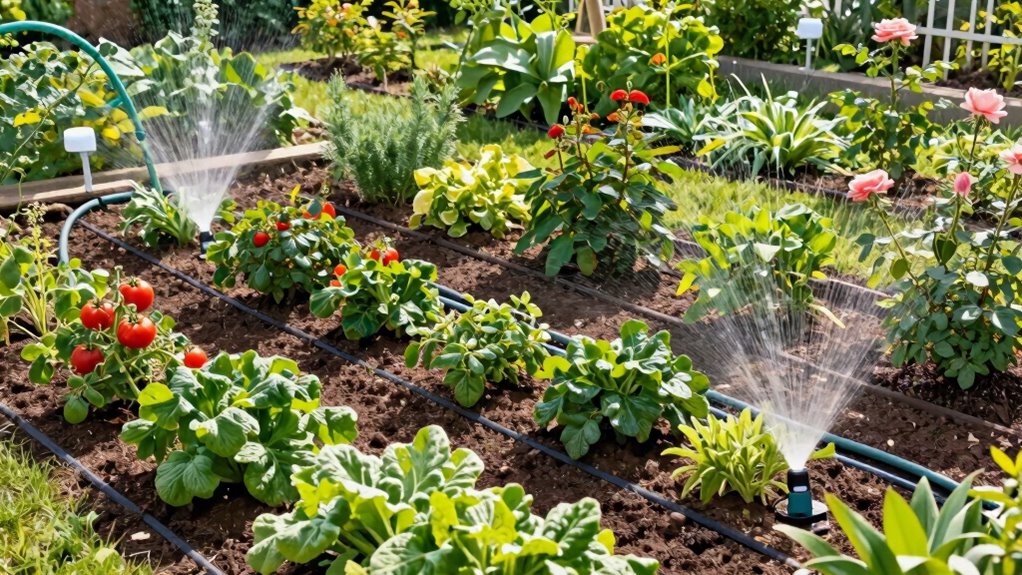
To determine your garden’s watering needs, start by evaluating your soil type, since it affects how water moves and retains moisture. Next, calculate the specific water requirements for each plant, considering their growth stage and size. Finally, keep an eye on your local climate, adjusting watering frequency based on rainfall and temperature patterns.
Assess Soil Type
Understanding your soil type is essential for determining your garden’s watering needs because different soils absorb and retain water in unique ways. To assess your soil, consider its composition and drainage capacity. This helps you identify whether your soil is sandy, clayey, loamy, or silt-based, each requiring different watering strategies.
You can test your soil by:
- Digging a small hole and observing water movement
- Noting how quickly the soil dries after watering
- Checking for compaction or looseness
- Using a soil testing kit for texture analysis
- Observing plant health and growth patterns
Knowing your soil type guides you to adjust watering frequency and volume, ensuring your plants get the right amount of moisture without overwatering or underwatering.
Calculate Plant Water Needs
Determining how much water your garden needs starts with observing your plants and soil closely. You’ll want to contemplate each plant’s root depth, as deeper roots access moisture further down in the soil. Shallow-rooted plants may need more frequent watering, while those with deep roots can tolerate longer dry spells. Also, think about each plant’s drought tolerance; hardy species withstand drought better and require less watering. Check soil moisture regularly by feeling the soil a few inches below the surface. If it feels dry, it’s time to water. To avoid overwatering, tailor your watering schedule based on these factors, ensuring each plant gets the right amount of moisture without waste. Incorporating accessible gardening tools into your gardening routine can help make the process easier and more inclusive. Additionally, understanding soil moisture levels can help you better determine when and how much to water, preventing both drought stress and overwatering. Recognizing plant water requirements is essential for creating an efficient watering plan suited to your garden’s needs.
Monitor Local Climate
Monitoring your local climate is key to fine-tuning your garden’s watering schedule. Understanding climate patterns and rainfall variability helps you adapt watering to seasonal changes. By tracking weather forecasts, you can anticipate dry spells or rainy periods, adjusting your irrigation accordingly. Keep an eye on local weather reports and soil moisture levels to prevent over- or under-watering. Recognizing how rainfall fluctuations impact your garden, especially during droughts or heavy rain seasons, is essential for effective water management. Being aware of climatic factors can help you make more precise watering decisions for your garden. Additionally, understanding free floating weather patterns can aid in predicting unexpected shifts in rainfall and temperature, allowing for more dynamic irrigation planning. Incorporating weather variability insights can further optimize your watering schedule, ensuring plants receive adequate hydration without waste. Considering climate data over time can help you identify long-term trends that influence your watering needs. Observing evaporation rates influenced by wind speed and humidity can also improve watering precision.
How to Pick the Right Sprinklers and Place Them Correctly
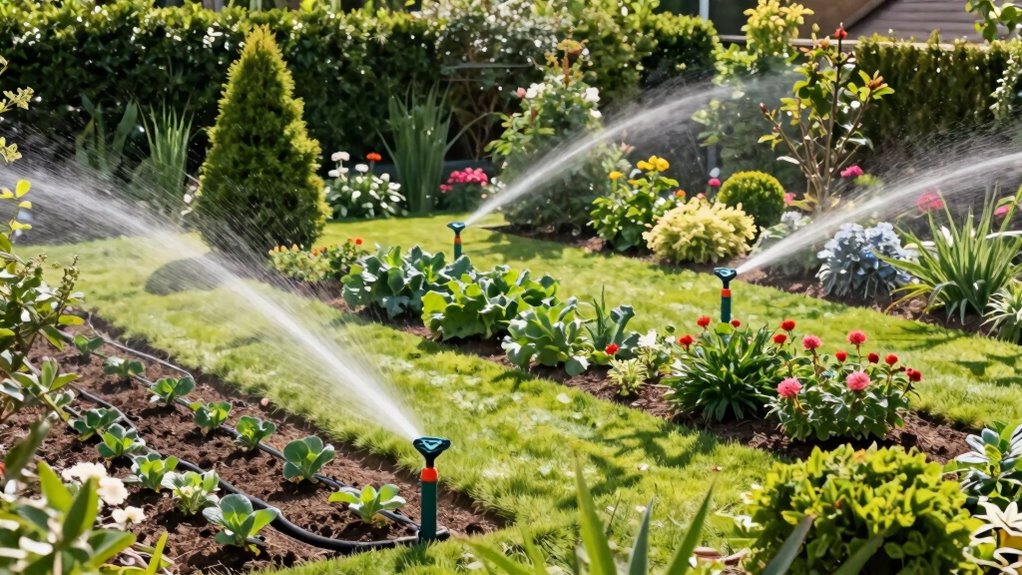
Choosing the right sprinklers depends on your garden’s size and shape, so pick types that match your needs. Proper placement guarantees even coverage, avoiding dry spots or water waste. You’ll also need to adjust settings for maximum coverage and efficiency to keep your garden healthy. Utilizing trusted local resources can help you select reliable sprinkler brands and maintenance services. Additionally, understanding watering zones ensures that each section of your garden receives the appropriate amount of water, preventing both overwatering and underwatering. Being aware of water pressure management can also improve the overall effectiveness of your irrigation system. Implementing watering schedules tailored to your garden’s specific needs further enhances water conservation and plant health. To ensure your system operates securely and transparently, consider monitoring your irrigation activity with digital transaction security tools that help detect any irregularities.
Choosing Suitable Sprinkler Types
Selecting the right sprinkler type is essential for ensuring your garden receives even and efficient watering. Different sprinkler types serve various needs, so choosing wisely enhances watering efficiency and conserves water. Consider these options:
- Fixed sprinklers for small, precise areas
- Rotary sprinklers for larger lawns
- Oscillating sprinklers for rectangular zones
- Drip emitters for flower beds and shrubs
- Pop-up sprinklers for lawns and turf
Each type offers unique coverage and water distribution patterns, so match the sprinkler to your garden’s shape and size. Proper selection guarantees water reaches all plants evenly, prevents runoff, and conserves resources. Understanding the strengths of each sprinkler type helps you create an effective watering plan, keeping your garden healthy and lush while optimizing watering efficiency. When planning your watering system, consider the capacity of your irrigation setup to ensure it can meet your garden’s needs effectively. Additionally, using the appropriate spray pattern for each zone ensures uniform coverage and prevents overwatering or dry spots. Selecting the correct sprinkler type also minimizes water wastage and ensures that your garden’s specific zones are properly irrigated. Incorporating proper placement of sprinklers can further enhance coverage and efficiency, reducing the chances of dry patches.
Optimal Sprinkler Placement Strategies
Proper sprinkler placement maximizes watering efficiency and guarantees your garden receives even coverage. To achieve this, select sprinklers suited to each zone’s size and shape, such as rotor sprays for large areas and drip irrigation for beds. Position sprinklers to avoid overlaps and dry spots, ensuring water reaches all plants. Use rain sensors to prevent overwatering and conserve water. Here’s a quick guide:
| Zone Type | Sprinkler Type | Placement Tip |
|---|---|---|
| Lawn | Rotor sprinklers | Place at corners for uniform coverage |
| Flower beds | Drip irrigation | Position at plant base, avoiding runoff |
| Edges | Spray heads | Angle toward the center to cover edges |
| Slopes | Low-angle sprinklers | Prevent runoff, target dry spots |
| Vegetables | Micro-sprays | Cover small, uneven areas |
Strategic placement guarantees efficient watering and healthy growth.
Adjusting for Coverage and Efficiency
To guarantee your sprinkler system delivers ideal coverage and maximizes efficiency, you need to pick the right sprinklers and place them correctly. Proper placement prevents overlaps, conserves water, and promotes healthy growth. Consider factors like soil compaction, which can hinder water absorption, and adjust sprinkler positions accordingly. Use adjustable heads to target specific areas and avoid dry patches. Keep in mind that correct placement also aids pest control by reducing standing water where pests breed. When setting up, remember to:
- Assess soil compaction to optimize watering depth
- Position sprinklers to avoid overlapping coverage
- Use adjustable heads for precise watering
- Ensure heads are placed at appropriate heights for even distribution
- Consider sprinkler type for specific zones and plant needs
This approach promotes efficient watering, healthy plants, and easier maintenance.
How to Set Up Your Garden’s Irrigation Zones Step by Step
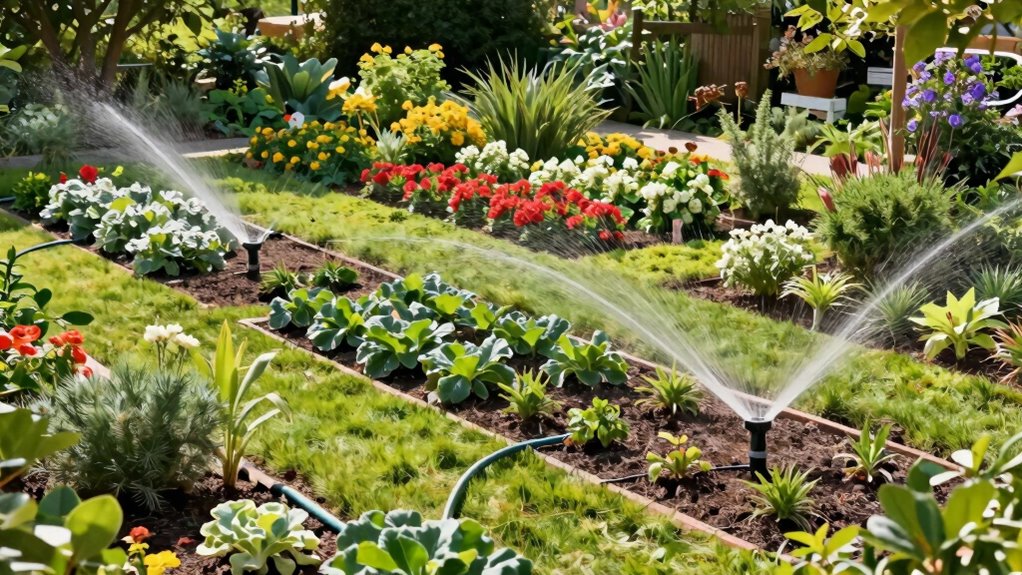
Setting up your garden’s irrigation zones might seem complex at first, but breaking the process into clear steps makes it manageable. Start by mapping your garden and dividing it into sections based on plant water needs and sunlight exposure. Install drip irrigation lines in areas with drought-tolerant plants to conserve water, and use sprinkler zones for lawn areas. Incorporate rain sensors into your system to prevent overwatering during rainstorms. Connect your zones to a central controller or timer, ensuring each has its own valve for independent control. Test each zone to check coverage and adjust emitters or sprinkler heads as needed. Properly establishing your zones now will ensure efficient watering and healthier plants in the long run.
How to Create an Efficient Watering Schedule for Your Zones

Creating an efficient watering schedule guarantees your garden receives the right amount of water without waste. To do this, consider factors like plant needs, soil type, and weather patterns. Consistency helps you maximize fertilizer schedules and pest management, preventing overwatering or underwatering. Use these tips:
- Water early in the morning to reduce evaporation.
- Adjust schedules seasonally for ideal growth.
- Group plants with similar watering needs.
- Incorporate rain sensors to avoid unnecessary watering.
- Monitor soil moisture to fine-tune your plan.
How to Troubleshoot Common Coverage Problems
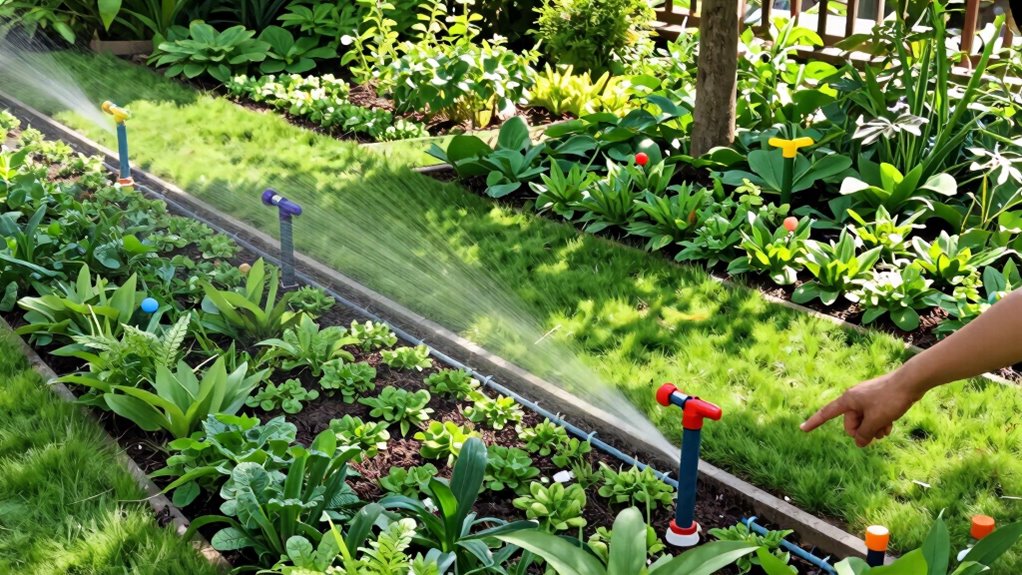
Even the best-designed irrigation zones can encounter coverage issues that prevent plants from receiving adequate water. If you notice dry spots or uneven watering, start by inspecting your sprinkler heads or drip irrigation emitters. Make sure they’re not blocked or damaged, and adjust their position if needed. Check your rain sensors—sometimes they may be incorrectly set or malfunction, causing your system to skip watering when it’s actually dry. Also, verify that the zones are operating on the correct schedule and that valves are fully opening. If coverage remains inconsistent, consider increasing the head spacing or adding additional emitters in dry areas. Regularly inspecting and maintaining your system helps ensure all zones deliver uniform, effective watering.
How to Maintain and Adjust Your Irrigation Zones Over Time

Regularly maintaining and adjusting your irrigation zones is essential to keep your system running efficiently and guarantee your plants receive proper watering as conditions change. Over time, factors like seasonal shifts, plant growth, and soil health require tweaks to your system. Check for clogged nozzles, leaks, or uneven coverage, and adjust sprinkler heads as needed. Keep your fertilizer schedules aligned with watering routines to prevent over- or under-fertilizing. Incorporate pest management practices by monitoring for insect activity or fungal issues that may affect watering needs.
- Test zones periodically for coverage and efficiency
- Adjust sprinkler heads for even coverage
- Update fertilizer schedules seasonally
- Inspect for pests and disease signs
- Clean and replace damaged parts
Frequently Asked Questions
How Often Should I Water Each Irrigation Zone During Different Seasons?
You should adjust your watering schedules based on the season. During spring and summer, water each irrigation zone deeply once or twice a week, ensuring the soil moistens to a depth of 6-8 inches. In fall and winter, cut back watering frequency to once every two or three weeks, depending on rainfall and temperatures. Seasonal adjustments prevent overwatering and promote healthy plant growth year-round.
Can I Automate My Garden Irrigation Zones With Smart Technology?
Imagine your garden as a living masterpiece, and smart technology as its conductor. Yes, you can automate your irrigation zones with rain sensors and smart controllers, ensuring your plants get water only when needed. These devices adjust watering schedules based on weather conditions, saving water and effort. With automation, you’ll enjoy a lush garden while your system runs seamlessly in the background, responding intelligently to nature’s rhythm.
What Are the Signs That My Irrigation Zones Need Repairs or Upgrades?
You’ll notice signs that your irrigation zones need repairs or upgrades if your soil moisture levels are uneven or consistently too dry, indicating ineffective watering. Look out for sprinkler malfunctions like clogged heads, leaks, or uneven spray patterns, which can signal issues. If zones run longer than scheduled or don’t turn on at all, it’s time to examine and upgrade your system to guarantee efficient watering and healthy garden growth.
How Do I Prevent Overwatering or Underwatering in Specific Zones?
Your garden’s health depends on avoiding watering mishaps—it’s practically life or death for your plants. To prevent overwatering or underwatering, you should optimize sensor placement to get accurate moisture readings, and tailor watering schedules to your zone’s needs. Regularly check soil moisture levels and adjust schedules accordingly. This proactive approach guarantees each zone receives just the right amount of water, keeping your garden thriving without waste or stress.
Are There Eco-Friendly Options for Watering My Garden Zones Efficiently?
Yes, you can choose eco-friendly options like rainwater harvesting and drip irrigation to water your garden zones efficiently. Rainwater harvesting collects natural rain, reducing reliance on tap water, while drip irrigation delivers water directly to plant roots, minimizing waste. Both methods conserve water, lower your environmental impact, and assure your plants receive consistent moisture. Incorporate these sustainable practices to maintain healthy garden zones without harming the environment.
Conclusion
By understanding your garden’s irrigation zones, choosing the right sprinklers, and creating a thoughtful watering schedule, you build a system that nurtures your plants and conserves water. Regularly maintain and adjust your zones, troubleshoot issues promptly, and watch your garden thrive with consistent, efficient watering. Like a well-orchestrated symphony, your irrigation plan brings harmony to your garden—watering, growing, flourishing—every plant, every time.