
TL;DR
Thanksgiving hosting is about more than preparing the meal: it balances food safety, timing, guest comfort, and a welcoming atmosphere. Confirm guests and dietary needs early, plan dishes around your kitchen, cook turkey to 165°F (74°C), and decide in advance how you will serve and store food. A short prep timeline and a few specific delegated tasks can make the day feel like a gathering instead of a shift in the kitchen.
A Thanksgiving meal can smell wonderful and still leave you stuck in the kitchen while everyone else reaches for seconds. The difference often comes down to a few plans made before the oven heats up: who is coming, which dishes fit your kitchen, and how you’ll keep dinner moving.

Get your next haul delivered free with Prime
- Fast, free delivery on millions of items
- Prime Video, Amazon Music and more included
- Member-only deals all year
Thanksgiving hosting essentials are the practical details that let you serve a safe meal and make people feel at home. Thanksgiving hosting is about more than a turkey and a polished table; a successful gathering balances food safety, timing, guest comfort, and a little room for the unexpected.
This guide walks you through a guest check-in, a kitchen-friendly menu, a sample schedule, safe serving and storage, and the small comforts that help guests settle in. Whether you’re hosting six people in a small apartment or a lively family table of fourteen, you can focus on practical choices that make the day easier to enjoy.
Confirm attendance, allergies, dietary needs, arrival times, and contributions before you finalize the menu.
Choose dishes that fit your oven, stovetop, refrigerator, and serving space; make a few items ahead or buy them ready-made.
Work backward from serving time and delegate specific jobs such as pouring drinks or bringing a side to the table.
Cook turkey to 165°F (74°C) in the thickest breast and innermost thigh and wing, checking with a food thermometer.
Refrigerate perishable leftovers within two hours in shallow containers, and plan portions so sharing food is easy.
Start with a guest check-in that prevents last-minute surprises
Before you plan the menu, confirm who is coming, what they can eat, and what they can comfortably do at your home. A quick message two or three weeks ahead gives you time to ask about allergies, dietary needs, arrival times, children, and mobility needs. Those details affect more than what you buy: they can determine which dishes need separate preparation, how many seats you need, and whether your arrival and serving plans work for everyone. Asking early gives you time to make considered adjustments instead of trying to solve several constraints while cooking.
For instance, if your cousin avoids gluten and your friend is bringing a toddler, you can label the gravy, set aside a gluten-free serving spoon, and keep a simple snack within reach. Ask guests what they plan to bring, too. “Could you bring a salad or a bottle of sparkling water?” is clearer than “Bring anything,” which can leave you with three pies and no vegetables. Specific requests also help you avoid accidentally assigning a dish that conflicts with someone’s dietary needs or adds pressure to a guest who has little time.
Use the guest list like a map of the day. Note who needs a nearby chair, who may arrive after the meal, and whether someone would appreciate an alcohol-free drink. A small kitchen can handle a big-hearted gathering, but it helps to know whether twelve coats need a place to land and whether your dining chairs actually number twelve. A few minutes spent checking space and seating can prevent bottlenecks and help guests move around safely.
Send a short message with the meal time, address details, parking or transit notes, and a request for ingredient information on shared dishes. Guests feel more relaxed when they know what to expect, and you can make better choices before you shop.
Products Worth Considering

Garmin Fenix 7X Sapphire Solar Multisport GPS Watch

BowFlex Results Series SelectTech Adjustable Dumbbells, Pair

Therabody SleepMask Blackout Eye Mask with Vibration
As an affiliate, we earn on qualifying purchases.
Build a menu your oven and counters can actually handle
A workable Thanksgiving menu fits your appliances, refrigerator, serving space, and energy. Choose dishes that can share the oven or cook ahead, then add only a few items that need attention at the last minute. A menu with four oven dishes all scheduled for 5 p.m. is a traffic jam in casserole form. The issue is not simply how many dishes you can make; it is whether their cooking and serving windows overlap. When too many dishes need the same appliance at once, one delay can push the whole meal back.
For example, if your oven holds one turkey and one baking dish, make cranberry sauce and pie the day before, and cook mashed potatoes on the stovetop. A vegetarian main such as stuffed squash can bake earlier and reheat while the turkey rests. If you have one small refrigerator, leave space for the turkey and perishable ingredients instead of filling every shelf with drinks. These choices trade a little spontaneity for a more predictable kitchen: you know which appliance is free and can focus on finishing dishes rather than rearranging the whole plan.
Mix familiar favorites with one or two flexible options. A roasted vegetable platter, green salad, or rice dish can work for guests with different diets, while a clearly labeled gravy or casserole lets people choose confidently. When allergies are involved, ask the guest what precautions work for them; ingredient labels help, but shared utensils and surfaces can matter too. A flexible dish can widen the choices available, but it does not automatically make a meal safe for a guest with an allergy. Clear communication about ingredients and preparation lets the guest decide what works.
Store-bought rolls, a bakery pie, or a guest-contributed side can be part of a thoughtful meal. You are hosting people, not auditioning for a cooking show. Write down each dish, its cooking method, and whether it can be made ahead; that list will show you quickly if your menu asks too much of the same appliance. It also makes tradeoffs visible: you can swap one oven dish for a stovetop side before the schedule becomes hard to change.
Use a simple timeline to keep dinner moving
A Thanksgiving timeline turns a crowded kitchen into a sequence of manageable jobs. Start with the serving time and work backward: thawing and shopping come first, make-ahead dishes follow, then the turkey and sides, and finally the table and drinks. A written plan also gives you a place to hand off tasks instead of answering the same question while holding a hot pan. Working backward matters because several jobs depend on earlier ones: the turkey needs time to thaw and cook, and guests cannot be served until the sides and table are ready. Seeing those dependencies on paper makes it easier to spot an unrealistic plan.
Try this sample schedule for a 4 p.m. meal, adjusting it for your turkey size and recipe instructions:
- Several days before: Confirm guests and restrictions, shop for shelf-stable ingredients, and move a frozen turkey to the refrigerator with enough thawing time based on its weight.
- The day before: Prepare sauces, desserts, and chopped vegetables; set the table; clear a shelf for leftovers.
- Morning: Follow your turkey recipe and thermometer checks, then start sides that can hold or reheat well.
- About an hour before serving: Warm the dishes that need it, set out serving utensils and drinks, and ask a guest to greet arrivals.
- After the meal: Pack leftovers into shallow containers and refrigerate them within two hours.
Picture a host who has written “Avery: drinks, Lee: salad” on the plan. When the doorbell rings, the host can welcome people instead of inventing jobs on the spot. Build in a cushion, too; a turkey that needs more time is easier to manage when the rolls are not waiting on the same oven shelf. A buffer absorbs ordinary delays, while assigning discrete jobs keeps help useful without making guests guess what the host needs.
Keep the turkey and sides safe without guessing
Food safety depends on time and temperature, not on the turkey’s golden color or the smell drifting from the oven. The USDA’s general guidance is to cook turkey to 165°F (74°C) in the thickest part of the breast and the innermost parts of the thigh and wing, using a food thermometer. Check the bird in more than one spot, and keep the thermometer from touching bone. Appearance can be misleading because a browned exterior does not tell you whether the interior has reached a safe temperature. Checking several locations helps account for uneven cooking across a large bird.
Thaw a frozen turkey in the refrigerator, allowing time for it to thaw safely rather than leaving it on the counter. Keep raw turkey and its juices away from ready-to-eat foods, wash hands and surfaces after handling it, and use separate utensils for raw and cooked food. For instance, don’t put cooked turkey back on the platter that held it raw unless you’ve washed the platter first. These steps reduce the chance that bacteria from raw poultry will reach food that is ready to eat, where there may be no further cooking step to kill them.
Once dinner is served, avoid letting perishable food sit out for hours. USDA guidance says to refrigerate leftovers within two hours; use shallow containers so food cools faster. Keep cold dishes cold and hot dishes hot, and set out smaller portions for a buffet while the rest stays chilled or warm. Smaller batches take a little more attention to replenish, but they limit how long the full supply of food sits at room temperature and make safe storage easier afterward.
A thermometer is more reliable than color. If you are unsure about turkey thawing, cooking, or storage for a particular dish, check current USDA food-safety guidance before serving. A calm, practical food-safety plan protects the people around your table without making the meal feel like a checklist.
Set up the room so guests can relax and help themselves
Guest comfort comes from easy paths, clear places for belongings, and food and drinks people can reach without asking you for every little thing. Put a basket or cleared bed aside for coats and bags, leave a path wide enough to reach the table, and keep drinks away from the busiest cooking area. Small adjustments can make a home feel welcoming even when the kitchen is full. They also reduce interruptions: if guests know where to put a coat or find water, the host can keep cooking or join the conversation.
For example, place water, sparkling cider, and glasses on a side table near the living room. That keeps guests from crowding around the oven when they arrive. Set out a few chairs beyond the dining table for older relatives or anyone who needs a break from standing; if a guest uses a mobility aid, leave the route to the bathroom and table clear. Planning these paths ahead matters because a crowded route can turn an otherwise comfortable room into a difficult one to navigate.
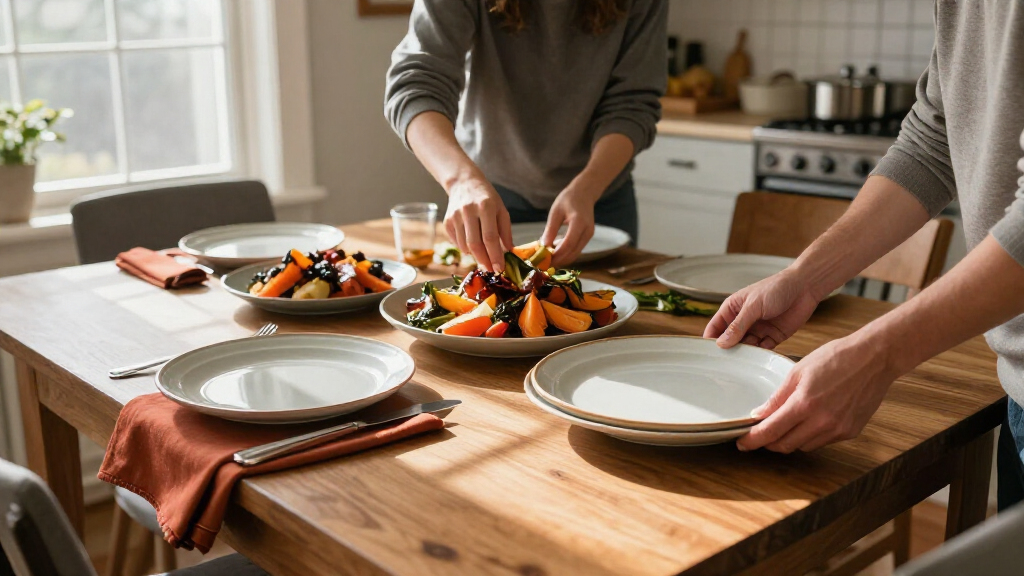
Lay out serving spoons before dinner, and label dishes when ingredients may not be obvious. A folded card that says “contains walnuts” is a simple courtesy for someone managing an allergy. If you have limited counter space, group dishes on a sideboard or use a dining table buffet so hot pans do not compete with chopping boards. This setup helps guests serve themselves while keeping the work area available for cooking and cleanup.
Ask for help with a task that has a clear finish: “Could you pour drinks?” or “Would you bring the salad to the table?” That feels easier than asking a guest to figure out what needs doing. You can still be the host while letting people contribute.
Make leftovers easy to store, share, and enjoy
A leftover plan saves good food and clears the kitchen before the last guests head home. Before the meal, set out shallow containers, labels, and a marker; then you can pack food quickly instead of hunting through cupboards with tired eyes. Refrigerate perishable leftovers within two hours, and avoid stacking a deep pot of hot food in the fridge where the center cools slowly. Dividing food into smaller portions helps it cool more quickly and gives you convenient amounts to reheat, so safe handling and everyday convenience work together.
For instance, divide turkey, stuffing, and vegetables into separate containers so people can reheat only what they want. Write the date on each container and offer guests a portion to take home. If you send food with someone, include the name of the dish and any known ingredients, especially if the container holds gravy, nuts, or dairy. Clear labels reduce guesswork later, particularly when guests have dietary restrictions or several similar containers are in the refrigerator.
Use leftovers in a way that suits your week: turkey can become sandwiches or soup, roasted vegetables can go into a grain bowl, and cranberry sauce can brighten oatmeal or yogurt. Follow current food-safety guidance for storage and reheating, and discard food that has sat out too long or seems unsafe. A clever recipe never makes questionable storage safe. Planning a likely use can help you portion leftovers realistically, but convenience should not override safe storage times.
This is also where a little portion planning helps with waste. If you know several guests are traveling or have small appetites, make a moderate amount of each side rather than doubling every recipe. You can send people home with a meal and still avoid a refrigerator full of containers you will forget about.
Frequently Asked Questions
How much turkey should I buy per person?
It depends on how much you want for leftovers and whether you are serving several substantial sides. Use a trusted recipe or retailer’s portion guide as a starting point, then adjust for your guest list; a smaller bird or turkey breast may suit a small gathering better than a large turkey that overwhelms the oven.
How long does it take to thaw a turkey safely?
Thaw a frozen turkey in the refrigerator, not on the counter. The time depends on the bird’s weight, so check current USDA thawing guidance and begin early enough that the turkey is fully thawed before cooking day; a partly frozen bird can disrupt your schedule.
What temperature should turkey reach to be safe?
The USDA’s general guidance is 165°F (74°C). Check with a food thermometer in the thickest part of the breast and the innermost parts of the thigh and wing, avoiding bone for a more useful reading.
How can I host Thanksgiving in a small kitchen?
Pick dishes that use different appliances or can be made ahead, and keep your menu short enough for the oven and refrigerator you have. For example, bake pie the day before, warm rolls after the turkey comes out, and serve drinks on a separate table so guests stay clear of the cooking area.
When should I refrigerate Thanksgiving leftovers?
Refrigerate perishable leftovers within two hours of serving, and divide them into shallow containers so they cool quickly. If the meal includes buffet dishes, keep extra portions chilled or hot and replenish the serving platters in smaller batches.
Conclusion
The best Thanksgiving plan is one that gives you enough structure to handle the meal and enough breathing room to enjoy the people around it. Confirm the guest details, choose a menu your kitchen can manage, and write down the timing before the holiday arrives.
Then put the thermometer by the oven, the drinks where guests can find them, and yourself at the table. The turkey can rest; so can you.