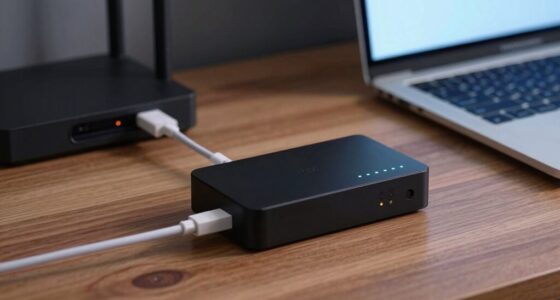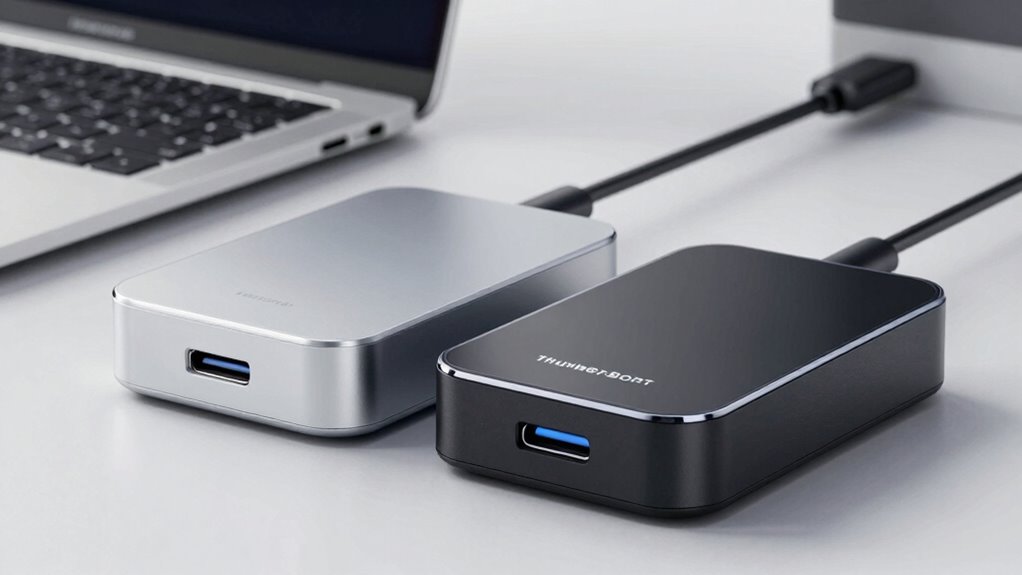

Understanding the difference between USB-C and Thunderbolt helps you choose the right docking station for your needs. USB-C is great for charging and everyday peripherals, while Thunderbolt offers faster speeds and the ability to daisy-chain devices, making it ideal for demanding tasks. Not all USB-C ports support Thunderbolt features, so compatibility matters. Keep these key points in mind, and you’ll be ready to make informed choices—plus, you’ll discover how to optimize your setup further.

Get your next haul delivered free with Prime
- Fast, free delivery on millions of items
- Prime Video, Amazon Music and more included
- Member-only deals all year
Key Takeaways
- USB-C is versatile for charging and basic data transfer, while Thunderbolt offers faster speeds and daisy-chaining capabilities.
- Not all USB-C ports support Thunderbolt; check device specifications for compatibility.
- Thunderbolt provides higher data transfer rates (up to 40 Gbps) compared to standard USB-C (10-20 Gbps).
- Choosing the right docking station depends on your device’s port type and intended use.
- Verify compatibility and features to avoid performance issues and ensure optimal connectivity.
As an affiliate, we earn on qualifying purchases.
USB-C and Thunderbolt: What You Should Know
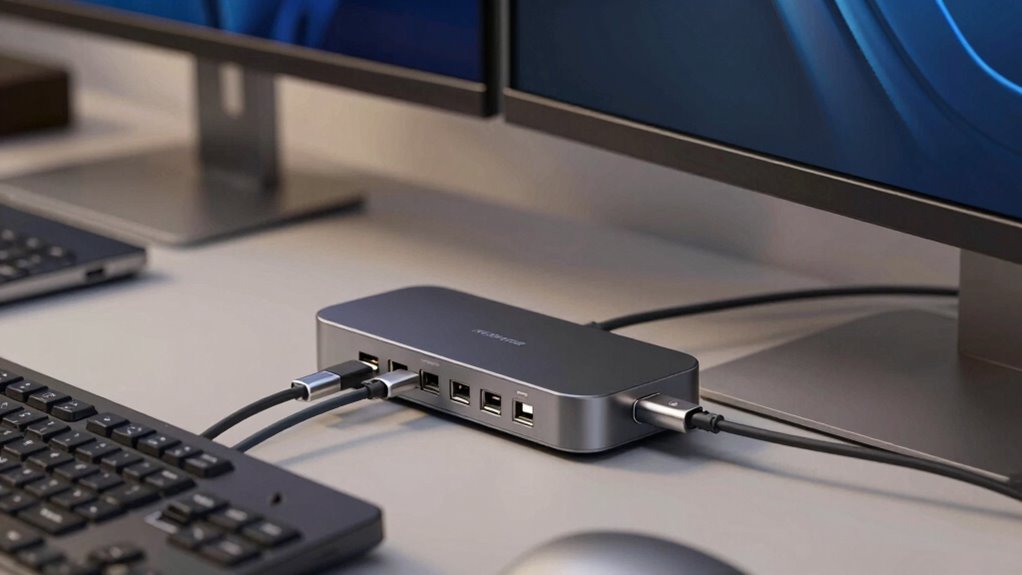
While USB-C and Thunderbolt ports may look similar, they serve different purposes and have distinct capabilities. USB-C is widely used for charging, data transfer, and connecting peripherals, but its power delivery can vary depending on the device and cable quality. Thunderbolt ports, on the other hand, support faster data transfer and higher power delivery, often enabling daisy chaining multiple devices. Compatibility issues can arise because not all USB-C ports support Thunderbolt features, even if they look identical. This means you might encounter limitations or need specific cables and adapters to ensure full functionality. Understanding these differences helps you pick the right port for your needs and avoid potential frustrations with power delivery or device compatibility. Additionally, technology standards continue to evolve, making it important to stay informed about the capabilities of your ports to maximize their performance. As industry regulations develop, manufacturers may also update port features, which can affect compatibility and performance over time. Staying aware of port specifications can help prevent confusion and ensure you select the best connection for your setup, especially as new standards are introduced.
As an affiliate, we earn on qualifying purchases.
USB-C vs Thunderbolt: Performance & Speed Differences
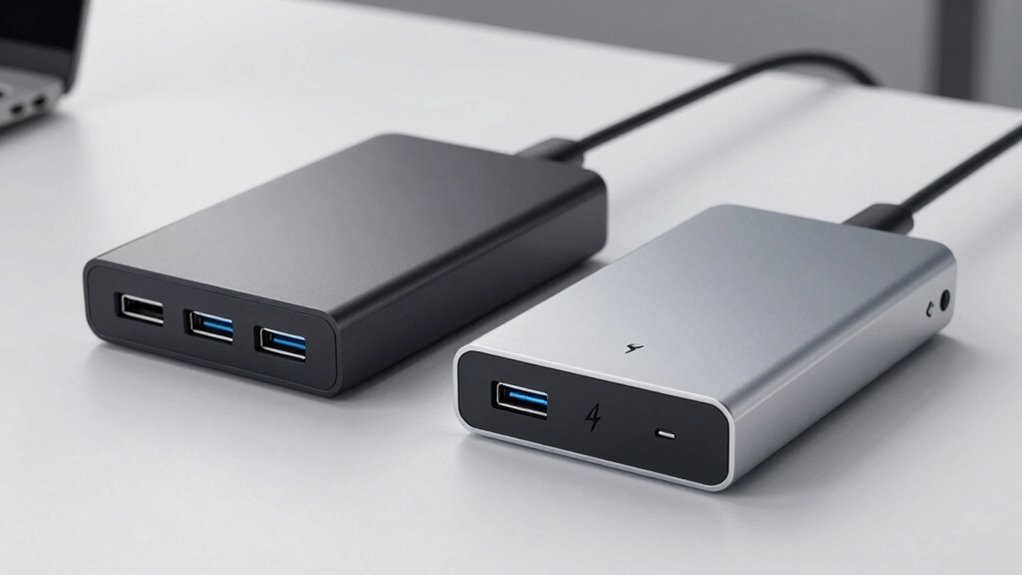
Thunderbolt ports deliver markedly faster data transfer speeds than USB-C, making them ideal for high-performance tasks like video editing and large file transfers. With Thunderbolt 3 and 4, you can achieve speeds up to 40 Gbps, considerably outperforming standard USB-C, which generally maxes out around 10-20 Gbps. When comparing their performance, consider these key points:
Thunderbolt offers faster data transfer speeds than USB-C, ideal for demanding tasks like video editing.
- Data transfer: Thunderbolt provides superior speeds, reducing transfer times for large files.
- Compatibility issues: While Thunderbolt can work with USB-C devices, not all USB-C ports support Thunderbolt, leading to potential compatibility hurdles.
- Use case suitability: For demanding tasks, Thunderbolt’s speed advantage justifies its higher cost and limited device compatibility.
- Affiliate disclosure: Understanding the potential for affiliate commissions when purchasing related accessories can influence your buying choices. Additionally, performance benchmarks highlight how Thunderbolt’s advantages translate into real-world benefits.
Understanding these differences helps you choose the right port based on your performance needs.
As an affiliate, we earn on qualifying purchases.
Which Devices and Use Cases Match USB-C and Thunderbolt?
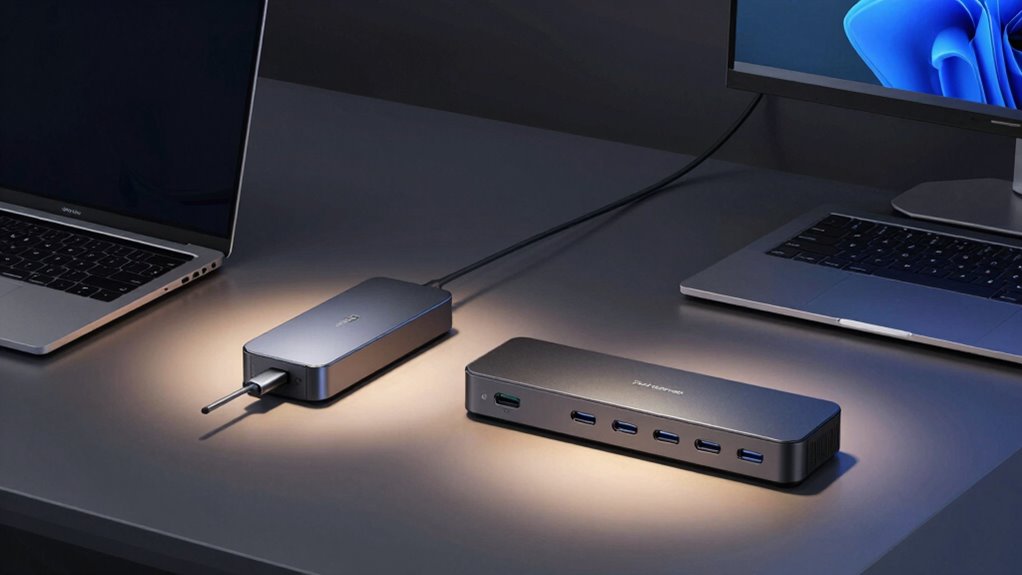
Choosing the right port depends on the devices you use and the tasks you perform. For mobile compatibility, USB-C is ideal, as it works seamlessly with smartphones, tablets, and ultrabooks, offering fast data transfer and charging. If you connect multiple displays or need high bandwidth for professional tasks, Thunderbolt is better suited due to its superior speed and versatility. Gamers and those using gaming peripherals benefit from Thunderbolt’s high data rates for smooth gameplay and fast responses. USB-C handles everyday peripherals like keyboards, mice, and external drives efficiently, but Thunderbolt provides additional power and performance for demanding setups. Ultimately, match your device types and use cases to the port’s capabilities for an excellent experience.
As an affiliate, we earn on qualifying purchases.
How to Find the Right Docking Station for Your Setup
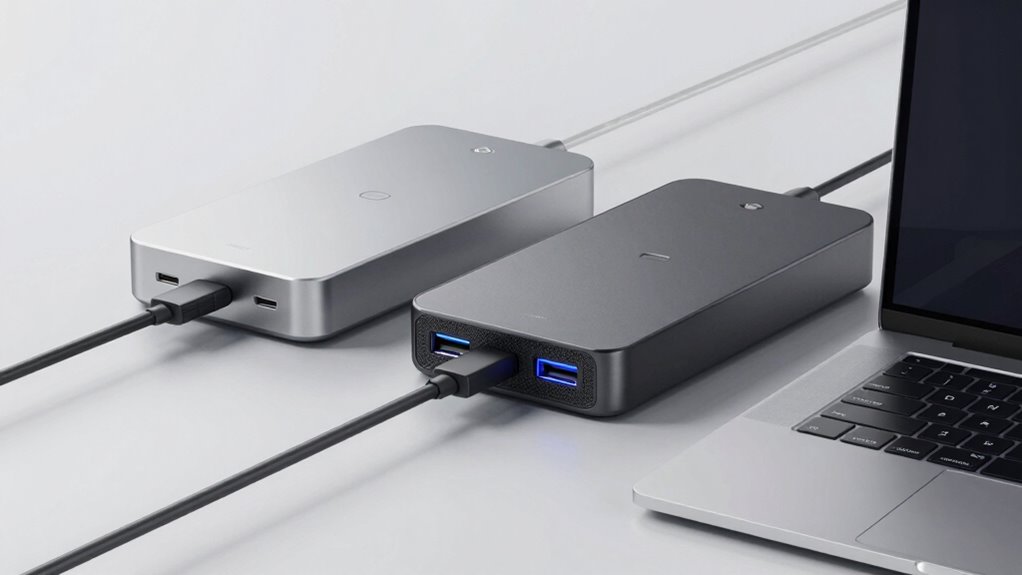
Finding the right docking station begins with understanding your specific setup and how you plan to use it. To avoid compatibility issues, start by evaluating your device’s ports and supported standards. Compatibility considerations are crucial to ensure seamless operation. Next, consider port versatility to ensure the dock offers the connections you need for peripherals, displays, and power delivery. Additionally, researching emerging trends in digital publishing can provide insights into innovative connector technologies that might improve your experience. Staying informed about enterprise governance best practices can also help you select docks that meet security and compliance standards. Moreover, understanding ergonomic design principles in docking stations can help you create a healthier and more comfortable workspace. Incorporating child development insights can also guide you to choose ergonomic and adaptable setups suitable for various user needs. Here are key steps: 1. Identify your device’s compatibility with USB-C or Thunderbolt to prevent issues. 2. Determine the types and number of ports required for your peripherals. 3. Check if the dock supports your device’s maximum data transfer speeds and power needs.
Common Myths and Mistakes About USB-C and Thunderbolt Docks

Many people believe that any USB-C or Thunderbolt dock will work seamlessly with their devices, but this isn’t always the case. Compatibility issues are common, and false advertising can lead you to buy a dock that doesn’t support your setup. Not all USB-C ports are equal—some lack the necessary power or data transfer capabilities, causing performance problems. Thunderbolt docks often require specific ports and support levels, which aren’t always clearly advertised. Relying on labels alone can be misleading, so you need to verify compatibility before purchasing. Falling for false advertising or misconceptions about universal compatibility can result in wasted money and frustration. To avoid these mistakes, research your device’s specifications and confirm that the dock supports your needs explicitly. Additionally, understanding Bank SWIFT/BIC Codes can be crucial for secure financial transactions, especially when dealing with international suppliers or vendors.
Frequently Asked Questions
Can I Connect a Thunderbolt Device to a USB-C Port?
Yes, you can connect a Thunderbolt device to a USB-C port if the port supports Thunderbolt 3 or 4, but you need an appropriate adapter. Check your device specifications and compatibility, as not all USB-C ports can handle Thunderbolt data transfer speeds. Using the right adapter guarantees proper connectivity and performance, so verify compatibility before connecting your Thunderbolt device to avoid issues.
Do All USB-C Ports Support Thunderbolt 3 or 4?
Not all USB-C ports support Thunderbolt 3 or 4. To know if yours does, check for Thunderbolt logos or specifications from your device manufacturer. Thunderbolt ports support faster data transfer and USB-C power delivery, making them versatile. If your USB-C port lacks the Thunderbolt symbol, it likely only supports standard USB-C features like power delivery and data transfer, but won’t handle Thunderbolt devices or speeds.
Are There Compatibility Issues Between Different USB-C and Thunderbolt Devices?
A stitch in time saves nine, and that applies to compatibility too. You might face issues with adapter compatibility and device interchangeability between USB-C and Thunderbolt devices. Not all USB-C ports support Thunderbolt, and using incompatible devices can cause connection problems or reduced performance. To avoid issues, check device specifications carefully and stick to certified adapters, ensuring smooth operation and avoiding frustration with incompatible hardware.
How Do I Identify if My Device Supports Thunderbolt?
You can identify if your device supports Thunderbolt by checking the device’s specifications or user manual for compatibility details. Look for indicator lights on the device—some Thunderbolt docks have a small lightning bolt symbol. Additionally, examine the port itself; Thunderbolt ports often have a lightning bolt icon next to the USB-C connector. Ensuring your device’s compatibility helps prevent connection issues and optimizes performance.
Will My Existing USB-C Dock Work With Thunderbolt Devices?
Your existing USB-C dock might work with Thunderbolt devices if it offers good USB-C compatibility, but it’s not guaranteed. Thunderbolt adapters can help connect Thunderbolt devices to your USB-C dock, but performance may vary. Check your dock’s specifications to see if it supports Thunderbolt, as not all USB-C ports do. Using a dedicated Thunderbolt dock ensures full compatibility and maximum performance for your Thunderbolt devices.
Conclusion
Now that you know the differences between USB-C and Thunderbolt, choosing the right dock becomes easier. Did you know that Thunderbolt 4 can transfer data at up to 40Gbps—eight times faster than USB-C’s standard? Imagine streaming 4K videos, transferring large files, and connecting multiple devices seamlessly, all through a single port. With this knowledge, you’re ready to make a confident choice and streamline your setup for maximum performance.
Halloween Picks
halloween
As an affiliate, we earn on qualifying purchases.