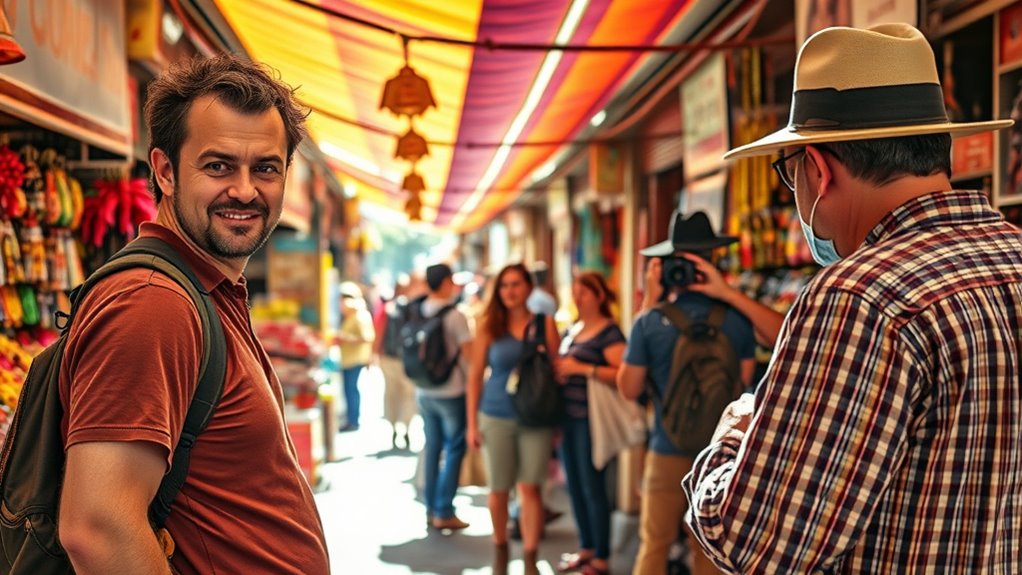

When traveling abroad, stay alert to common scams that target tourists. Watch out for fake tour guides offering tempting deals, and always book through reputable companies. Beware of overpriced taxi rides without meters and stick to official services or ride-sharing apps. Unsolicited help can serve as a distraction for pickpockets, so keep your valuables secure. And be cautious of “free” gifts or charity requests—if they seem too good to be true, they probably are. There’s more to know about staying safe.
Key Takeaways
- Always book tours through reputable companies and read online reviews to avoid fake tour guides.
- Use ride-sharing apps or official taxi services to prevent being overcharged by taxi drivers.
- Keep valuables secure and be wary of strangers offering unsolicited help, as they may be distractions for pickpockets.
- Verify the legitimacy of any charity before donating to avoid falling for donation scams.
- Be cautious of offers for “free” gifts or services, as they often lead to pressure to pay for overpriced items.

When you’re planning your next getaway, it’s crucial to stay alert for travel scams that could derail your trip. Scammers often target tourists, knowing they might be less familiar with the area and its customs. You don’t want to fall victim to these schemes, so being informed is your best defense.
One common scam involves fake tour guides. You might find someone approaching you at a popular tourist site, offering a seemingly great deal on a guided tour. They’ll present themselves as knowledgeable locals, but their goal is to separate you from your money. To avoid this, always book tours through reputable companies. Research online reviews beforehand, and if a deal seems too good to be true, it likely is.
Stay cautious of fake tour guides at popular sites; always book through reputable companies to avoid scams.
Another prevalent scam is the “overpriced taxi ride.” When you arrive at your destination, you might be overwhelmed by taxi drivers vying for your attention. Some of them may not use meters or will charge exorbitant flat rates. To dodge this trap, research local transportation options before your trip. Use ride-sharing apps or official taxi services to ensure you’re paying a fair price.
Furthermore, watch out for the “friendly stranger” who approaches you, offering unsolicited help. They may offer to take your photo or point you in the right direction. However, while they’re being friendly, they might also be pickpockets working in pairs. One distracts you, while the other steals your belongings. Keep your valuables secure and don’t hesitate to ignore strangers who approach you.
Also, be cautious of any requests for donations, especially from people who claim to represent charities. Scammers often exploit tourists’ goodwill. If you want to donate, do some research first to ensure the charity is legitimate. There’s no harm in helping, but make sure your money goes to the right place.
Lastly, be wary of “free” gifts or services. If someone offers you something for free, it’s probably a setup for a scam. They might insist you’re obligated to pay later or pressure you into purchasing something overpriced. Trust your instincts; if it feels off, it probably is. Additionally, understanding color accuracy in your surroundings can help you identify deceptive situations, as clear visibility is crucial in avoiding scams.
Frequently Asked Questions
How Can I Report a Travel Scam I Encountered Abroad?
To report a travel scam you encountered abroad, start by contacting local authorities or the nearest embassy or consulate. They can guide you on filing a report. Document all details, including dates, locations, and descriptions of the scam. If you paid using a credit card, notify your bank, as they might assist in disputing transactions. Sharing your experience online can also help warn other travelers about the scam.
Are Travel Insurance Policies Effective Against Scams?
Travel insurance policies can’t shield you from scams directly, but they can provide some safety net. Imagine you’ve lost your wallet in a bustling marketplace, and the panic sets in. Your insurance might help recover some losses, but it won’t replace the cash stolen. Always read the fine print; some policies cover trip cancellations or emergency assistance. So while they’re not a foolproof defense, they can ease the financial strain of unexpected setbacks.
What Are the Signs of a Potential Travel Scam?
You can spot a potential travel scam by watching for a few key signs. If the deal seems too good to be true, it probably is. Be wary of high-pressure tactics, like insisting you book immediately. Look out for unprofessional websites or poorly written communication. If someone asks for payment via unusual methods, like wire transfers or gift cards, that’s a red flag. Trust your instincts; if something feels off, it likely is.
How Do I Safely Use My Credit Card While Traveling?
Your credit card’s like a lifeline while traveling; treat it with care. To use it safely, always opt for secure networks and avoid public Wi-Fi when making transactions. Keep your card close, and consider using a travel-friendly card with no foreign transaction fees. Set up alerts for transactions, so you’ll catch any suspicious activity right away. finally, never share your PIN or card details; trust your instincts, and stay vigilant!
Can I Get My Money Back After Being Scammed?
Yes, you can potentially get your money back after being scammed. Start by contacting your bank or credit card company immediately—they may reverse the charge or help you dispute it. Gather any evidence of the scam, like receipts or screenshots. If the scam involved a service or product, consider reporting it to local authorities. While it might take time, staying persistent increases your chances of recovering your lost funds.
Conclusion
Staying aware of travel scams can save you time, money, and stress while exploring the world. Did you know that nearly 30% of travelers report falling victim to a scam during their trips? By keeping your guard up and knowing what to watch for, you can enjoy your adventures without unnecessary setbacks. So, stay informed, trust your instincts, and don’t let a scam ruin your journey. Safe travels!