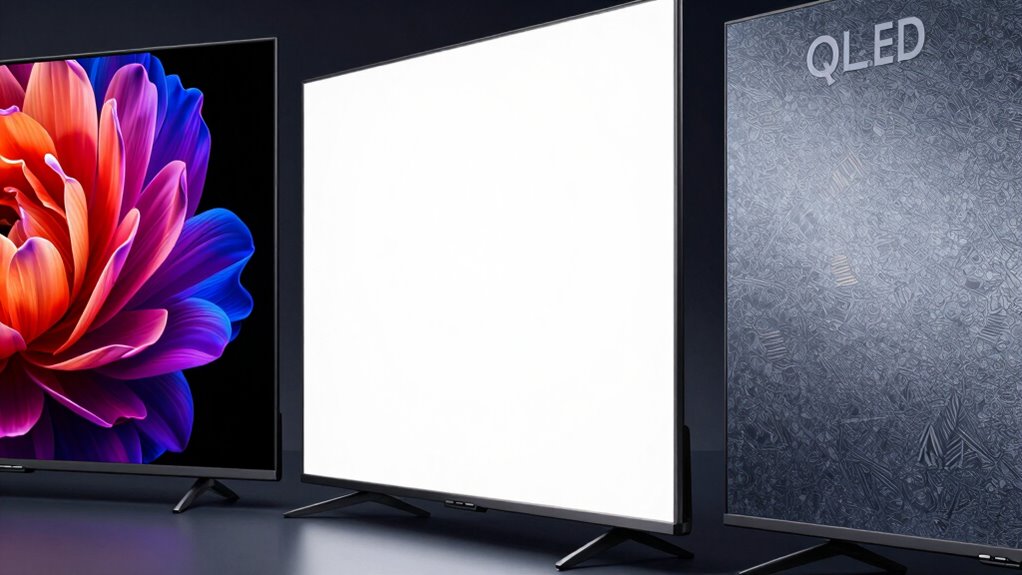

If you’re choosing between TV panels, you’ll find that OLEDs offer better contrast and deep blacks because each pixel emits its own light, making it great for dark rooms. LCDs are usually brighter and better in well-lit spaces, with accurate colors and advanced backlighting to improve contrast. Both have improved over time, but understanding these core differences helps you pick what suits your needs best. Keep going to discover more about how each panel type fits your viewing style.

Get your next haul delivered free with Prime
- Fast, free delivery on millions of items
- Prime Video, Amazon Music and more included
- Member-only deals all year
Key Takeaways
- OLED panels offer deep blacks and high contrast, ideal for dark room viewing, while LCDs excel in brightness and color accuracy for bright environments.
- OLED displays emit their own light for superior contrast but may have shorter lifespans; LCDs use backlighting and tend to last longer.
- LCD panels generally provide higher peak brightness, making them better suited for daytime use and HDR content in well-lit rooms.
- Both panel types have improved durability and color reproduction, with OLED focusing on contrast and blacks, and LCD on color precision.
- Choose OLED for cinematic experiences in dark settings; opt for LCD if you need bright, accurate colors in well-lit spaces.
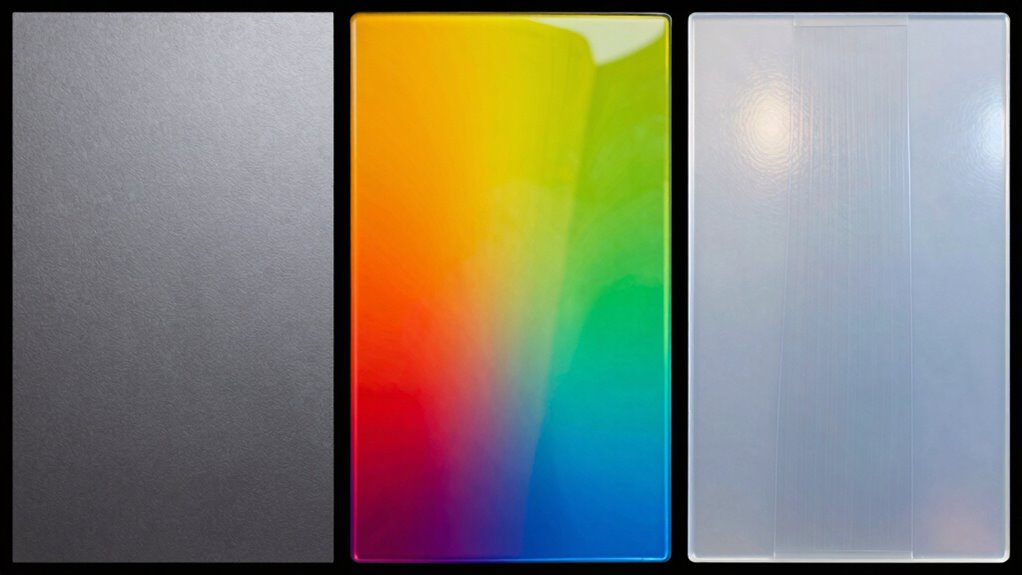
Are you curious about the different types of TV panels and how they impact your viewing experience? Understanding the main panel types—OLED and LCD—can help you choose a TV that suits your preferences without falling for hype. OLED panels are known for their impressive brightness levels, which means they can deliver vibrant images even in well-lit rooms. This high OLED brightness enhances contrast, making dark scenes look deeper and more detailed. On the other hand, LCD panels often excel in color accuracy, providing consistent and true-to-life colors across the screen. While LCDs might not reach the same levels of contrast as OLEDs, they can still produce stunning visuals, especially if they use advanced backlighting technology like local dimming.
When it comes to picture quality, each panel type has its strengths. OLEDs deliver perfect blacks because each pixel emits its own light and can turn completely off, creating a striking contrast that’s hard to beat. This makes OLED TVs ideal for cinematic experiences where deep blacks and vibrant colors matter most. However, their brightness, while impressive, can sometimes be limited compared to high-end LCDs, especially in very bright environments. LCD screens, with their backlighting systems, can often push higher peak brightness levels, which enhances HDR content and makes daylight viewing more comfortable. Additionally, the viewing angles of OLED screens tend to be wider, offering consistent picture quality from different positions in the room. Moreover, the manufacturing processes of these panels can influence their durability and longevity, which is an important consideration for some buyers. Advances in panel technology continue to improve both types, narrowing the gaps in performance and lifespan. For example, newer OLED models are incorporating improved panel durability to address longevity concerns. Furthermore, the manufacturing process efficiency can impact the overall cost and availability of each panel type.
Color accuracy is another critical factor in choosing the right panel. LCD panels, particularly those with wide color gamuts, tend to produce more precise and consistent colors across different scenes and viewing angles. This is especially true for models with quantum dots or enhanced backlighting technologies, which improve color richness. OLED panels also offer excellent color reproduction, but their main advantage lies in contrast and blacks rather than pure color accuracy. As a viewer, your preference might come down to whether you prioritize vivid, punchy colors or deep contrast with accurate color reproduction.
In the end, your choice depends on your viewing environment and what you value most. If you watch in a dark room and crave deep blacks and high contrast, OLED might be the better pick. If you mostly watch in bright spaces or want the most accurate colors for tasks like photo editing or gaming, LCD panels with advanced features could serve you better. Both types have matured significantly, so understanding their core differences helps you make an informed decision without getting caught up in marketing hype.
As an affiliate, we earn on qualifying purchases.
Frequently Asked Questions
Which TV Panel Type Offers the Best Color Accuracy?
You’ll find OLED panels offer the best color accuracy because they excel in color calibration and have a wider color gamut. Their ability to produce vibrant, true-to-life colors makes them ideal for detailed viewing. Compared to other panel types, OLEDs deliver more precise color reproduction, ensuring you see images as they’re meant to be seen. If color accuracy matters most, opting for an OLED TV is your best choice.
Are OLED Panels More Durable Than LCD Panels?
Imagine your TV as a delicate butterfly versus a hardy cactus. OLED panels, like butterflies, may dazzle but tend to be more fragile, with screen longevity affected by burn-in and delicate materials. LCD panels, akin to cacti, survive harsher conditions and require less maintenance. So, if durability’s your goal, LCDs usually outlast OLEDs, which demand gentle handling and careful usage.
How Do Panel Types Affect Gaming Response Times?
Panel types considerably influence gaming response times by affecting refresh rate and input lag. OLED panels usually offer quicker response times, reducing motion blur, while LCDs might have slightly higher input lag. A higher refresh rate, like 120Hz, enhances smoothness, but the panel’s response time and input lag are key for fast-paced gaming. Choose a panel with low input lag and high refresh rate for the best gaming experience.
Can Panel Type Impact TV Energy Consumption?
Yes, panel type impacts TV energy consumption. LED panels are generally more energy-efficient, consuming less power and reducing your electricity bills. OLED screens, while offering better picture quality, tend to use more energy because each pixel emits its own light. Your choice of panel affects overall power consumption, so if energy efficiency matters to you, opt for LED technology. This way, you enjoy great visuals while keeping your power use in check.
Do Panel Differences Influence TV Price Significantly?
It’s a case of “you get what you pay for,” as panel differences can substantially influence TV prices. High-quality panel manufacturing, like OLED or QLED, often costs more due to advanced technology and better viewing angles, enhancing picture quality. Cheaper panels may save you money initially but might suffer from limited viewing angles and lower durability. So, investing in a better panel can mean a higher upfront price but better long-term satisfaction.
As an affiliate, we earn on qualifying purchases.
Conclusion
Now that you know the ins and outs of various TV panel types, you’re better equipped to pick the perfect one for your needs. Whether you prioritize picture quality, viewing angles, or budget, there’s a panel suited for you. Remember, don’t judge a book by its cover—test different screens if you can—and find the one that truly speaks to your entertainment style. With this knowledge, you’re ready to make a smart choice and enjoy your viewing experience to the fullest.
TVs with local dimming technology
As an affiliate, we earn on qualifying purchases.
As an affiliate, we earn on qualifying purchases.
As an affiliate, we earn on qualifying purchases.
Halloween Picks
halloween
As an affiliate, we earn on qualifying purchases.