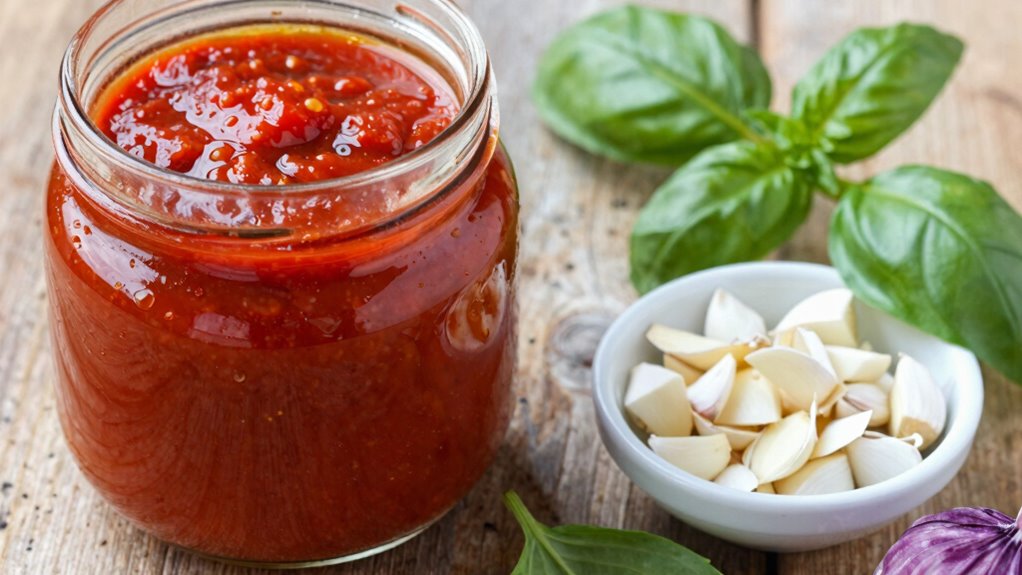

The easiest way to upgrade your homemade sauces is by adding simple ingredients like fresh herbs, a splash of acidity, or a touch of sweetness. Chop herbs like basil or parsley and stir them in at the end for brightness. A squeeze of lemon or splash of vinegar can cut through richness and boost flavor. A little honey or sugar balances tangy notes. Play with these quick tweaks to elevate your sauces and discover more flavor-enhancing tips as you continue exploring.

Get your next haul delivered free with Prime
- Fast, free delivery on millions of items
- Prime Video, Amazon Music and more included
- Member-only deals all year
Key Takeaways
- Add fresh herbs like basil or parsley at the end for a quick flavor boost.
- Incorporate a splash of lemon juice or vinegar to brighten and enhance the sauce.
- Mix in a small amount of honey or sugar to balance acidity and bitterness.
- Substitute roasted garlic or smoky canned tomatoes for deeper, richer flavors.
- Make small, simple adjustments to taste to personalize and elevate your sauce easily.
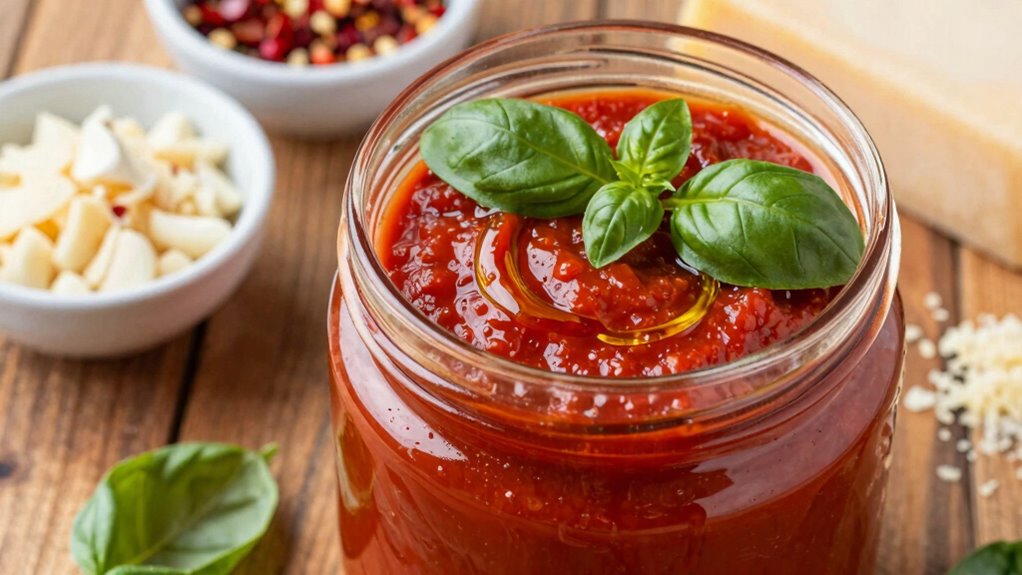
If you’re looking to elevate your homemade sauces effortlessly, the simplest method is to add fresh herbs, a splash of acidity, or a touch of sweetness. These small adjustments can dramatically transform your sauce, making it more vibrant and balanced. When aiming for flavor enhancement, fresh herbs like basil, parsley, or cilantro work wonders. They introduce a fresh, aromatic note that brightens the overall profile. Just a handful, finely chopped, stirred in at the end, can turn a bland sauce into something memorable. If you don’t have fresh herbs on hand, dried versions can work, but they tend to be less potent, so add them gradually.
A splash of acidity—think lemon juice, vinegar, or even a splash of wine—can elevate your sauce by cutting through richness and adding a lively tang. This tweak is particularly effective if your sauce feels heavy or dull. For example, a squeeze of lemon can lift a tomato sauce, making it taste fresher and more vibrant. Vinegar, like balsamic or red wine vinegar, adds complexity and depth. Be cautious with the amount; start small and taste as you go. Acidity also helps balance sweetness and bitterness, ensuring each element in your sauce plays its part. Incorporating flavor balancing techniques can further enhance the overall harmony of your sauce. Sometimes, just a brief simmer after adding these ingredients helps meld the flavors better.
Adding a touch of sweetness can also do wonders. A pinch of sugar, honey, or maple syrup can mellow out acidity and enhance savory flavors. This is especially useful if your sauce is too tangy or bitter. Think of it as ingredient substitution—replacing or balancing out sharp flavors with a small amount of sweetness. It’s a quick fix that can turn a so-so sauce into a delightful one, especially if you’re working with ingredients that tend to be bitter or overly acidic. Additionally, experimenting with different sweeteners can bring unique nuances to your sauce, enhancing its depth. Incorporating flavor adjustments can help you fine-tune the final taste to perfection.
Another way to upgrade your sauce is through ingredient substitution. If you’re out of a key ingredient, consider swapping in something similar but with a flavor boost. For example, replace plain garlic with roasted garlic for a sweeter, milder tone, or swap out plain canned tomatoes for fire-roasted ones for added smoky depth. Using high-quality ingredients or choosing variations with richer flavors can instantly upgrade your sauce without complicating the recipe. These simple upgrades allow you to tailor your sauce to your taste and pantry, elevating even basic recipes. Remember, ingredient quality can make a significant difference in the final flavor.
In short, simple additions like fresh herbs, acidity, and sweetness, along with smart ingredient substitutions, are your secret weapons for making your homemade sauces more delicious without much effort. They’re quick, effective, and completely customizable, letting you craft a sauce that’s perfectly suited to your palate every time.
As an affiliate, we earn on qualifying purchases.
Frequently Asked Questions
Can I Store Upgraded Sauces Longer Without Spoilage?
Yes, you can extend storage longevity and prevent spoilage by properly storing your upgraded sauces. Use airtight containers and keep them refrigerated at or below 40°F. Label each jar with the date you made or upgraded the sauce. For longer shelf life, consider freezing portions in freezer-safe containers. Regularly check for any signs of spoilage, like mold or off odors, to guarantee your sauces stay fresh longer.
Are There Any Dietary Restrictions When Upgrading Sauces?
When upgrading sauces, you should consider dietary restrictions like gluten intolerance or vegan preferences. You can easily find gluten-free options such as tamari instead of soy sauce, and vegan substitutions like plant-based creams or oils. Always read labels to guarantee ingredients meet dietary needs. By making these adjustments, you can enjoy your upgraded sauces without worry, ensuring everyone can indulge comfortably and safely.
How Do I Adjust Seasoning Levels After Upgrading?
Ever wondered if your upgraded sauce still hits the right notes? To adjust seasoning levels after upgrading, taste your sauce first, then focus on flavor balancing. Add small amounts of ingredient substitutions like salt, sugar, or acid to enhance the flavor without overpowering it. Keep tasting as you go, and remember, patience is key—adjust gradually until you achieve the perfect harmony in your sauce.
Can Upgraded Sauces Be Frozen for Later Use?
Yes, upgraded sauces can be frozen for later use. To preserve their flavor infusion and prevent texture loss, let the sauce cool completely before transferring it to an airtight container. Use ingredient substitution to enhance flavor before freezing. Keep in mind, some ingredients may change texture upon thawing, so consider adding fresh herbs or spices after reheating for the best taste. Freeze for up to three months for maximum freshness.
What Are Common Mistakes to Avoid When Upgrading Sauces?
Ever wondered what mistakes can ruin your upgraded sauce? Avoid overdoing flavor balancing, which can mask the original taste, and be cautious with ingredient substitution—using the wrong ingredient can throw off the entire flavor. Don’t rush the process; taste as you go to guarantee harmony. Also, steer clear of adding too much salt or spice at once, as it’s hard to fix once blended. Keep these tips in mind for a perfect upgrade!
As an affiliate, we earn on qualifying purchases.
Conclusion
Think of your homemade sauces as a garden, waiting to bloom with a single, thoughtful touch. Just like watering and tending to your plants, a small upgrade—like a splash of fresh herbs or a dash of spice—can transform your sauce into something extraordinary. Remember, growth happens step by step. So, keep nurturing your culinary garden, and soon, every bite will feel like savoring a lush, vibrant landscape of flavor.
As an affiliate, we earn on qualifying purchases.
As an affiliate, we earn on qualifying purchases.
Columbus Day / Indigenous Peoples' Day Picks
long weekend sales
As an affiliate, we earn on qualifying purchases.