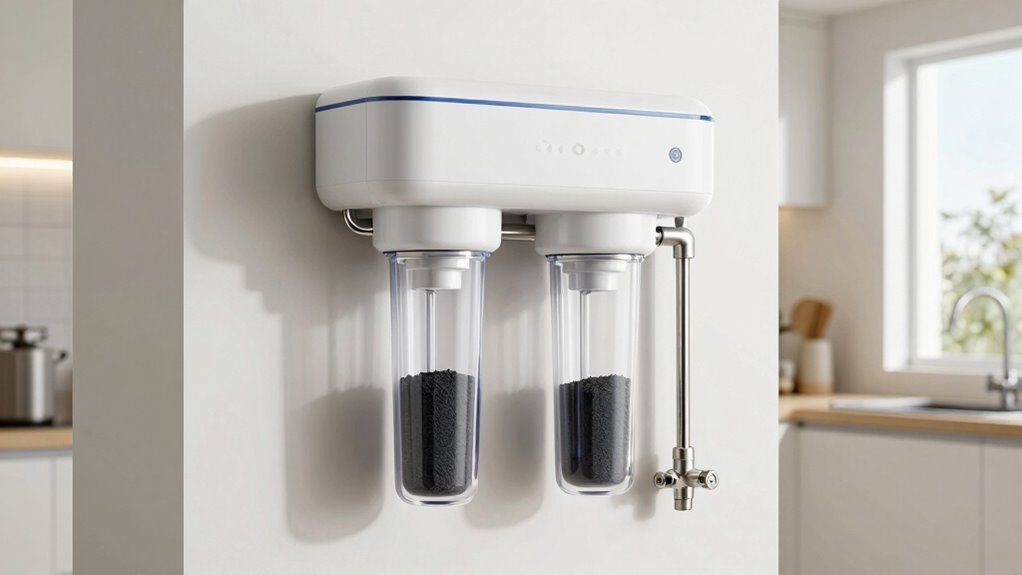

A whole-house water filtration system uses different media to remove contaminants and improve water quality throughout your home. Activated carbon reduces chlorine, VOCs, and odors, while sediment filters trap dirt and rust. KDF media targets heavy metals, and reverse osmosis membranes remove salts and minerals. Specialty media like ion exchange resins soften water or remove chloramines. Knowing these terms helps you understand how each component works together to give you safe, clean water. Keep exploring to learn more about each aspect.

Get your next haul delivered free with Prime
- Fast, free delivery on millions of items
- Prime Video, Amazon Music and more included
- Member-only deals all year
Key Takeaways
- Filtration media are the core materials like activated carbon or sediment filters that remove specific contaminants from water.
- Activated carbon reduces chlorine, VOCs, and odors through adsorption, improving water taste and safety.
- Reverse osmosis membrane removes dissolved solids, salts, and minerals for purer drinking water.
- Sediment filters trap dirt, rust, and sand physically, protecting downstream filtration media.
- Multi-stage systems combine different media layers to target a broad range of impurities effectively.
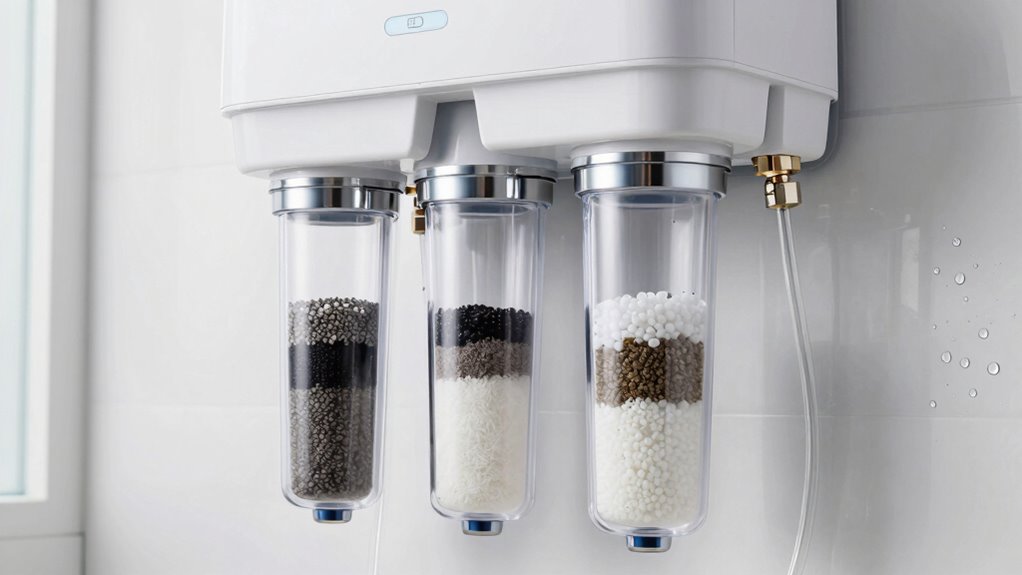
Have you ever wondered what all those technical terms mean when it comes to whole-house water filtration systems? If you’re looking to understand how these systems work, it helps to know some key concepts like water purification and filtration media. Water purification is the process of removing contaminants from your water, ensuring it’s safe and clean for your entire household. It involves different stages and types of filtration media, each designed to target specific impurities. Knowing what these materials do makes choosing the right system much easier.
Understanding water purification and filtration media helps you choose the best whole-house filtration system.
Filtration media are the core components inside your filtration system that do the actual work of cleaning your water. They come in various forms, such as activated carbon, sediment filters, or specialty media designed for specific contaminants. Activated carbon is one of the most common filtration media because it’s highly effective at reducing chlorine, volatile organic compounds (VOCs), and unpleasant odors. It works by adsorbing impurities onto its porous surface, capturing contaminants that cause taste and smell issues. Sediment filters, on the other hand, use physical barriers like pleated paper or mesh to trap dirt, sand, rust, and other larger particles before they reach your plumbing.
Understanding the different types of filtration media helps you grasp how water purification improves your water quality. For example, media like KDF (Kinetic Degradation Fluxion) are used to remove heavy metals and control bacteria growth. Reverse osmosis systems utilize a semi-permeable membrane as a filtration media to remove dissolved solids, including salts and minerals, providing extremely pure water. Some systems also incorporate specialty media like catalytic carbon, which can break down chloramines, or ion exchange resins that soften water by replacing magnesium and calcium ions with sodium. Additionally, understanding the filtering process helps you grasp how impurities are effectively removed at each stage. Recognizing the importance of filtration media can also help you evaluate the longevity and maintenance needs of your system. A clear understanding of water purification processes can guide you in selecting systems that best meet your household’s needs. Knowing about system components can further assist you in understanding how the entire filtration setup functions seamlessly.
When evaluating whole-house water filtration systems, pay attention to the type of filtration media used and how it contributes to water purification. The media determine what contaminants are filtered out and how effectively the system performs. Many systems combine multiple filtration media layers to target a broader range of impurities, ensuring your water is safe for drinking, cooking, and bathing. As you learn more about these terms, you’ll be better equipped to select a system that matches your water quality needs.
In the end, understanding water purification and filtration media means you can make smarter choices about your home’s water quality. It’s not just about installing a system but about knowing how each component works together to deliver clean, safe water for your entire household.
whole house water filtration system
As an affiliate, we earn on qualifying purchases.
As an affiliate, we earn on qualifying purchases.
Frequently Asked Questions
How Often Should I Replace My Water Filter?
You should replace your water filter every 6 to 12 months, depending on your water quality and usage. Following maintenance schedules helps guarantee your filtration system works efficiently. Check the manufacturer’s recommendations for your specific filter, as some may need more frequent replacements. Keep an eye out for signs like reduced water flow or changes in water taste, which indicate it’s time for a filter replacement.
Are Whole-House Filters Effective Against Viruses?
Whole-house filters can be effective against some waterborne pathogens, but their ability to remove viruses depends on the filter’s pore size and design. Virus filtration requires specific filtration systems, like UV or advanced membrane filters, that target tiny particles. Regularly maintaining and upgrading your system guarantees better protection. For thorough virus removal, consider combining your whole-house filter with additional treatment options to effectively reduce waterborne pathogens.
What Is the Lifespan of Different Filtration Media?
Think of filtration media as the heartbeat of your water system, essential yet finite. The lifespan of different filtration media varies—carbon filters typically last 6-12 months, while sediment filters may need replacement every 3-6 months. Media replacement frequency depends on water quality and usage, so regularly checking your filter’s condition guarantees peak performance. Keep an eye on these timelines to maintain clean, safe water in your home.
Do Filters Affect Water Pressure Throughout the House?
Yes, filters can affect water pressure throughout your house. As water passes through the filtration media, pressure loss occurs, which may reduce the flow rate. The more clogged or restrictive the filter, the greater the pressure loss. Regular maintenance and choosing the right filter size help minimize impact, ensuring consistent water pressure and flow rate across your plumbing system without sacrificing filtration efficiency.
Can Filtration Remove All Types of Contaminants?
Your water filtration system isn’t a magic wand that banishes every contaminant type; it has its limitations. While it effectively removes many common pollutants like chlorine, sediment, and certain bacteria, some contaminants—like viruses, dissolved metals, or chemicals—may slip through. Filtration limitations mean you might need specialized filters for specific issues. So, stay informed about your system’s capabilities to guarantee your water stays safe and clean.
As an affiliate, we earn on qualifying purchases.
Conclusion
Now that you’ve navigated the intricate tapestry of whole-house water filtration terms, you’re better equipped to make informed decisions. Think of your home’s water system as a well-orchestrated symphony—each component playing its part to create pure, harmonious flow. With this knowledge, you can confidently tune your system, ensuring your water remains crystal clear and free of impurities. Remember, understanding these terms is like holding the master key to the fortress of your home’s water quality.
As an affiliate, we earn on qualifying purchases.
reverse osmosis water filter system
As an affiliate, we earn on qualifying purchases.
As an affiliate, we earn on qualifying purchases.
Halloween Picks
halloween
As an affiliate, we earn on qualifying purchases.