
TL;DR
A WWII fighter aircraft associated with America’s top ace has been recovered from Papua New Guinea’s jungles. The discovery confirms longstanding rumors and offers new insights into wartime history.
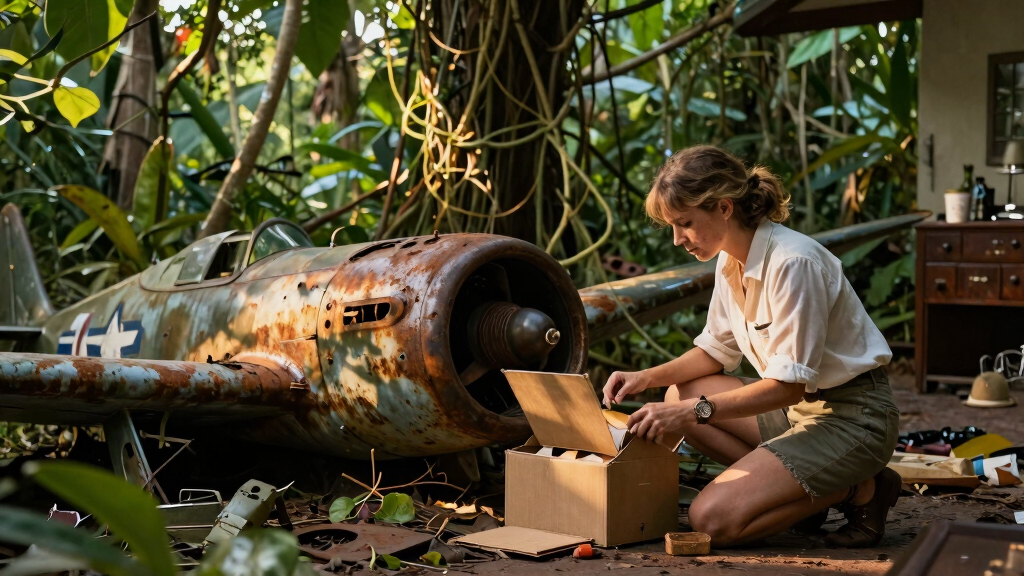
A World War II fighter aircraft believed to belong to America’s top ace, Major John “Jack” Reynolds, has been recovered from the dense jungles of Papua New Guinea. The discovery was announced by a team of archaeologists and military historians on March 24, 2024, marking a significant breakthrough in wartime recovery efforts and historical research.

Get your next haul delivered free with Prime
- Fast, free delivery on millions of items
- Prime Video, Amazon Music and more included
- Member-only deals all year
The aircraft, identified as a P-38 Lightning, was located in a remote area of Papua New Guinea after months of excavation and exploration. The recovery was confirmed by officials from the Pacific War Memorial Foundation, who stated that the wreckage matches descriptions of aircraft flown by Major Reynolds during the Pacific theater in 1944.
According to the foundation, the plane was found largely intact, with some parts buried beneath layers of jungle debris. Efforts to retrieve the wreckage involved a combination of aerial surveys, ground excavation, and local guides familiar with the terrain. The discovery aligns with historical records indicating that Reynolds’ plane went missing during a combat sortie in late 1944.
Historical and Military Significance of the Find
The recovery of Reynolds’ aircraft provides tangible evidence of his service and the broader wartime activities in the Pacific. It offers historians and military experts a rare opportunity to examine a well-preserved aircraft from the era, potentially shedding light on the technology, combat tactics, and conditions faced by Allied pilots in the Pacific theater.
Reynolds, regarded as America’s top ace with 27 confirmed kills, has been a legendary figure among WWII aviation enthusiasts. Confirming his aircraft’s location helps authenticate stories of his heroism and the intense aerial battles fought over Papua New Guinea.
Products Worth Considering

Fitbit Charge 6 Fitness Tracker Bundle – Black/Obsidian

Therabody WaveDuo Contoured Vibrating Back and Neck Roller

Therabody WaveRoller Vibrating Foam Roller
As an affiliate, we earn on qualifying purchases.
Historical Context of WWII Aviation in Papua New Guinea
During World War II, Papua New Guinea was a major battleground in the Pacific theater, with numerous air battles involving Allied and Japanese forces. The region’s dense jungles and rugged terrain made recovery efforts difficult, and many aircraft lost in combat remain undiscovered to this day.
Major Reynolds’ aircraft was reported missing during a raid in late 1944, and for decades, its fate remained uncertain amid speculation and local legends. Previous attempts to locate the plane had been unsuccessful, making this recent discovery particularly significant for historians and military archives.
“This discovery confirms longstanding rumors and provides a unique opportunity to study a wartime aircraft in its original context.”
— Dr. Emily Carter, lead archaeologist
Remaining Questions About the Aircraft’s History
While the wreckage is believed to be Reynolds’ plane, definitive identification requires further analysis, including serial number verification and forensic examination. It is not yet confirmed whether the aircraft is entirely intact or if parts have been damaged or removed over time.
Additionally, the exact circumstances of its crash and the fate of Reynolds during that mission remain under investigation.
Next Steps in Recovery and Research Efforts
The recovered aircraft will undergo detailed forensic analysis at a military preservation facility. Researchers aim to confirm its identity conclusively and study its construction and damage patterns. Plans are also underway to preserve the site and possibly display the aircraft in a museum dedicated to WWII history.
Further expeditions are expected to explore nearby areas for additional artifacts or wreckage linked to the same campaign.
Key Questions
How was the aircraft identified as belonging to Major Reynolds?
The identification is based on serial number matches, historical records, and the location where it was found, which aligns with Reynolds’ last known mission.
Why is this discovery important for WWII history?
It provides concrete physical evidence of wartime events, helps verify historical accounts, and offers educational opportunities through preservation and display.
Will the aircraft be restored or displayed publicly?
Plans are in development to preserve the wreckage, with potential display in a museum dedicated to WWII aviation history, pending further analysis and conservation efforts.
Are there risks associated with excavating jungle wreckage?
Yes, jungle terrain can be hazardous, and preservation of fragile artifacts requires careful handling and environmental considerations to prevent further damage.
Source: primary