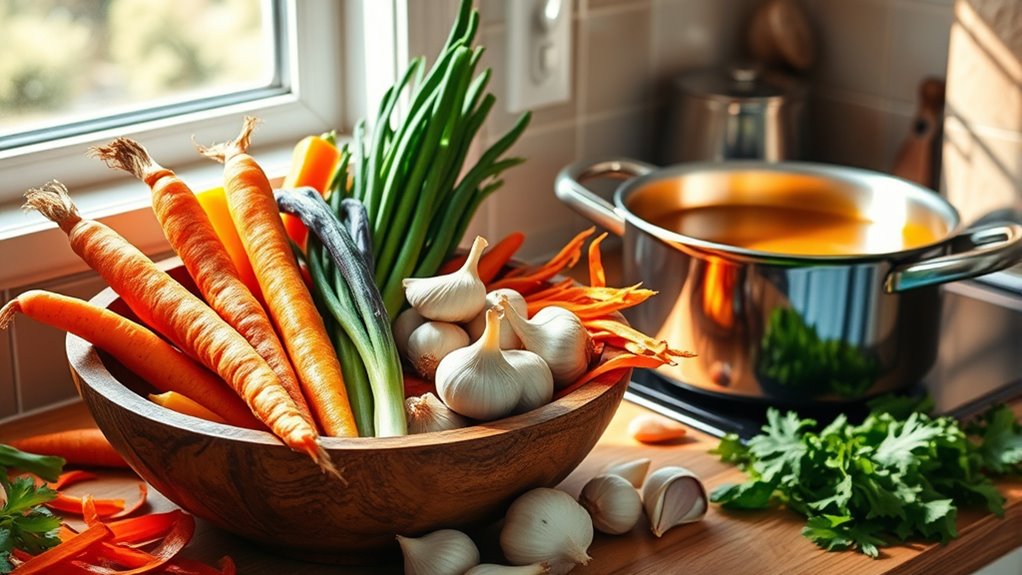

Zero-waste cooking helps you make the most of every ingredient, cutting down food waste and enhancing creativity. You can use vegetable peels to create stock or transform fruit scraps into jams and infused waters. Meal planning lets you utilize leftovers efficiently, turning them into versatile dishes, while pantry staples can add flavor depth. Every bit counts, and even scraps can contribute to delicious meals. Keep going to discover more tips on turning your kitchen into a zero-waste haven!
Key Takeaways
- Embrace vegetable peels and scraps to create homemade stocks, enhancing flavor while minimizing waste.
- Transform fruit scraps into jams or infused waters for delicious and sustainable uses.
- Plan weekly meals to diversify ingredient use and prevent purchasing excess food.
- Repurpose aging ingredients in smoothies or sautéed dishes to maximize their potential.
- Compost unusable scraps to enrich soil and reduce landfill contributions, completing the zero-waste cycle.

When you embrace zero-waste cooking, you’re not just reducing food waste; you’re also transforming your approach to meal preparation. You’ll find that using every ingredient in your kitchen not only benefits the environment but also sparks creativity in your cooking. Instead of tossing scraps, you’ll learn how to repurpose them, making your meals more nutritious and flavorful.
Embracing zero-waste cooking transforms meal prep, fuels creativity, and turns scraps into nutritious, flavorful dishes.
Start by looking at the parts of fruits and vegetables you typically discard. For instance, vegetable peels can be turned into homemade stock. Just toss them into a pot with water, simmer, and strain. You’ll create a rich, flavorful base for soups and sauces, all while utilizing what you’d normally throw away. Similarly, fruit scraps can be transformed into delicious jams or infused waters. It’s all about finding ways to make the most of what you have.
Another key aspect of zero-waste cooking is meal planning. When you plan your meals, you’re less likely to buy excess food that might go bad. Take a moment to map out a week’s worth of meals, ensuring you’re using ingredients in multiple ways. If you roast a chicken, for instance, you can use the leftovers in sandwiches, salads, or even in a stir-fry. This not only saves money but also reduces the chance of waste.
Be mindful of expiration dates and use your senses to assess freshness. If something’s nearing its end, prioritize it in your meals. If you’ve got wilting greens, toss them into a smoothie or sauté them with garlic as a side dish. You’ll find that getting creative with aging ingredients can lead to surprising and delightful meals.
Condiments and pantry staples can also contribute to zero-waste cooking. Don’t let that half-empty jar of mustard or a leftover can of beans sit idly in your fridge. Use them in dressings, marinades, or even as flavor boosters in various dishes. By incorporating these items into your meals, you’ll ensure nothing goes to waste while adding depth to your cooking.
Finally, consider composting what you can’t use. This isn’t a direct part of cooking, but it completes the zero-waste cycle. Composting not only reduces landfill waste but also enriches your garden soil. It’s a small step that can make a big difference. Additionally, using organic farming methods can enhance your kitchen’s sustainability by ensuring that the ingredients you use come from healthy, well-cared-for sources.
Frequently Asked Questions
What Are the Best Storage Methods for Leftover Ingredients?
The best storage methods for leftover ingredients include airtight containers, freezer bags, and glass jars. You should label everything with dates to keep track of freshness. For herbs, consider wrapping them in a damp paper towel before placing them in a plastic bag. Vegetables can be stored in breathable produce bags to maintain crispness. Always remember to cool leftovers before refrigerating to prevent condensation and spoilage. This way, you’ll maximize their lifespan.
How Can I Repurpose Vegetable Scraps Creatively?
You can repurpose vegetable scraps creatively by making stock from peels and stems, blending vegetable tops into pesto, or roasting carrot greens for a tasty garnish. Try dehydrating onion skins to add flavor to dishes or using leftover celery leaves in salads. You can even create a delicious vegetable fritter with scraps or add them to smoothies for extra nutrients. Don’t forget about composting any inedible parts to enrich your garden soil!
Are There Specific Tools for Zero-Waste Cooking?
You don’t need a lot of fancy gadgets to embrace zero-waste cooking; just a few thoughtful tools can make a world of difference. A sturdy vegetable peeler and a good knife help you maximize every inch of your produce. A compost bin is essential for scraps, while reusable containers keep your leftovers fresh. Don’t forget a blender for smoothies and soups; it turns your kitchen remnants into something delightful. Happy cooking!
What Are Common Mistakes in Zero-Waste Cooking?
Common mistakes in zero-waste cooking include not planning meals properly, which leads to food spoilage. You might also overlook using scraps or leftover ingredients creatively. Ignoring storage methods can result in waste, too. Additionally, buying too much food can overwhelm you, causing items to go unused. Finally, not educating yourself about what’s truly compostable can hinder your efforts. By avoiding these pitfalls, you’ll make a bigger impact on reducing waste.
How Do I Start a Compost System at Home?
Did you know that about 30% of the food supply in the U.S. is wasted? To start a compost system at home, choose a designated spot outdoors. Gather kitchen scraps like fruit peels, coffee grounds, and eggshells, along with yard waste like grass clippings and leaves. Mix them in a compost bin or pile. Turn it regularly to aerate, and in a few months, you’ll have nutrient-rich compost for your garden!
Conclusion
Embracing zero-waste cooking is like dancing with your ingredients, turning scraps into culinary treasures. By creatively using every part of your food, you’re not just saving the planet; you’re crafting delicious memories. So, next time you chop, think of the symphony of flavors waiting to be born from what you usually toss aside. Let your kitchen be a canvas, and every leftover a brushstroke in your masterpiece of sustainability. Together, we can savor every bite and waste nothing!