
To create a zero waste home, start by using reusable bags and opting for bulk items. Check your pantry and fridge to repurpose food scraps and compost leftovers. Switch to eco-friendly personal care and cleaning products, like bar soaps and homemade solutions. Involve your family in recycling and composting efforts to foster a collective commitment. Every small change counts toward reducing waste. Keep exploring to learn more sustainable practices for your home and lifestyle.
Key Takeaways
- Bring reusable bags and opt for bulk items to minimize packaging waste and reduce single-use plastics during shopping trips.
- Assess pantry and fridge regularly to repurpose older food items, and compost scraps to enrich soil and reduce landfill waste.
- Switch to reusable personal care items and choose products with minimal or compostable packaging, like bar soaps and shampoo bars.
- Make eco-friendly cleaning solutions using simple ingredients to avoid harmful chemicals and reduce plastic waste from commercial products.
- Educate and involve family members in recycling and composting efforts to foster a shared commitment to a zero waste lifestyle.
Embracing a zero waste home can transform your lifestyle and positively impact the environment. It’s not just about reducing trash; it’s about rethinking how you consume and live. You can start small, making incremental changes that lead to a significant reduction in waste. Each decision you make contributes to a healthier planet and a more mindful way of living.
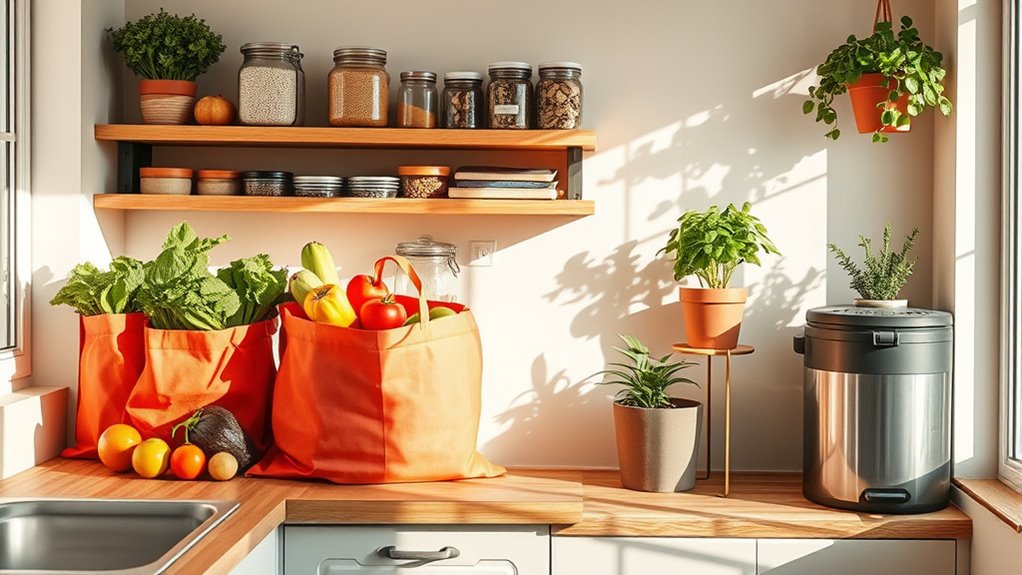
Begin with your shopping habits. When you head to the grocery store, bring reusable bags along. Opt for bulk items, which often come without packaging, and choose products that use minimal or compostable materials. If you’re buying fresh produce, skip the plastic bags and place fruits and veggies directly in your cart. You’ll find that many stores offer bulk bins for grains, nuts, and spices, giving you the chance to buy exactly what you need without excess packaging.
Transform your shopping habits by bringing reusable bags and choosing bulk items to minimize waste and embrace sustainability.
Next, evaluate what you already have at home. Take a look through your pantry and fridge. Do you have items that you could repurpose or use creatively? For instance, older vegetables can be turned into soups or stir-fries. You might even consider composting food scraps instead of tossing them in the trash. Composting not only reduces waste but also enriches your garden soil if you have one. Recognizing spiritual guidance in your choices can enhance your journey toward a zero waste lifestyle.
You can also make a significant impact by focusing on personal care products. Switch to reusable items instead of disposable ones. Think about using cloth napkins instead of paper towels, and reusable razors instead of disposable ones. Your bathroom can become a hub for sustainable choices by choosing bar soaps, shampoo bars, and refillable containers.
When it comes to cleaning, you don’t need to buy a plethora of chemical-laden products. You can make effective cleaners with simple ingredients like vinegar, baking soda, and essential oils. These solutions are not only eco-friendly but often safer for your family.
Finally, get your family involved. Educate them about the benefits of living a zero waste lifestyle. Involve them in the process, whether it’s sorting recyclables or setting up a compost bin. When everyone participates, it becomes easier and more enjoyable.
Frequently Asked Questions
How Do I Start a Zero Waste Lifestyle?
To start a zero waste lifestyle, begin by evaluating your current habits. Identify items you can replace or reduce, like single-use plastics. Shop with reusable bags and containers, and choose bulk items when possible. Focus on composting food scraps and recycling properly. Gradually incorporate sustainable products, like cloth napkins and glass containers. Engage with local zero waste communities for support and ideas. Remember, it’s a journey, so take it one step at a time!
What Are the Best Composting Methods for Beginners?
Composting can create a fantastic foundation for your garden! For beginners, start with a simple bin or pile method, layering greens (like fruit scraps) and browns (like dry leaves). Keep it moist, but not soggy, and turn it weekly for aeration. Bokashi composting is another beginner-friendly option; it ferments kitchen waste, making it odorless and quick. Whichever method you choose, you’ll transform waste into wonderful, nutrient-rich soil for your plants!
Can I Still Use Disposable Items Occasionally?
Yes, you can still use disposable items occasionally. Life happens, and sometimes convenience trumps perfection. If you find yourself in a situation where disposables make sense, don’t beat yourself up. Just try to balance it out by making more eco-friendly choices in other areas. Remember, every small effort counts, and it’s about progress, not perfection. Focus on reducing your overall waste, and you’ll still be making a positive impact.
How Do I Handle Food Waste in a Zero Waste Home?
You handle food waste by composting, but there’s more to it. Picture a vibrant garden thriving on your scraps. Start by keeping a container for vegetable peels and fruit cores. When it’s full, toss it into your compost pile or bin. You can also freeze scraps until you’re ready to compost. Additionally, get creative with leftovers—transform them into new meals instead of letting them go to waste. Your effort will nourish both your garden and the planet.
Are There Zero Waste Alternatives for Personal Care Products?
Yes, there are plenty of zero waste alternatives for personal care products! You can switch to bar soap instead of liquid soap, choose a bamboo toothbrush, and use reusable cotton rounds for makeup removal. Consider solid shampoo and conditioner bars to reduce plastic waste. Look for refillable containers for lotions and creams, or make your own using natural ingredients. These eco-friendly options help you maintain your routine while minimizing your environmental impact.
Conclusion
By adopting a zero waste lifestyle, you can markedly reduce your household waste and make a positive impact on the planet. Did you know that the average person generates about 4.4 pounds of trash each day? That’s nearly 1,600 pounds a year! By implementing even a few of these tips, you can contribute to a cleaner environment and inspire others to follow suit. Every small change adds up, so start today and watch your waste diminish!