To size an air compressor for your garage, focus on matching its tank capacity and motor power to the tools you use. For continuous tasks or larger tools, choose a larger tank and higher horsepower. For lighter, sporadic jobs, smaller tanks and lower power may suffice. Proper sizing guarantees efficient operation, longer equipment life, and cost savings. Want to understand how to pick the perfect compressor for your projects? Keep exploring to learn more.
Key Takeaways
- Match compressor size to the airflow and pressure needs of your tools and projects.
- Choose a tank capacity that supports continuous use without frequent refilling.
- Select motor power based on the demand of your most frequent or largest tools.
- Ensure compressor specs align with the airflow and pressure ratings of your garage tools.
- Consider duty cycle, maintenance, and efficiency factors to prolong equipment lifespan and performance.
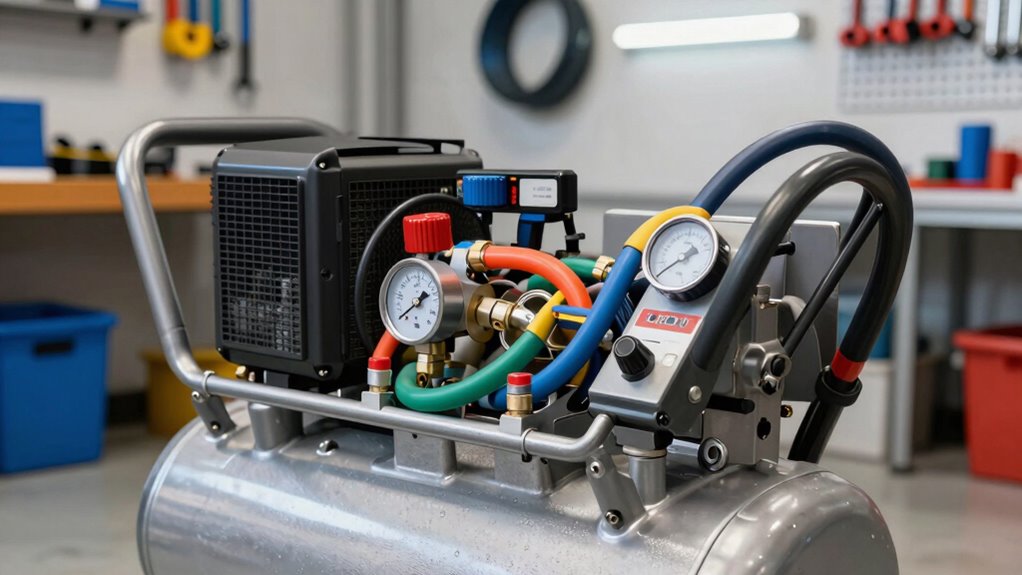
Choosing the right air compressor size is essential to guarantee efficient operation and prevent equipment issues. When you’re setting up a compressor for your garage, understanding how tank capacity and motor power work together will make a big difference in your projects’ success. The tank capacity determines how much compressed air you can store at once, affecting how long you can run tools without waiting for the compressor to catch up. If your tasks require continuous airflow, a larger tank will provide a steady supply, reducing the frequency of cycles and giving you more consistent power. Conversely, if you mainly use small tools sporadically, a smaller tank might suffice, saving space and cost.
Choosing the right compressor size ensures efficient operation and longer equipment lifespan.
Motor power is equally important because it directly impacts how quickly your compressor can build up pressure and how well it maintains that pressure under load. A more powerful motor can fill the tank faster, which means less downtime between uses, especially if you’re working on larger projects or multiple tools. But keep in mind, a higher motor power typically comes with increased energy consumption and size. So, balancing motor power with your actual needs is key. If you overestimate and choose a motor that’s much stronger than necessary, you may end up with a bulky, inefficient setup. On the other hand, a motor that’s too weak might struggle to keep up with your workload, leading to longer wait times and frustration.
In practical terms, think about the tools you plan to use. For example, a framing nailer or impact wrench usually demands higher airflow and pressure, so you’d want a compressor with a larger tank and a motor with enough power to handle those demands. Smaller, intermittent tasks like inflating tires or powering airbrushes don’t require as much capacity or power. When sizing your compressor, consider both tank capacity and motor power as a system—an adequately sized tank paired with a suitable motor ensures you get reliable performance and extend the lifespan of your equipment. Additionally, understanding airflow requirements helps in selecting the most appropriate compressor for your needs. Ensuring the compressor’s pressure ratings align with your tools is crucial for optimal performance.
Furthermore, paying attention to compressor duty cycle can help prevent overheating and ensure consistent performance during prolonged use. Regularly monitoring the duty cycle can also help you make adjustments to avoid unnecessary wear. A properly matched compressor system can significantly improve efficiency and reduce operational costs over time. Also, considering air compressor maintenance can prolong the lifespan of your equipment and maintain peak performance. Finally, don’t forget that other factors, such as compressor duty cycle and pressure ratings, also influence performance. But starting with a good understanding of tank capacity and motor power sets a solid foundation for choosing a compressor that fits your garage needs. By matching these specs to your typical projects, you’ll avoid unnecessary wear, save energy, and keep your work flowing smoothly.

DEWALT Pancake Air Compressor, 6 Gallon, 165 PSI (DWFP55126)
- Maximum PSI: 165 PSI for powerful performance
- Tank Capacity: 6-gallon tank for extended use
- Air Flow Rate: 2.6 SCFM at 90 PSI
As an affiliate, we earn on qualifying purchases.
As an affiliate, we earn on qualifying purchases.
Frequently Asked Questions
How Does Humidity Affect Air Compressor Performance?
Humidity effects can diminish your air compressor’s efficiency because moisture in the air can lead to condensation inside the tank and lines. This moisture can cause rust and corrosion, damaging components over time. To maintain peak performance, you should use a moisture trap or desiccant filter. By controlling humidity, you guarantee your compressor runs smoothly, preventing issues caused by excess moisture and improving overall compressor efficiency.
Can I Upgrade My Compressor Later if Needed?
Yes, you can upgrade your compressor later if needed. Did you know that about 70% of garage users find their initial compressor capacity becomes insufficient over time? Most compressors offer upgrade options, allowing you to increase capacity or efficiency as your needs grow. Just make certain your current setup can support a larger unit or additional features, making future upgrades smoother and more cost-effective.
What Safety Precautions Should I Follow During Installation?
During installation, you should prioritize safety precautions like proper electrical grounding to prevent shocks and guarantee stable operation. Always follow installation safety guidelines, such as wearing protective gear and working in a well-ventilated area. Double-check that all electrical connections are secure and compliant with local codes. If you’re unsure, consult a professional. These steps help protect you and guarantee your compressor operates safely and efficiently.
How Often Should I Service My Air Compressor?
You should service your air compressor every 3 to 6 months, depending on usage. Think of it as giving your machine a tune-up to keep it humming smoothly. Regular maintenance schedules help prevent breakdowns and extend your compressor’s lifespan. Check and change oil, clean or replace filters, and inspect hoses. Staying on top of these tasks guarantees your compressor runs efficiently and lasts longer, saving you money in the long run.
Are There Eco-Friendly Air Compressor Options Available?
Yes, eco-friendly alternatives and low-energy compressors are available for your garage. These compressors use energy-efficient motors and advanced technologies to reduce power consumption, helping you save on electricity bills and lower your environmental impact. Look for models with ENERGY STAR ratings or those that incorporate innovative designs like variable speed drives. Choosing a low-energy compressor not only benefits the environment but also makes your workspace more sustainable and cost-effective.

Klutch 20-Gallon Air Compressor, 2 HP, 120V, 175 PSI, 4.2 SCFM at 90 PSI
- Reliable 2 HP Motor: Ensures consistent performance and longevity
- Portable 20-Gallon Tank: Easy to transport and store
- Oil-Free Pump: Reduces maintenance needs
As an affiliate, we earn on qualifying purchases.
As an affiliate, we earn on qualifying purchases.
Conclusion
Now that you understand the basics of air compressor sizing, you’re better equipped to choose the right tool for your garage. By considering your needs, understanding your tools, and balancing capacity with efficiency, you’ll guarantee smooth operation and long-lasting performance. Remember, sizing isn’t just about power, but about matching your compressor to your projects. From simple tasks to demanding jobs, making the right choice keeps your garage running seamlessly, efficiently, and confidently.
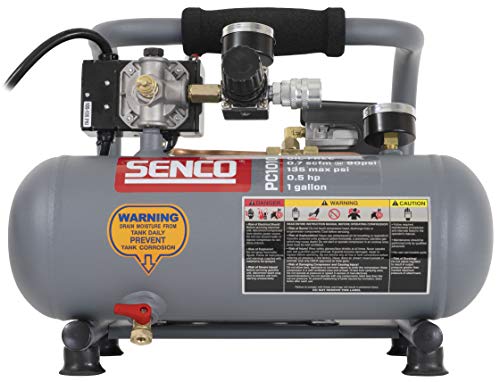
SENCO Air Compressor 1/2-Horsepower, 1-Gallon, 20 lbs. (PC1010)
- Power Source: Suitable for pneumatic tools and household use
- Performance: Delivers 20-44 drives per minute at 1 HP peak
- Portability: Compact, lightweight, easy to carry
As an affiliate, we earn on qualifying purchases.
As an affiliate, we earn on qualifying purchases.

ECOMAX Air Compressor 6 Gallon 150 PSI Pancake Portable Oil-free Tank with 10 PCS Accessories Kit
- Complete Accessories Kit: Includes hoses, gauges, and nozzles
- High PSI and Capacity: 150 PSI with 6-gallon tank for efficiency
- Lightweight and Portable: Weighs 34.17 pounds with flip-up handle
As an affiliate, we earn on qualifying purchases.
As an affiliate, we earn on qualifying purchases.