

To keep your infant safe, avoid common car seat fit mistakes like loosening the harness or failing to check it before each trip. Make certain the harness is snug enough to prevent excessive movement but not so tight it causes discomfort. Confirm the chest clip is at armpit level and straps are positioned correctly at or below the shoulders for rear-facing seats. Staying aware of these details helps prevent dangerous misfits—if you continue, you’ll discover more essential adjustments for maximum safety.

Get your next haul delivered free with Prime
- Fast, free delivery on millions of items
- Prime Video, Amazon Music and more included
- Member-only deals all year
Key Takeaways
- Leaving harness straps too loose, compromising the child’s restraint during a collision.
- Incorrectly positioning the harness at or above the shoulders, reducing protection.
- Failing to keep the chest clip at armpit level, decreasing impact absorption.
- Not adjusting the harness as the baby grows, resulting in an improper fit.
- Ignoring the need for regular checks to ensure harness tightness before each trip.
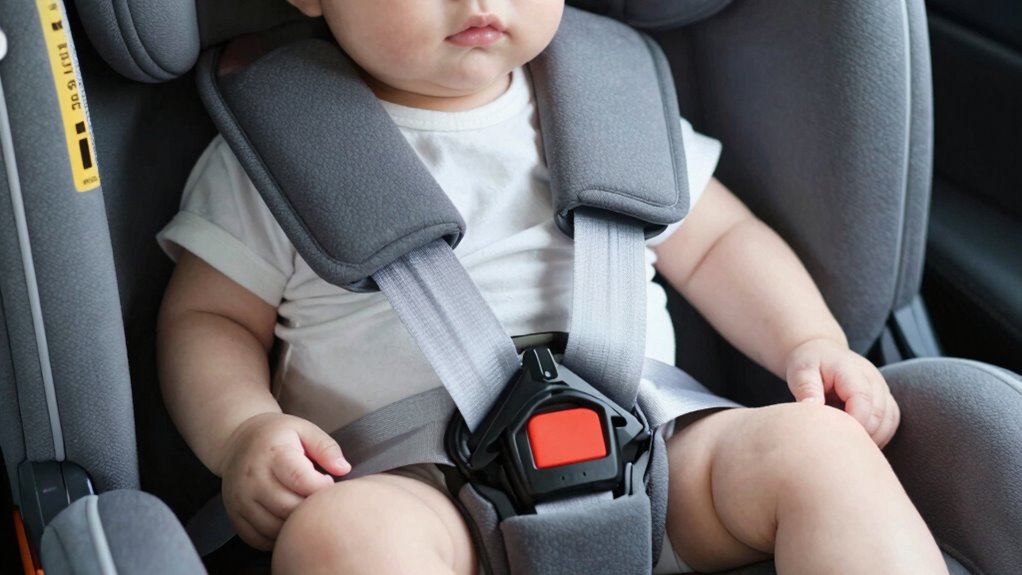
Ensuring your infant’s car seat fits properly is essential for their safety, yet many parents unknowingly make common mistakes that can compromise protection. One of the most critical areas to focus on is secure installation. If the car seat isn’t installed correctly, even the best harness system won’t keep your baby safe during a crash. Before every trip, double-check that the seat is tightly secured to your vehicle, with minimal movement side to side or front to back. Many parents overlook this step or assume it’s secure enough when it’s not. Use the vehicle’s seat belt or lower anchors, depending on your seat’s instructions, and verify they’re tightly fastened. A loose installation can cause the seat to shift dangerously during sudden stops or crashes, putting your infant at risk. Regularly inspect the installation to ensure ongoing safety, especially if the seat has been moved or adjusted. It’s also helpful to periodically review installation techniques to stay updated with the latest safety standards. Additionally, keeping up with safety recommendations can help you identify potential issues early and maintain optimal protection for your child. Staying informed about current safety standards can further improve your understanding of proper installation practices.
In addition, harness adjustment is equally important. The harness should be snug enough that you cannot pinch any excess webbing at the shoulder. When you place your baby in the seat, make sure the straps are at the correct height—usually at or just below their shoulders for rear-facing seats. Many parents make the mistake of leaving the straps too loose or not adjusting them as their baby grows. A loose harness can allow your infant to move too much during sudden stops, increasing injury risk. Conversely, a harness that is too tight can cause discomfort and restrict movement. It’s essential to find a balance where the harness fits snugly but comfortably. Proper harness adjustment also means ensuring the chest clip is positioned at armpit level. Many parents forget to check this, which can compromise the harness’s effectiveness in a crash. Being aware of proper seat installation and harness adjustment techniques can help prevent these common mistakes before they happen.
Products Worth Considering

BowFlex Results Series SelectTech 552 Adjustable Dumbbell

Bowflex SelectTech 840 Adjustable Kettlebell

Hyperice Normatec Elite Wireless Compression Boots Recovery – Standard Size
As an affiliate, we earn on qualifying purchases.
Frequently Asked Questions
How Often Should I Check My Infant Car Seat’s Fit?
You should check your infant car seat’s fit before every trip and at least once a month. During car seat installation, guarantee straps are snug and the harness is at the correct level. Regularly verifying fit is essential for infant safety tips, as your baby’s growth can affect fit over time. Keep an eye on any signs of wear or looseness, and adjust as needed to maintain maximum safety.
Can a Car Seat Fit Change as My Baby Grows?
Yes, a car seat fit can change as your baby grows. You should regularly check and make necessary car seat adjustments to guarantee a snug, secure fit. Infant growth impacts how the seat fits, so it’s crucial to monitor their size and position. As your baby gains weight and length, you might need to adjust harness straps or reposition the seat to keep them safe and comfortable during every ride.
Are There Specific Signs Indicating a Seat Isn’t Fitting Properly?
You’ll notice signs that indicate a seat isn’t fitting properly, like loose harness straps or seat belt tension issues. The harness should be snug, with no slack, and the straps should lie flat without twisting. Check that the harness is positioned at or below your baby’s shoulders, and confirm the seat belt is tight enough to hold the seat securely. If these signs are present, adjust the harness or seat to guarantee safety.
Does the Type of Vehicle Affect the Car Seat Fit?
Yes, the type of vehicle can affect the car seat fit. Vehicle compatibility varies, and some cars have seats or seat belts that make proper installation challenging. You need to check your vehicle’s seat adjustment options and verify the infant car seat fits securely. Always refer to both your vehicle’s manual and the car seat instructions to optimize safety, making necessary adjustments for a snug, secure fit.
What Tools Can Help Ensure a Proper Fit for My Infant Car Seat?
To guarantee a proper fit for your infant car seat, use installation accessories like angle adjusters or foam wedges to achieve the correct recline and positioning. Also, perform a fit adjustment by tightening the harness straps snugly against your baby’s chest, ensuring there’s no slack. These tools help you secure the seat properly, reducing safety risks and providing peace of mind during every ride. Always follow the manufacturer’s instructions for best results.
Conclusion
By avoiding these common infant car seat fit mistakes, you’re planting seeds of safety that will grow strong and unwavering. Imagine your little one snug and secure, like a precious treasure wrapped in a fortress of protection. Every correct adjustment is a brick in that fortress, shielding your child from harm’s reach. So take the time to guarantee a perfect fit—because their safety is the most beautiful garden you can nurture.