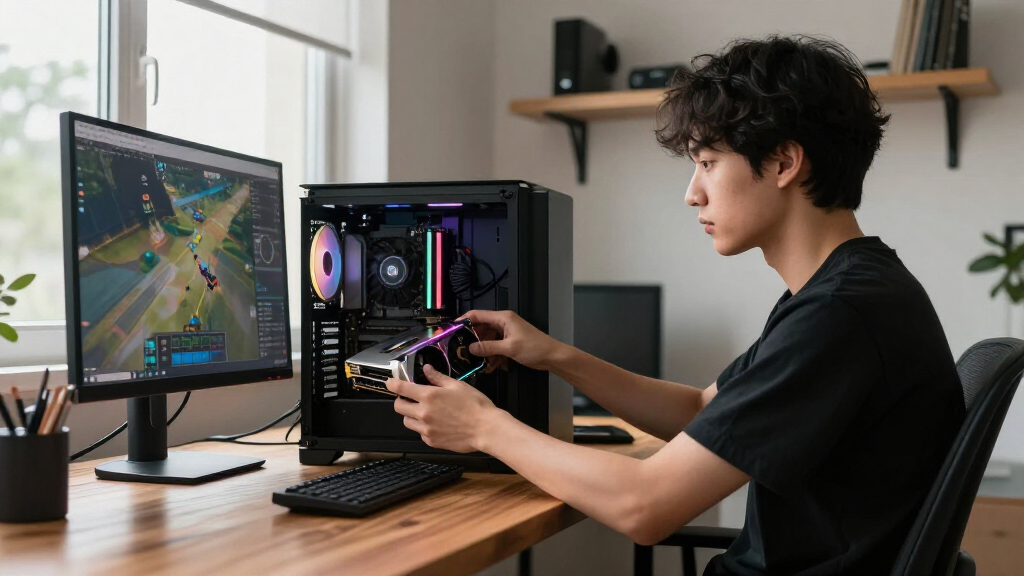

Choosing the best high-end GPU in 2026 means balancing raw performance, feature set, and price. The NVIDIA GeForce RTX 4080 stands out as the top overall pick for its exceptional power and efficiency, while the Gigabyte RTX 5090 Xtreme offers unmatched performance for enthusiasts. However, these high-end cards often come with steep prices and increased power demands, making tradeoffs unavoidable. Whether you’re a gamer, creator, or professional, this guide helps you navigate the options. Continue reading for an in-depth comparison of the best high-end GPUs this year.

Get your next haul delivered free with Prime
- Fast, free delivery on millions of items
- Prime Video, Amazon Music and more included
- Member-only deals all year
Key Takeaways
- The NVIDIA GeForce RTX 4080 offers the best balance of performance and efficiency for most users.
- The Gigabyte RTX 5090 Xtreme pushes the limits but comes with a significantly higher price and power requirement.
- Premium models like the ASUS AORUS and MSI SUPRIM deliver top-tier cooling and build quality, but at premium prices.
- Variants with larger VRAM (like the ASRock RX 7900 XTX 24GB) are better suited for creative and professional workloads.
- Price-to-performance varies widely; the highest-priced options don’t always provide proportional gains.
| ASUS Prime Radeon RX 9070 XT 16GB GDDR6 OC Edition Gaming Graphics Card |  | Best Overall High-End GPU | Graphics Coprocessor: AMD RX9070 | RAM: 16 GB | GPU Clock Speed: 3030 MHz | VIEW LATEST PRICE | See Our Full Breakdown |
| NVIDIA GeForce RTX 4080 16GB GDDR6X Graphics Card |  | Best for Cutting-Edge Ray Tracing and AI Features | Graphics Coprocessor: NVIDIA GeForce RTX 4080 | RAM: 16 GB | GPU Clock Speed: 2.51 GHz | VIEW LATEST PRICE | See Our Full Breakdown |
| GIGABYTE Radeon RX 9070 XT Gaming OC ICE 16G Graphics Card |  | Best for Customization and Visuals | Graphics Coprocessor: RX 9070XT | RAM: 16 GB | GPU Clock Speed: 2520 MHz | VIEW LATEST PRICE | See Our Full Breakdown |
| GIGABYTE GeForce RTX 5080 Gaming OC 16G Graphics Card |  | Best for Next-Gen NVIDIA Architecture | Architecture: NVIDIA Blackwell | Memory: 16GB GDDR7 | Memory Interface: 256-bit | VIEW LATEST PRICE | See Our Full Breakdown |
| NVIDIA GeForce RTX 5080 Founders Edition |  | Best for Premium NVIDIA Experience | Graphics Coprocessor: NVIDIA GeForce RTX 5080 | RAM: 16 GB | GPU Clock Speed: 2806 MHz | VIEW LATEST PRICE | See Our Full Breakdown |
| Sapphire Pulse AMD Radeon RX 9070 XT Gaming Graphics Card with 16GB GDDR6, AMD RDNA 4 |  | Best Overall High-End GPU | Memory Size: 16 GB | Memory Interface: 256-bit | GPU Clock Speed: 2970 MHz | VIEW LATEST PRICE | See Our Full Breakdown |
| ASRock Radeon RX 7900 XTX Phantom Gaming 24GB OC Graphics Card |  | Best for 4K Gaming & Content Creation | Graphics Coprocessor: AMD Radeon RX 7900 XTX | Memory: 24 GB GDDR6 | GPU Clock Speed: 2615 MHz | VIEW LATEST PRICE | See Our Full Breakdown |
| ASUS TUF Gaming GeForce RTX 5070 12GB GDDR7 OC Edition Graphics Card |  | Best for Demanding Gaming & Professional Use | Graphics Coprocessor: NVIDIA GeForce RTX 5070 | RAM: 12 GB | GPU Clock Speed: 2640 MHz | VIEW LATEST PRICE | See Our Full Breakdown |
| Gigabyte AORUS GeForce RTX 5090 Xtreme WATERFORCE 32G Graphics Card |  | Best for Extreme Performance & Gaming Enthusiasts | Graphics Coprocessor: NVIDIA GeForce RTX 5090 | RAM: 32 GB | GPU Clock Speed: 2655 MHz | VIEW LATEST PRICE | See Our Full Breakdown |
| ASUS TUF Gaming GeForce RTX 5080 16GB GDDR7 OC Edition Graphics Card |  | Best High-End Card for Durability and Power | Graphics Coprocessor: NVIDIA GeForce RTX 5080 | RAM: 16 GB | GPU Clock Speed: 2730 MHz | VIEW LATEST PRICE | See Our Full Breakdown |
| MSI Gaming RTX 5080 16G SUPRIM Liquid SOC Graphics Card |  | Best for Extreme Cooling and High-Resolution Gaming | Chipset: NVIDIA GeForce RTX 5080 | Video Memory: 16 GB GDDR7 | Memory Interface: 256-bit | VIEW LATEST PRICE | See Our Full Breakdown |
| high-end GPU | GPU Clock Speed | Video Output Interface | Graphics RAM Type | Graphics Coprocessor |
|---|---|---|---|---|
| ASUS Prime Radeon RX 9070 XT 1 | 3030 MHz | DisplayPort 2.1a x 3, HDMI 2.1b | GDDR6 | AMD RX9070 |
| NVIDIA GeForce RTX 4080 16GB G | 2.51 GHz | DisplayPort, HDMI | GDDR6X | NVIDIA GeForce RTX 4080 |
| GIGABYTE Radeon RX 9070 XT Gam | 2520 MHz | DisplayPort, HDMI | GDDR6 | RX 9070XT |
| GIGABYTE GeForce RTX 5080 Gami | — | — | — | — |
| NVIDIA GeForce RTX 5080 Founde | 2806 MHz | HDMI, DisplayPort | GDDR7 | NVIDIA GeForce RTX 5080 |
| Sapphire Pulse AMD Radeon RX 9 | 2970 MHz | 2 x HDMI, 2 x DisplayPort | GDDR6 | — |
| ASRock Radeon RX 7900 XTX Phan | 2615 MHz | DisplayPort 2.1, HDMI 2.1 | GDDR6 | AMD Radeon RX 7900 XTX |
| ASUS TUF Gaming GeForce RTX 50 | 2640 MHz | DisplayPort 2.1a x3, HDMI 2.1b x2 | GDDR7 | NVIDIA GeForce RTX 5070 |
| Gigabyte AORUS GeForce RTX 509 | 2655 MHz | DisplayPort | GDDR7 | NVIDIA GeForce RTX 5090 |
| ASUS TUF Gaming GeForce RTX 50 | 2730 MHz | DisplayPort 2.1a x3, HDMI 2.1b x2 | GDDR7 | NVIDIA GeForce RTX 5080 |
| MSI Gaming RTX 5080 16G SUPRIM | 2745 MHz | — | — | — |
More Details on Our Top Picks
ASUS Prime Radeon RX 9070 XT 16GB GDDR6 OC Edition Gaming Graphics Card
The ASUS Prime Radeon RX 9070 XT OC Edition stands out for its impressive 16GB GDDR6 memory and a boost clock reaching 3030 MHz, making it highly capable for demanding gaming and creative workflows. Its advanced cooling system with axial-tech fans and dual-ball bearings enhances durability, while support for PCIe 5.0 and DisplayPort 2.1 ensures future-proof connectivity. Compared with the NVIDIA GeForce RTX 4080, it offers equally high performance but may demand more power and space due to its larger size. This GPU balances raw power with features that appeal to enthusiasts who want top-tier performance without compromise. The main tradeoff is its size, which could limit compatibility in smaller cases, and its high power consumption requiring a robust power supply.
Pros:- High-performance GPU with a boost clock up to 3030 MHz
- Advanced cooling system for thermal stability and longevity
- Supports PCIe 5.0 and HDMI 2.1b for modern connectivity
- Dual BIOS profiles for performance tuning or quiet operation
Cons:- Large 2.5-slot design may not fit in smaller cases
- High power consumption requires a robust power supply
- Price is not listed, but likely premium
Best for: High-end gamers and creative professionals seeking flagship performance in a single GPU
Not ideal for: Users with small case builds or limited power supplies, due to its large form factor and high power draw
- Graphics Coprocessor:AMD RX9070
- RAM:16 GB
- GPU Clock Speed:3030 MHz
- Video Output Interface:DisplayPort 2.1a x 3, HDMI 2.1b
- Graphics RAM Type:GDDR6
- Compatible Devices:Desktop
- Interface:PCI-Express x16
- Maximum Resolution:7680 x 4320
- Item Dimensions:12.3″L x 5.1″W
Our verdict“Best suited for enthusiasts who prioritize top-tier performance and can accommodate its size and power requirements.”
NVIDIA GeForce RTX 4080 16GB GDDR6X Graphics Card
The NVIDIA GeForce RTX 4080 offers a compelling mix of 16GB GDDR6X memory and a boost clock of 2.51 GHz, making it ideal for high-fidelity gaming and professional rendering. Its support for PCIe 4.0 ensures fast data transfer, while dedicated ray tracing cores and DLSS 3 support deliver superior visual realism. When compared to the ASUS RX 9070 XT, the RTX 4080 shines in ray tracing and AI-driven features but tends to be more expensive and demands a high-power system. This card is better suited for gamers and creators who want the latest graphical features and are willing to pay a premium. Its size and power requirements may be restrictive for smaller builds, and its price can be prohibitive for casual users.
Pros:- 16GB GDDR6X memory for demanding workloads
- Supports PCIe 4.0 for quick data transfer
- Dedicated ray tracing cores for realistic graphics
- Compatible with DirectX 12 Ultimate
Cons:- Requires a high-capacity power supply
- Expensive relative to some competitors
- Large size may limit compatibility
Best for: Gamers and creative professionals prioritizing ray tracing and AI enhancements
Not ideal for: Budget-conscious users or those with smaller cases, due to its size and high cost
- Graphics Coprocessor:NVIDIA GeForce RTX 4080
- RAM:16 GB
- GPU Clock Speed:2.51 GHz
- Video Output Interface:DisplayPort, HDMI
- Graphics RAM Type:GDDR6X
- Compatible Devices:Desktop
Our verdict“Ideal for enthusiasts who want cutting-edge graphics features and are prepared for the associated investment and system requirements.”
GIGABYTE Radeon RX 9070 XT Gaming OC ICE 16G Graphics Card
The GIGABYTE Radeon RX 9070 XT Gaming OC ICE makes this list for its combination of 16GB GDDR6 memory and a core clock of 2520 MHz, delivering solid performance for gaming and content creation. Its WINDFORCE cooling system ensures thermal stability under load, and the customizable RGB lighting adds aesthetic appeal. Compared with the ASUS RX 9070 XT, it emphasizes aesthetics and cooling performance but may have similar size and power requirements. This pick is perfect for users who want a balance of performance and visual customization, especially in larger cases. The main tradeoffs include potential high power consumption and a premium price, which might be a concern for budget-focused buyers.
Pros:- Strong 16GB GDDR6 memory for high-quality visuals
- WINDFORCE cooling for thermal efficiency
- Customizable RGB lighting for personalized aesthetics
- Supports PCIe 5.0 and DisplayPort 2.1
Cons:- Likely high power consumption due to performance levels
- Size may require a spacious case
- Premium price point
Best for: Gaming enthusiasts who want high performance with aesthetic customization
Not ideal for: Small case owners or users seeking the most cost-effective option
- Graphics Coprocessor:RX 9070XT
- RAM:16 GB
- GPU Clock Speed:2520 MHz
- Video Output Interface:DisplayPort, HDMI
- Graphics RAM Type:GDDR6
- Compatible Devices:Desktop
Our verdict“A strong choice for gamers who want performance combined with visual flair and cooling efficiency.”
GIGABYTE GeForce RTX 5080 Gaming OC 16G Graphics Card
The GIGABYTE GeForce RTX 5080 Gaming OC leverages NVIDIA’s Blackwell architecture with 16GB GDDR7 memory and PCIe 5.0 support, promising exceptional performance for both gaming and professional tasks. The inclusion of DLSS 4 and the WINDFORCE cooling system ensures high frame rates and thermal stability. Compared with the RTX 4080, this card features the latest GDDR7 memory and a more advanced architecture, which translates into better future-proofing and performance potential. However, this level of power and technology comes with a significant price tag and high power demands. It suits users who want the absolute latest in NVIDIA’s tech and are prepared for the associated costs and system requirements.
Pros:- NVIDIA Blackwell architecture for top-tier performance
- Large 16GB GDDR7 memory for demanding applications
- DLSS 4 support for enhanced frame rates
- Supports PCIe 5.0 and advanced cooling
Cons:- High power consumption and cost
- Large physical size may restrict compatibility
- Premium price may be out of reach for some
Best for: Tech enthusiasts and high-end gamers who want cutting-edge NVIDIA performance
Not ideal for: Budget gamers or those with limited case space, due to size and cost
- Architecture:NVIDIA Blackwell
- Memory:16GB GDDR7
- Memory Interface:256-bit
- PCIe Version:PCIe 5.0
- Cooling System:WINDFORCE
Our verdict“Best suited for early adopters and power users wanting the latest NVIDIA tech and high performance.”
NVIDIA GeForce RTX 5080 Founders Edition
The NVIDIA GeForce RTX 5080 Founders Edition combines high-end specs with a sleek design, featuring 16GB GDDR7 memory and a GPU clock speed of 2806 MHz. Its support for full ray tracing, DLSS 4, and AI enhancements makes it a top pick for demanding gaming and creative workflows. Compared to the GIGABYTE RTX 5080, this edition offers a refined, minimalist aesthetic and NVIDIA’s own design polish, but it may come at a slightly higher price. This card is ideal for users who want a premium NVIDIA experience with a focus on both performance and style. The main tradeoffs are its cost and the need for a compatible high-performance system, along with its weight and size.
Pros:- Powerful GPU with 2806 MHz clock speed
- Supports full ray tracing and DLSS 4 for visual fidelity
- Large 16GB GDDR7 memory for intensive tasks
- Elegant design with multiple display outputs
Cons:- High cost compared to other high-end GPUs
- Requires a high-performance system
- Large and heavy design
Best for: Loyalists and demanding users seeking a high-performance, visually refined NVIDIA GPU
Not ideal for: Those on a strict budget or building in small cases, due to size and cost
- Graphics Coprocessor:NVIDIA GeForce RTX 5080
- RAM:16 GB
- GPU Clock Speed:2806 MHz
- Video Output Interface:HDMI, DisplayPort
- Graphics RAM Type:GDDR7
- Compatible Devices:Desktop
- Interface:PCI Express 4.0
- Display Maximum Resolution:3840×2160
Our verdict“Ideal for enthusiasts who want a premium NVIDIA GPU with advanced features and refined aesthetics.”
Sapphire Pulse AMD Radeon RX 9070 XT Gaming Graphics Card with 16GB GDDR6, AMD RDNA 4
The Sapphire Pulse AMD Radeon RX 9070 XT stands out for delivering high-resolution gaming with its 16GB GDDR6 memory and AMD RDNA 4 architecture. While it offers impressive support for up to 7680×4320 displays, it doesn’t specify cooling or noise profiles, which could be a concern for extended sessions. Compared to the RTX 5070, it excels in raw memory capacity but may lag slightly in ray-tracing performance. Its high power requirements and premium price mean it’s best suited for those with a robust power supply and a desire for future-proofing. Who should consider this? Enthusiast gamers seeking a versatile, high-res experience without sacrificing AMD loyalty. Who should skip this? Users with limited case space or less demanding performance needs. Pros: Large 16GB GDDR6 memory; High maximum resolution support; Multiple output options; AMD RDNA 4 architecture ensures modern performance. Cons: No cooling/noise info; High power draw; Premium cost.
Verdict: This GPU is ideal for gamers prioritizing high resolution and future-proof features in an AMD-based build.- Memory Size:16 GB
- Memory Interface:256-bit
- GPU Clock Speed:2970 MHz
- Video Output Interface:2 x HDMI, 2 x DisplayPort
- Graphics Ram Type:GDDR6
- Display Maximum Resolution:7680×4320
- Interface:PCI-Express x16
- Number of Fans:3
ASRock Radeon RX 7900 XTX Phantom Gaming 24GB OC Graphics Card
The ASRock Radeon RX 7900 XTX Phantom Gaming offers a commanding 24GB GDDR6 memory, making it a top choice for 4K gaming and intensive content workloads. Its 2615 MHz boost clock ensures snappy performance, rivaling NVIDIA’s RTX 4080 in raw power, but it requires at least an 800W power supply, which could limit upgrade paths for some. Its advanced cooling system and durable metal frame make it reliable under heavy loads, yet its size might demand a spacious case. Compared to the RTX 5090, it balances high performance with a slightly lower price point, but still commands a significant investment. Who should consider this? Content creators and gamers prioritizing large memory buffers and AMD ecosystem compatibility. Who should skip this? Those with compact cases or budget constraints. Pros: Massive 24GB GDDR6 memory; Effective cooling system; Modern high-refresh display outputs; Durable construction. Cons: Large footprint; Power requirements are high; Premium price.
Verdict: This GPU makes the most sense for users seeking flagship performance with ample VRAM in a high-quality build.- Graphics Coprocessor:AMD Radeon RX 7900 XTX
- Memory:24 GB GDDR6
- GPU Clock Speed:2615 MHz
- Video Output Interface:DisplayPort 2.1, HDMI 2.1
- Graphics Ram Type:GDDR6
- Memory Clock Speed:2615 MHz
- Compatible Devices:Personal Computer
- Graphics Card Interface:PCI-Express x16
Our verdict“Best for 4K Gaming & Content Creation — a strong pick in this lineup.”
ASUS TUF Gaming GeForce RTX 5070 12GB GDDR7 OC Edition Graphics Card
The ASUS TUF Gaming GeForce RTX 5070 OC combines NVIDIA’s Blackwell architecture with robust cooling and military-grade components, making it ideal for gamers who push their hardware with high resolutions, up to 7680×4320. Its 2640 MHz clock speed and GDDR7 memory ensure solid performance, but the large 3.125-slot design may require a spacious case, limiting compatibility. While it offers excellent thermal management with three axial-tech fans, its high power demand and premium price may deter casual users. Compared to the RTX 5080, it provides comparable gaming performance but at a lower cost, making it a good middle ground. Who should consider this? Enthusiasts needing durability and high performance in demanding environments. Who should skip this? Users with small cases or lower budget expectations. Pros: Advanced NVIDIA architecture; Effective cooling with three fans; Military-grade components; High resolution support. Cons: Large size; High power consumption; Price premium.
Verdict: This GPU is a strong pick for those who need reliable, high-performance gaming and professional features in a durable package.- Graphics Coprocessor:NVIDIA GeForce RTX 5070
- RAM:12 GB
- GPU Clock Speed:2640 MHz
- Video Output Interface:DisplayPort 2.1a x3, HDMI 2.1b x2
- Graphics RAM Type:GDDR7
- Memory Clock Speed:2640 MHz
- Compatible Devices:Desktop Graphics Card
- Interface:PCI-Express x16
Our verdict“Best for Demanding Gaming & Professional Use — a strong pick in this lineup.”
Gigabyte AORUS GeForce RTX 5090 Xtreme WATERFORCE 32G Graphics Card
The Gigabyte AORUS RTX 5090 Xtreme WATERFORCE offers 32GB of GDDR7 memory paired with advanced cooling and RGB lighting, making it a centerpiece for high-end gaming and professional rendering. Its 2655 MHz boost clock delivers cutting-edge performance, especially compared to the RTX 4080 and 5080 models, but its large size and high power consumption mean it needs a spacious case and a capable power supply. The WATERFORCE cooling system minimizes heat, allowing sustained high clocks, while the 4-year warranty adds peace of mind. Its premium features come at a steep price, but for those seeking the absolute best in gaming performance and visual fidelity, it’s hard to beat. Who should consider this? Hardcore gamers and creative professionals demanding maximum VRAM and cooling efficiency. Who should skip this? Budget-conscious buyers or those with limited case space. Pros: Massive 32GB GDDR7 memory; Advanced WATERFORCE cooling; RGB lighting for aesthetics; Long warranty. Cons: Very large and heavy; High power and heat output; Expensive.
Verdict: This GPU is tailored for users who need top-tier performance and have the system capacity to handle its size and power demands.- Graphics Coprocessor:NVIDIA GeForce RTX 5090
- RAM:32 GB
- GPU Clock Speed:2655 MHz
- Video Output Interface:DisplayPort
- Graphics RAM Type:GDDR7
- Memory Clock Speed:28000 MHz
- Maximum Resolution:7680×4320
- Warranty:4 years
Our verdict“Best for Extreme Performance & Gaming Enthusiasts — a strong pick in this lineup.”
ASUS TUF Gaming GeForce RTX 5080 16GB GDDR7 OC Edition Graphics Card
This ASUS TUF Gaming RTX 5080 stands out for its combination of high performance and rugged build quality. Its 16GB GDDR7 memory and 2730 MHz boost clock deliver top-tier gaming and professional workloads, rivaling the MSI SUPRIM Liquid in raw power but with a focus on durability thanks to military-grade components. Compared with the MSI card, it offers a more traditional air-cooled design, which might be less elegant but is often more reliable for extended use. The large size and high power requirements make it less suitable for smaller cases or systems with limited power supplies. The three axial-tech fans and advanced cooling make it ideal for users who prioritize longevity and consistent thermal performance, especially under demanding tasks. However, its size and price point make it less appealing for budget-conscious enthusiasts or those with compact builds.
Pros:- Robust cooling with three Axial-tech fans and thermal management
- Military-grade components ensure longevity and reliability
- Supports up to 7680 x 4320 resolution for demanding applications
- High boost clock of 2730 MHz for top-tier performance
Cons:- Requires a hefty 850W power supply with dual 12V-2×6 connectors
- Large 13.7-inch size may not fit all cases
- Premium price reflects high-end features, limiting accessibility
Best for: Gamers and professionals who need a durable, high-performance GPU capable of handling ultra-high resolutions and heavy workloads in a full-sized tower.
Not ideal for: Small form factor PC builders or users with limited power supplies, due to its size and high wattage requirements.
- Graphics Coprocessor:NVIDIA GeForce RTX 5080
- RAM:16 GB
- GPU Clock Speed:2730 MHz
- Video Output Interface:DisplayPort 2.1a x3, HDMI 2.1b x2
- Graphics RAM Type:GDDR7
- Maximum Resolution:7680 x 4320
Our verdict“This card is best suited for users who prioritize durability and raw power in a high-end, full-sized build, willing to invest in premium features.”
MSI Gaming RTX 5080 16G SUPRIM Liquid SOC Graphics Card
The MSI SUPRIM LIQUID GPU excels in delivering exceptional thermal performance thanks to its advanced liquid cooling system, making it a compelling choice over air-cooled options like the ASUS TUF. Its 16GB GDDR7 memory and 2745 MHz clock speed ensure it can handle the most demanding gaming scenarios at 7680 x 4320 resolution. The single-fan design is innovative but may not match the cooling efficiency of triple-fan models under prolonged heavy loads, which could be a concern for overclockers or extended gaming marathons. Its high price reflects the premium cooling and build quality, which is ideal for enthusiasts seeking stability at extreme settings. Compared to the ASUS, it offers better thermal management but at the potential cost of slightly more complex installation and maintenance.
Pros:- Outstanding thermal management with liquid cooling
- High GPU clock speed of 2745 MHz for peak performance
- Supports ultra-high resolutions up to 7680 x 4320
- Robust connectivity options including DisplayPort and HDMI
Cons:- Likely very expensive due to high-end cooling technology
- Single fan design might limit cooling efficiency under sustained loads
- Installation complexity may be a barrier for some users
Best for: Extreme gamers and overclockers who want top-tier cooling performance and high resolutions in a premium, liquid-cooled setup.
Not ideal for: Budget-conscious users or those with smaller cases, since the liquid cooling system and single-fan design demand careful installation and ample space.
- Chipset:NVIDIA GeForce RTX 5080
- Video Memory:16 GB GDDR7
- Memory Interface:256-bit
- Output:DisplayPort x 3 (v2.1a), HDMI 2.1b
- Maximum Resolution:7680 x 4320
- GPU Clock Speed:2745 MHz
Our verdict“This GPU is best for enthusiasts seeking the best cooling solution for intensive gaming and overclocking at ultra-high resolutions, with a willingness to handle complex setup.”
How We Picked
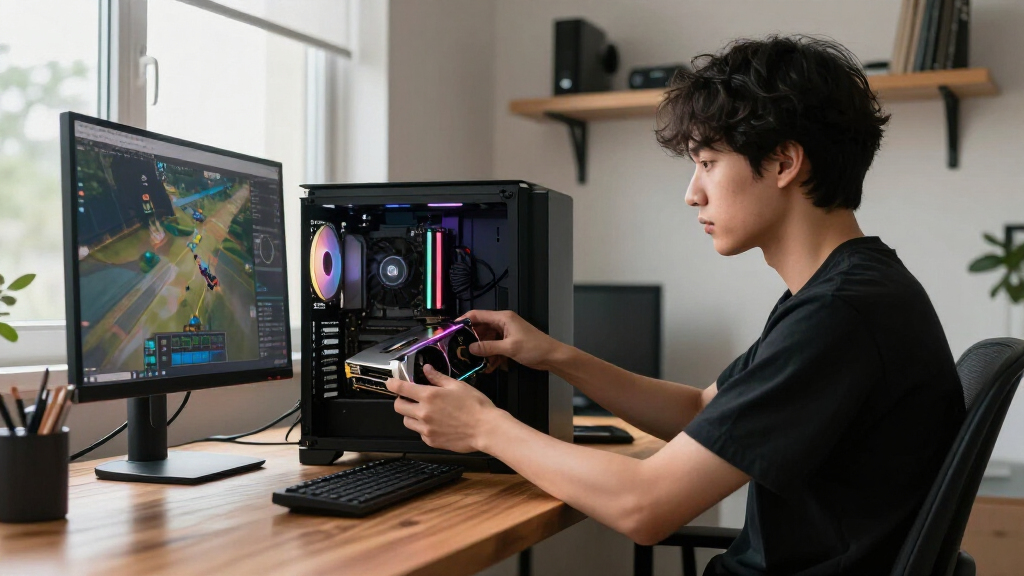
To determine the best high-end GPUs, I considered performance benchmarks across gaming and creative tasks, build quality, cooling solutions, power efficiency, and value relative to cost. I prioritized models that represent the latest technology, with a focus on real-world usability and longevity. The ranking reflects the overall balance of these factors, emphasizing versatility for different user needs. I excluded older models that no longer match current standards or lack comparable features, ensuring the list features only the most capable options available in 2026.| high-end GPU | Graphics RAM Type | Compatible Devices |
|---|---|---|
| ASUS Prime Radeon RX 9070 XT 1 | GDDR6 | Desktop |
| NVIDIA GeForce RTX 4080 16GB G | GDDR6X | Desktop |
| GIGABYTE Radeon RX 9070 XT Gam | GDDR6 | Desktop |
| GIGABYTE GeForce RTX 5080 Gami | — | — |
| NVIDIA GeForce RTX 5080 Founde | GDDR7 | Desktop |
| Sapphire Pulse AMD Radeon RX 9 | GDDR6 | — |
| ASRock Radeon RX 7900 XTX Phan | GDDR6 | Personal Computer |
| ASUS TUF Gaming GeForce RTX 50 | GDDR7 | Desktop Graphics Card |
| Gigabyte AORUS GeForce RTX 509 | GDDR7 | — |
| ASUS TUF Gaming GeForce RTX 50 | GDDR7 | — |
| MSI Gaming RTX 5080 16G SUPRIM | — | — |
Factors to Consider When Choosing Best High-end GPUs
When selecting a high-end GPU, several key factors impact your experience and investment. Understanding these helps avoid common pitfalls and ensures you get a card that meets your specific needs. From performance to compatibility, each consideration influences how well your GPU will serve your intended use, whether gaming, content creation, or professional workloads.Performance and Use Case
Assess your primary activities. High-end GPUs excel in 4K gaming, ray tracing, and demanding creative tasks. The most powerful cards deliver higher frame rates and better visual fidelity but come with increased costs and power requirements. Matching your workload with the GPU’s capabilities prevents overpaying for unnecessary power or underperforming in demanding scenarios.
VRAM and Memory Capacity
VRAM size influences how well a GPU handles large textures and complex projects. Creative professionals benefit from cards with 24GB or more, while gamers can often manage with 12-16GB. Choosing the right VRAM prevents bottlenecks, especially in future-proofing for upcoming software or high-resolution displays.
Compatibility and Power Requirements
Check your PC’s power supply, case size, and PCIe slots before buying. High-end GPUs often demand substantial wattage and specific connectors that may require upgrades. Ensure your system’s cooling is adequate, as these cards generate significant heat, which can impact longevity and stability if not properly managed.
Price-to-Performance Balance
Premium GPUs command high prices, but the performance gains diminish at the top end. Evaluate whether the extra cost aligns with your needs—some models offer marginal improvements over slightly lower-tier options. This balance helps avoid overinvestment on features that won’t be fully utilized.
Cooling and Noise Levels
Effective cooling solutions extend the lifespan of your GPU and maintain performance under load. Look for models with advanced cooling systems or water cooling options if quiet operation and thermal stability are priorities. Not all high-end cards are equally quiet, so consider your preferences and environment when choosing.
Frequently Asked Questions
Is it worth paying extra for a water-cooled high-end GPU?
Water-cooled GPUs often provide better thermal performance and quieter operation, which can be beneficial for overclocking or maintaining low noise levels. However, they tend to be more expensive and require more maintenance. For most users, a high-quality air-cooled model offers sufficient cooling, but enthusiasts pushing for maximum performance might find water cooling justifiable.
How much VRAM do I really need for high-end gaming and creative work?
For gaming at 4K or with high-resolution textures, 12-16GB of VRAM is typically enough, but high-end creative workflows—such as 3D rendering or video editing—may benefit from 24GB or more. Larger VRAM helps future-proof your system and prevents bottlenecks as software and games become more demanding, but it also increases the cost of the GPU.
Can I upgrade my current PC to support these high-end GPUs?
Upgrading to a high-end GPU often requires a sufficiently powerful power supply, adequate PCIe slots, and enough space inside your case. Verify your system’s compatibility before purchasing. In some cases, additional upgrades like a new power supply or cooling system may be necessary to fully utilize these cards without stability issues.
Are the latest GPUs more energy-efficient than previous generations?
Yes, newer models typically incorporate advancements that improve performance per watt, reducing overall power consumption. However, high-end cards still draw significant power, so a robust power supply remains essential. These efficiency gains help lower operational costs and heat output, but overall power demands remain high compared to mid-range GPUs.
Should I wait for future GPU releases before buying now?
Waiting can be beneficial if upcoming models promise significant performance or feature upgrades. However, high-end GPUs tend to have long lifespans, and current models already deliver excellent performance for most demanding tasks. If you need a GPU immediately, choosing a well-reviewed current model is often the best route, but stay alert for upcoming launches if your timeline allows.
Conclusion
For most users seeking a balanced mix of power and value, the NVIDIA GeForce RTX 4080 stands out as the best overall choice. Creative professionals or those with demanding workloads will find the ASRock RX 7900 XTX 24GB offers excellent VRAM capacity. Enthusiasts wanting ultimate performance should consider the Gigabyte RTX 5090 Xtreme, despite its premium price. Beginners or those with modest needs might opt for slightly lower-tier options, but for cutting-edge gaming and creative work, investing in the top-tier cards listed here ensures longevity and top performance. Choose based on your specific workload, budget, and system compatibility to get the best experience.
As an affiliate, we earn on qualifying purchases.Fall Picks
fall essentials