Cyber Monday smart home shopping is less about finding the cheapest speaker and more about choosing the system your household will keep using. Amazon Alexa and Google Home both connect speakers, displays, lights, plugs, cameras, and other compatible products, but their sale shelves and strengths differ. Alexa deals often span a broader range of prices and device types, which can make it easier to outfit several rooms on a budget. Google Home fits naturally for people who use Android phones, Google Calendar, or Google services and want those tools reflected in their home controls. The practical choice is between wider bargain hunting and a more Google-centered setup. Choose Alexa if low-cost variety matters most; choose Google Home if its services and familiar controls matter more. Check current prices and compatibility before buying: Cyber Monday discounts change, and a discounted device is poor value if it does not work with your existing equipment.

Get your next haul delivered free with Prime
- Fast, free delivery on millions of items
- Prime Video, Amazon Music and more included
- Member-only deals all year
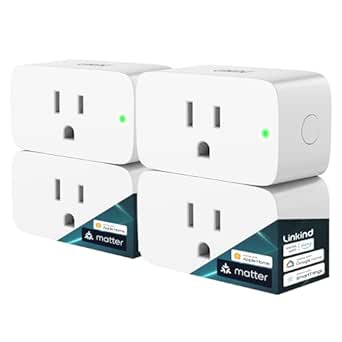
Linkind Matter Smart Plug, 4-Pack
- ✔ Pack size: 4 plugs
- ✔ Connectivity: Matter over 2.4 GHz Wi-Fi; IPv6 required
- ✔ Compatible platforms: Apple Home, Alexa, Google Home, SmartThings, AiDot
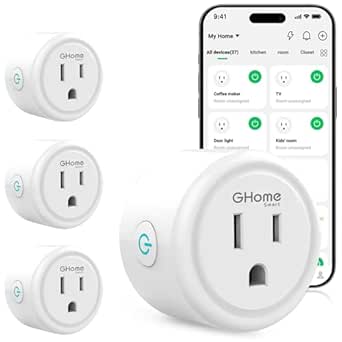
GHome Smart Plug with Wi-Fi, App, and Voice Control (4-Pack)
- ✔ Model: WP3
- ✔ Pack size: 4 plugs
- ✔ Connectivity: Wi-Fi and Bluetooth; 2.4 GHz Wi-Fi required
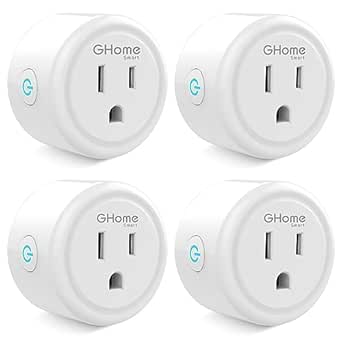
GHome Smart Plug Mini (4-Pack), WiFi Smart Outlet with App Control, Compatible with Alexa and Google Home, 2.4GHz Only, ETL/FCC L…
- ✔ Model: WP3
- ✔ Pack size: 4 plugs
- ✔ Connectivity: 2.4 GHz Wi-Fi and Bluetooth
At a Glance
| Criteria | Amazon Alexa smart home deals | Google Home smart home deals | Winner |
|---|---|---|---|
| Deal selection | Often broad selection across Amazon devices and third-party products; offers vary by seller and year. | Deals include Google Nest products and compatible accessories; availability and discounts vary. | A |
| Entry cost | Many entry-level Echo and compatible devices make it possible to start small. | Affordable speakers and plugs can provide a low-cost start, though options depend on the sale. | A |
| Compatibility | Works with many smart home products, but compatibility should be checked by exact model. | Supports many smart home products; verify device and platform support before checkout. | Depends |
| Voice control and routines | Alexa routines and voice commands can coordinate compatible devices. | Google Home controls compatible devices and can suit households already using Google services. | Depends |
| Google service integration | Supports common integrations, though it is not as centered on Google services. | A natural fit for households using Android, Google Calendar, and other Google services. | B |
| Multi-room expansion | A large range of Echo speakers and displays gives shoppers varied room-by-room choices. | Nest speakers and displays can extend a Google-centered setup across rooms. | A |
| Long-term value | Strong when discounts cover devices you will use and compatible add-ons. | Strong for Google users when discounted devices match an existing or planned setup. | Depends |
Linkind Matter Smart Plug, 4-Pack
For a home that mixes Apple devices with Alexa, Google Home, or SmartThings, Matter compatibility gives this four-pack the broadest stated reach in the lineup. That flexibility is the reason we rank Linkind first: the standard GHome plug and GHome Mini list Alexa and Google Assistant support, while Linkind also names Apple Home and SmartThings. Its support for local LAN control can also be useful when the internet connection drops, though it should not be mistaken for universal offline operation across every platform.Capacity is another point of separation. Linkind is rated at 15 A and 1800 W, compared with 1200 W for either GHome option. That higher rating may suit a wider range of compatible household devices, but we still need to check the appliance label and avoid exceeding the plug’s rating. Built-in overload and short-circuit protection add useful safeguards; they do not remove the need to use a plug within its stated limits.The catch is a more particular network setup. Linkind requires 2.4 GHz Wi-Fi and IPv6, and a Matter-certified hub or controller is required for some platforms. That is more to confirm than the GHome plugs’ app-first setup, and it may make this a poor match for buyers who simply want a quick Alexa or Google outlet. When broad platform choice and the higher listed power capacity matter, however, Linkind offers the most adaptable package here.
Pros:
- Works with Apple Home, Alexa, Google Home, SmartThings, and AiDot.
- Supports local LAN control during internet outages.
- Rated up to 15 A and 1800 W, above the listed capacity of both GHome models.
- Includes scheduling, timers, and overload and short-circuit protection.
Cons:
- Requires 2.4 GHz Wi-Fi and IPv6.
- Some platforms need a Matter-certified hub or controller.
Best for: Households using, or planning to use, multiple Matter-compatible platforms and wanting the highest listed power capacity in this comparison.
Not ideal for: Buyers whose router does not support the required network setup, or who do not want to check for a compatible Matter hub for their chosen platform.
Bottom line: Choose Linkind when cross-platform flexibility and its higher 1800 W rating matter enough to justify checking network and hub compatibility.
“Choose Linkind when cross-platform flexibility and its higher 1800 W rating matter enough to justify checking network and hub compatibility.”
GHome Smart Plug with Wi-Fi, App, and Voice Control (4-Pack)
The standard GHome four-pack is the straightforward choice for Alexa and Google Assistant homes. It covers the everyday use cases many buyers want from smart plugs: remote app control, schedules, timers, group operation, and shared access for family members. Compared with Linkind, it gives up Matter’s broader platform list and local LAN control, but it avoids making a Matter hub part of the compatibility conversation.Setup has a clear sequence: connect the plugs to 2.4 GHz Wi-Fi through the GHome app, then link a voice assistant. The product also lists Smart Life and Tuya as compatible apps, giving buyers alternatives for app control, though initial setup still goes through GHome. That first step is worth knowing if we are buying several plugs to install at once. Once configured, grouping and family sharing can make it easier for more than one person to manage lamps or other appropriate devices.Its main limitation beside Linkind is the 1200 W rating, rather than 1800 W, and it is not the smallest option on paper: GHome Mini lists slightly smaller dimensions. So buyers choosing between the two GHome packs should favor this model for its stated app and family-sharing features, and Mini for space-saving placement. It makes most sense when Alexa or Google support covers the household and the appliance stays within the listed rating.
Pros:
- Supports Alexa and Google Assistant voice control.
- Offers schedules, timers, group control, and family sharing.
- Works with GHome, Smart Life, and Tuya apps.
- No hub is required.
Cons:
- Requires stable 2.4 GHz Wi-Fi.
- Must be set up in the GHome app before voice assistant linking.
- Its 1200 W rating is below Linkind’s listed 1800 W capacity.
Best for: Alexa or Google Assistant households that want a four-pack with scheduling, shared family access, and simple group control.
Not ideal for: Buyers who need Apple Home or SmartThings support, local LAN control, a higher listed capacity, or the smallest plug dimensions.
Bottom line: Pick the standard GHome pack for familiar Alexa or Google control and family-friendly app features, as long as 1200 W is sufficient.
“Pick the standard GHome pack for familiar Alexa or Google control and family-friendly app features, as long as 1200 W is sufficient.”
GHome Smart Plug Mini (4-Pack), WiFi Smart Outlet with App Control, Compatible with Alexa and Google Home, 2.4GHz Only, ETL/FCC L…
When outlet space is the deciding factor, GHome Mini is the most compact option listed here. Its stated dimensions are 2 × 2 × 1 in, slightly smaller than the standard GHome plug’s 2.1 × 2.1 × 1.1 in. That difference is modest, but it can matter on a crowded power strip or where a large adapter would block a neighboring socket. Linkind is the more flexible platform pick; Mini earns its place by focusing on fit and straightforward appliance scheduling.Like the standard GHome model, Mini supports app control, timers, group control, and voice commands through Alexa and Google Assistant. Its description also mentions circular or random timer options, which may suit buyers who want scheduled lighting to vary. It uses Wi-Fi and Bluetooth on 2.4 GHz networks and requires setup through the GHome app before connecting a voice assistant, so the compact format does not make setup any less app-dependent.The compromises are clear against the other two: Mini lists 1200 W and 10 A, and its compatibility is limited to Alexa and Google Assistant rather than Linkind’s wider platform set. It also relies on a stable internet connection for remote features. Choose it for tight placement and familiar voice assistants; skip it if we need Matter, Apple Home, SmartThings, Linkind’s listed local network control, or the higher stated capacity.
Pros:
- Smallest listed dimensions among these three options.
- Supports Alexa and Google Assistant voice control.
- Offers scheduling, timers, and group control.
- Includes ETL and FCC certifications.
Cons:
- Limited to 2.4 GHz Wi-Fi and requires initial GHome app setup.
- Rated at 10 A and 1200 W, below Linkind’s stated capacity.
- Remote features depend on a stable internet connection.
Best for: Alexa or Google Assistant users who need a compact smart plug for crowded power strips, neighboring outlets, or tight spaces.
Not ideal for: Buyers seeking Matter support, Apple Home or SmartThings compatibility, local LAN control during outages, or more than 1200 W of capacity.
Bottom line: Choose GHome Mini when its smaller footprint solves an outlet-space problem and Alexa or Google support is enough.
“Choose GHome Mini when its smaller footprint solves an outlet-space problem and Alexa or Google support is enough.”
As an Amazon Associate we earn from qualifying purchases.
Key Differences
The clearest Cyber Monday advantage often goes to Alexa for shopping flexibility. Amazon sells its own Echo line and a broad range of compatible devices, so a shopper may find more combinations of speakers, plugs, bulbs, and cameras at different price points. That breadth only matters when the devices meet your needs and work with your setup. Comparing the product listing’s compatibility details is more useful than treating a low sale price as proof of a bargain.
Google Home’s advantage is fit for people whose daily routines already run through Google. A Nest speaker or display can make more sense in a household that uses Android phones and Google services than a similarly priced alternative that requires learning another set of controls. Neither ecosystem wins every compatibility or automation question: product support differs by model, and some advanced features may need additional hardware or a subscription.
For value, count the whole setup rather than one discounted device. A cheap speaker is useful if it becomes a reliable control point; it is wasteful if your lights, locks, or camera do not connect to it. Alexa is the better default for shoppers building a low-cost mixed-device setup from scratch. Google Home is the better purchase when its integration will simplify a household that already depends on Google. Paying extra for either brand makes sense only when the added device or service solves a specific problem.
Detailed Comparison
Deal selection (Amazon Alexa smart home deals wins — moderate)
Amazon Alexa often leads on breadth because its sale assortment can include Echo products alongside many compatible brands. Google Home deals cover Nest products and partner devices, but the exact selection depends on the retailer and year. This is a moderate advantage for Alexa deal hunters: more choice can help build a matched setup, though availability is not guaranteed and prices need checking.
Entry cost (Amazon Alexa smart home deals wins — minor)
Alexa often offers more ways to start at a low price, from compact speakers to discounted plugs and bulbs. Google Home can also be affordable, especially when a Nest speaker or accessory is on sale. The gap is minor to moderate and shifts with each Cyber Monday: compare the total cost of a working room setup, not just the cheapest single item.
Compatibility (major difference)
Both ecosystems support many third-party smart home products, but support is not universal and can differ by model, feature, or connection method. Neither earns a blanket win. Check that the exact device supports Alexa or Google Home and confirm any required hub, app, or subscription. The practical gap is minimal between ecosystems when your chosen products are explicitly compatible.
Voice control and routines (moderate difference)
Alexa and Google Home can control compatible devices with voice commands and routines. Which works better depends on the specific commands, devices, and household habits you plan to use. Alexa’s broad product range may make it easier to assemble a routine around discounted devices; Google’s routines may be more appealing to people already using its services. This is a moderate, use-case-dependent difference.
Google service integration (Google Home smart home deals wins — major)
Google Home has the clear advantage for shoppers who rely on Android phones and Google services, since its ecosystem aligns more closely with tools they already use. Alexa can still serve as a capable smart home controller, but it is not the obvious choice for a Google-centered household. The gap is major for daily convenience if those services are central; it matters little if they are not.
Multi-room expansion (Amazon Alexa smart home deals wins — moderate)
Alexa’s range of Echo products and compatible accessories gives deal hunters many options for extending control across several rooms and budgets. Google Home can also expand through Nest devices, and its speakers may suit households that value its service integration. Alexa’s advantage is moderate for shoppers who prioritize variety and sale pricing; Google can still be the better fit for a smaller, Google-focused home.
Long-term value (major difference)
Neither brand is inherently better value over time. Alexa tends to pay off when discounts help you build a low-cost system with devices you will actually use. Google Home can be worth paying more for when it reduces friction with services already in your routine. This difference is major to the buyer’s personal fit: avoid buying into an ecosystem solely because one headline price is lower.
Amazon Alexa smart home deals: Pros and Cons
Pros:
- Often offers a wide range of discounted devices and compatible accessories.
- Many low-cost ways to begin or expand a setup.
- Echo products provide options for adding voice control in multiple rooms.
Cons:
- A large sale assortment can make compatibility checks easy to overlook.
- Less natural fit for households built around Google services.
- A low-priced device can add little value if it duplicates existing controls.
Google Home smart home deals: Pros and Cons
Pros:
- Fits naturally into households that use Android and Google services.
- Nest speakers and displays can serve as familiar control points for compatible devices.
- Can be good value when discounts match a planned Google-centered setup.
Cons:
- Sale selection and pricing vary, so shoppers may find fewer suitable combinations.
- Some devices or features may require extra hardware or a subscription.
- Less compelling for a shopper whose priority is simply the widest range of low-cost options.
Who Should Choose What
Choose Amazon Alexa smart home deals if:
- You want to equip several rooms while keeping the upfront spend low.
- You value a wide range of discounted speakers and compatible accessories.
- You are starting fresh and are willing to check compatibility for each device.
Choose Google Home smart home deals if:
- Your household already uses Android and Google services every day.
- You want smart home controls to fit into a Google-centered routine.
- A Nest device is discounted enough to make a planned setup good value.
Skip both if: Skip both ecosystems for now if your must-have devices do not support either platform, you need features that depend on a separate hub or subscription you do not want, or you are buying only because a sale price looks attractive.
Value for Money
Paying more for Google Home is worthwhile for people who will use its Google service integration regularly; familiar controls can matter more than saving a few dollars on a speaker. Paying more for Alexa is harder to justify if a cheaper Echo or compatible device already covers the same need, though a broader sale selection can lower the cost of a multi-room setup. For most budget-minded shoppers, Alexa is the stronger value starting point. For Google users, a discounted Nest setup may deliver better personal value even if the cheapest competing devices cost less. In either case, compare the full setup cost, including any hub, required accessories, and subscription.
Final Verdict
For a shopper with no strong platform preference, Amazon Alexa is the better Cyber Monday starting point: its broad range and low-cost options make it easier to build a basic smart home for less. Choose Google Home instead if your household already relies on Android and Google services and the sale price makes a compatible Nest device worthwhile. The biggest deciding factor is whether bargain variety or Google-centered convenience will shape everyday use. Check compatibility first, then buy only devices that solve a real need.
Frequently Asked Questions
Which is better for Cyber Monday smart home deals, Alexa or Google Home?
Alexa is usually the stronger place to look for low-cost variety. Google Home is the better fit when your household already uses Google services. The better deal is the compatible device you will use, not simply the biggest discount.
Can Alexa and Google Home control the same smart home devices?
Many products support both platforms, but support varies by exact model and feature. Check the product listing for explicit Alexa and Google Home compatibility before purchasing.
Is a discounted smart speaker enough to start a smart home?
It can be a useful control point, but you also need compatible devices such as lights or plugs if you want to automate anything. Price the complete setup and check whether it needs a hub or subscription.
Should I buy a smart home device just because it is on sale?
Only if it fits your ecosystem and solves a real need. A steep discount does not make an incompatible camera, duplicate speaker, or unused accessory good value.