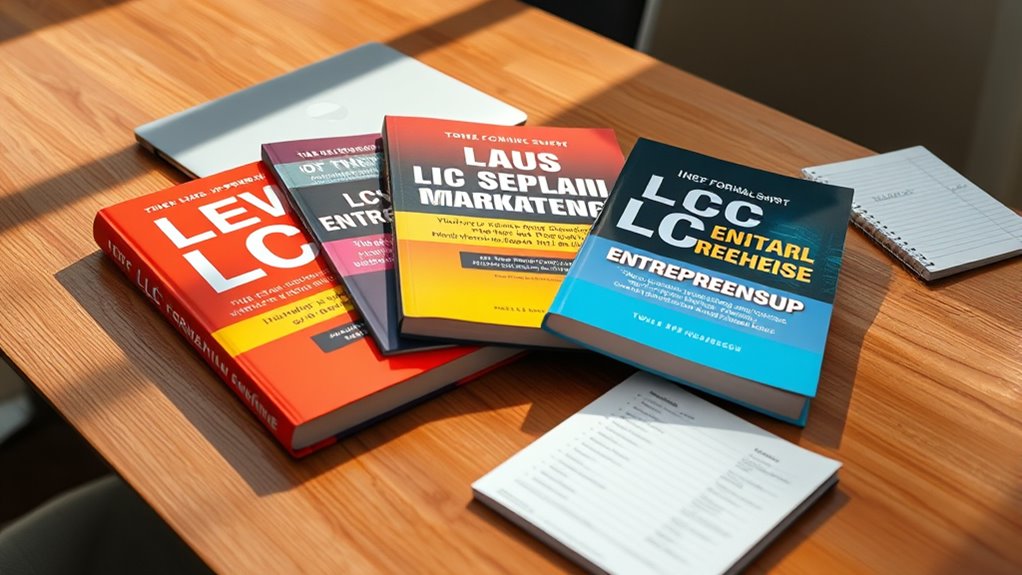

I ranked these quickstart LLC formation books by how clearly their supplied descriptions address the decisions a new owner faces: forming an LLC, understanding taxes, protecting personal assets, and managing the business after launch. LLC QuickStart Guide is my best overall pick for readers who want a clear first pass at formation, taxes, and liability protection. Decoding LLC for Beginners stands out for a wider mix of accounting, S-Corp, and real estate topics, while The LLC and Corporation Start-Up Guide is the one to examine if you are still choosing a business structure.

Get your next haul delivered free with Prime
- Fast, free delivery on millions of items
- Prime Video, Amazon Music and more included
- Member-only deals all year
The tradeoff is scope versus certainty. Some descriptions list specific subjects and a clear beginner audience; others offer little detail about what the book actually covers. I rank the more explicitly described guides ahead for readers seeking a practical starting point, while treating broad titles with limited information as options to investigate before relying on them. These books can orient you, but formation rules vary by state, and a general guide cannot replace current state instructions or advice from a qualified professional.
Key Takeaways
- LLC QuickStart Guide is the clearest match for a beginner focused on formation, LLC taxes, and personal-asset protection.
- Decoding LLC for Beginners covers the broadest stated set of adjacent topics, including accounting, S-Corp, and real estate, but may be too introductory for experienced owners.
- LLC Beginner’s Step-by-Step Guide is a fit for readers who want formation and ongoing management in one beginner-oriented guide, though its scope and edition details are limited.
- The LLC and Corporation Start-Up Guide has a distinct role for comparing entity types, but the supplied information does not verify its depth or specific procedures.
- The Ultimate LLC Beginner’s Guide promises formation, management, and growth for newcomers, but its description gives fewer concrete details than the leading picks.


| quickstart llc formation book | Book title | ASIN | Intended reader | Stated topics |
|---|---|---|---|---|
| LLC QuickStart Guide: The Simp | LLC QuickStart Guide | 1636101046 | Beginners | LLC formation, LLC taxes, personal-asset protection |
| Decoding LLC | Decoding LLC (Limited Liability Company) for Beginners | B0F8M4TKLY | Beginners and new entrepreneurs | Formation, taxes, accounting, S-Corp, real estate |
| LLC Beginner’s Step-by-Step Gu | LLC Beginner’s Step-by-Step Guide | B0DDHCZT3G | Beginners | Starting, managing, and growing an LLC |
| The LLC and Corporation Start- | The LLC and Corporation Start-Up Guide | 1572486112 | Not specified in supplied details | — |
| The Ultimate LLC Beginner’s Gu | The Ultimate LLC Beginner’s Guide | 1967516014 | Beginners, including readers with no business experience | Forming, managing, and growing an LLC |
More Details on Our Top Picks
LLC QuickStart Guide: The Simplified Beginner’s Guide to Forming a Limited Liability Company, Understanding LLC Taxes, and Protecting Personal Assets
This is my strongest all-around recommendation because its stated coverage connects three early concerns that new owners often need to understand together: forming an LLC, LLC taxes, and protecting personal assets. The beginner-focused framing suggests an accessible introduction rather than a manual aimed at lawyers or established companies. Compared with Decoding LLC for Beginners, it is less expansive on adjacent areas such as accounting, S-Corp treatment, and real estate, but it has a tighter match to the core formation-and-protection search.
That focus makes it a sensible first read for someone who wants to understand the basic purpose and responsibilities of an LLC before taking action. Its stated drawback is just as relevant: it lacks detailed legal procedures and may not address advanced LLC topics. I would use it to build foundational understanding, then check the relevant state filing office for current forms, fees, and requirements. Buyers who want precise filing instructions or specialized tax planning should not expect this book alone to answer every question.
Among the five, this guide offers the most balanced stated fit for a new owner who has not settled the basics. The step-by-step breadth claimed for Decoding may suit readers who want more related subjects, while the guides with sparse descriptions leave more uncertainty about their actual coverage. The core advantage here is a clear beginner brief; the cost of that simplicity is limited procedural depth.
Pros:- Beginner-oriented presentation of LLC fundamentals
- Brings formation and LLC tax basics into one guide
- Explicitly addresses personal-asset protection
- Its stated scope closely matches the core LLC-startup search
Cons:- The supplied description says legal procedures are not detailed
- Advanced LLC subjects may be outside its scope
Best for: First-time owners who want an accessible overview of LLC formation, taxes, and personal-asset protection before consulting state-specific sources.
Not ideal for: Readers seeking detailed state filing procedures, advanced entity planning, or a specialized tax reference.
- Book title:LLC QuickStart Guide
- ASIN:1636101046
- Intended reader:Beginners
- Primary subject:Forming a limited liability company
- Stated topics:LLC formation, LLC taxes, personal-asset protection
- Approach:Simplified introduction
- Known scope limitation:Limited detail on legal procedures and advanced LLC topics
Our verdict“I would start here for a clear first orientation to LLC setup, taxes, and liability protection, then verify action steps with current state guidance.”
Decoding LLC (Limited Liability Company) for Beginners: The Step-by-Step QuickStart Guide to Small Business Formation, Taxes, Accounting, S-Corp & Real Estate
Decoding LLC for Beginners has the widest stated topic range in this group. Its description covers formation, taxes, accounting, S-Corp topics, and real estate, which may suit a reader trying to connect the LLC decision to the practical financial questions that follow. The step-by-step framing also gives it a more procedural promise than the compact overview offered by LLC QuickStart Guide, although the supplied description does not establish how detailed those instructions are.
I would choose this over the top-ranked book when breadth matters more than a tightly focused introduction. A new owner who wants to understand bookkeeping alongside entity setup may appreciate that wider lens. Yet more topics do not automatically mean more depth: the stated cons warn that the material may be too basic for experienced entrepreneurs, and no edition or publication details are supplied. That missing context makes it harder to judge how current its guidance is, especially for legal and tax decisions that can change.
Compared with LLC Beginner’s Step-by-Step Guide, Decoding names more specific adjacent subjects, while the latter emphasizes starting, managing, and growing. The decision is whether you want a wider map of tax and business concepts or a general lifecycle guide. I see this as a useful beginner survey, not a substitute for specialized accounting, tax, or real-estate advice.
Pros:- Explicit step-by-step beginner positioning
- Names formation, taxes, and accounting among its topics
- Includes S-Corp and real-estate subjects in its stated scope
- Uses an accessible approach for readers new to business terminology
Cons:- May be too basic for experienced entrepreneurs
- No edition or publication details are supplied
- The description does not establish the depth of each topic
Best for: New entrepreneurs who want a broad introductory guide spanning formation, taxes, accounting, and related S-Corp or real-estate concepts.
Not ideal for: Experienced owners who need advanced tax strategy, detailed professional-level accounting, or clearly documented edition information.
- Book title:Decoding LLC (Limited Liability Company) for Beginners
- ASIN:B0F8M4TKLY
- Intended reader:Beginners and new entrepreneurs
- Primary subject:Small-business formation through an LLC
- Stated topics:Formation, taxes, accounting, S-Corp, real estate
- Approach:Step-by-step QuickStart guide
- Edition details:Not supplied
Our verdict“I would pick this when you want a wide beginner-level map of LLC and related business topics, accepting that its depth and currency are not established by the available details.”
LLC Beginner’s Step-by-Step Guide: Start, Manage, and Grow a Limited Liability Company
This guide’s strongest distinction is its stated reach beyond setup: it covers how to start, manage, and grow an LLC, with tax strategies, expert insights, and legal instructions also named in the description. That makes it a plausible choice for a reader who wants to think about the business after filing rather than treating formation as the finish line. Compared with LLC QuickStart Guide, which explicitly foregrounds personal-asset protection, this title emphasizes the ongoing life of the company.
The description positions it for beginners, but leaves meaningful questions unanswered: it does not specify format, edition, author, or how much detail its legal and tax guidance provides. I would not infer that “legal instructions” means state-by-state filing support. Decoding LLC for Beginners has a more explicit list of adjacent topics, while this book makes the clearer start-to-growth promise. Its appeal depends on that lifecycle framing, not on verified depth.
For a new owner who wants a broad orientation to formation and early operations, that framing may be more useful than a narrow filing overview. Still, readers needing forms, current statutory requirements, or tailored tax advice should pair it with official sources and qualified help. The missing bibliographic and scope details keep it below the two guides with more concrete descriptions.
Pros:- Covers starting, managing, and growing an LLC in its stated scope
- Names tax strategies and legal guidance
- Designed for beginner readers
- Its lifecycle emphasis differs from formation-only introductions
Cons:- Format and edition details are not supplied
- Author and scope details are not provided
- The description does not show how specific its legal instructions are
Best for: Beginners who want one introductory book framed around starting an LLC and continuing into management and growth.
Not ideal for: Readers who require a clearly documented edition, author credentials, state-specific steps, or a defined level of legal and tax detail.
- Book title:LLC Beginner’s Step-by-Step Guide
- ASIN:B0DDHCZT3G
- Business type:Limited liability company
- Intended reader:Beginners
- Stated topics:Starting, managing, and growing an LLC
- Additional topics:Tax strategies, expert insights, legal instructions
- Format and edition:Not specified in supplied details
Our verdict“I would choose this for a beginner who values a start-to-growth overview, while checking the book’s scope before relying on it for specific filing or tax decisions.”
The LLC and Corporation Start-Up Guide: Your Complete Guide to Launching the Right Business
This title has a useful point of difference: it puts LLCs and corporations in the same frame and focuses on choosing a suitable business structure. That is a different starting question from the other books, most of which are explicitly centered on forming or managing an LLC. If you have not decided whether an LLC is the right fit, a comparison-oriented guide could help you identify the questions to ask before filing.
The limitation is unusually important here: the supplied product information offers no description of specific contents, procedures, audience, or format. I cannot confirm how it compares the structures, whether it covers taxes or paperwork, or how current its guidance is. By contrast, LLC QuickStart Guide clearly names formation, taxes, and personal-asset protection; Decoding LLC for Beginners lists a broad set of related topics. Those are safer choices when you already know you want an LLC and need a more defined topic match.
I rank this lower not because a comparison is unhelpful, but because the available details do not let a buyer judge how thoroughly the comparison is handled. It makes most sense as a candidate for readers at the entity-selection stage, provided they inspect the contents and publication information before relying on it. For actual filing, use current official state instructions.
Pros:- Covers both LLC and corporation options in its title and stated focus
- Centers the decision about choosing a business structure
- Offers a different angle from LLC-only beginner guides
Cons:- No detailed description of contents or format is supplied
- Tax, filing, and ongoing management coverage cannot be confirmed
- The available information does not establish edition or currency
Best for: Readers who are deciding between an LLC and a corporation and want a guide framed around business-structure selection.
Not ideal for: Buyers who already chose an LLC and need confirmed tax coverage, filing steps, or detailed information about the book’s contents.
- Book title:The LLC and Corporation Start-Up Guide
- ASIN:1572486112
- Stated focus:Launching and choosing a business structure
- Business types named:LLC and corporation
- Intended reader:Not specified in supplied details
- Topics beyond structure choice:Not specified
- Format and edition:Not specified in supplied details
Our verdict“I would investigate this option if you are comparing entity types, but the sparse details make it a less certain choice for a practical LLC formation walkthrough.”
The Ultimate LLC Beginner’s Guide: Form, Manage, and Grow a Limited Liability Company
The Ultimate LLC Beginner’s Guide is aimed at people with no prior business experience and promises coverage of forming, managing, and growing an LLC. That makes it an accessible-sounding option for a reader who wants a broad introduction rather than a guide limited to the initial paperwork. Its lifecycle framing overlaps with LLC Beginner’s Step-by-Step Guide, but the supplied description gives less detail about particular subjects such as tax strategies or legal instructions.
That information gap is the main reason I place it fifth. The description does not identify specific chapters, procedures, author background, or edition details. In contrast, LLC QuickStart Guide explicitly names taxes and personal-asset protection, while Decoding LLC for Beginners lists accounting and other adjacent topics. Those clearer descriptions give buyers a stronger basis for matching a book to a specific need.
This pick can still make sense if you are new to business and want a general LLC orientation, especially if its full listing or contents provide detail not included here. I would verify that it addresses the questions you actually have before choosing it over a more specifically described guide. A beginner-friendly title is a useful signal about audience, but it does not by itself establish procedural depth or current legal coverage.
Pros:- Explicitly targets readers without prior business experience
- Promises coverage of forming, managing, and growing an LLC
- Offers a broad lifecycle framing for a beginner
Cons:- The supplied description gives few details about specific content
- No author or edition information is provided
- Tax, legal, and filing coverage cannot be confirmed from the description
Best for: Readers with no business background who want a general introduction spanning LLC formation and later management.
Not ideal for: Buyers who need clearly stated coverage of taxes, liability protection, accounting, or state-specific formation procedures.
- Book title:The Ultimate LLC Beginner’s Guide
- ASIN:1967516014
- Format:Book
- Topic:Limited liability companies
- Intended reader:Beginners, including readers with no business experience
- Stated topics:Forming, managing, and growing an LLC
- Additional content details:Not supplied
Our verdict“I would consider this as a general beginner guide only after checking its contents, since the available information is less specific than the higher-ranked options.”

How We Picked
I ranked these books against the promise of quickstart LLC formation, not general business inspiration. I gave more weight to products whose descriptions identify concrete beginner needs—formation steps, taxes, accounting, liability protection, or post-launch management—because those details help a reader judge whether a guide fits the task at hand. I also considered how clearly the available information establishes audience and scope.
The ranking reflects only the product information supplied here. I do not assume a particular edition, author expertise, state-by-state coverage, worksheets, or current legal updates when those details are not provided. That means a book with a broad title but sparse description ranks lower than one whose stated subjects align more directly with LLC setup. Since LLC requirements and tax rules can change and differ by location, I treat every book as an educational starting point rather than a substitute for official state guidance, an attorney, or a tax professional.
| quickstart llc formation book | Book title | Intended reader | Stated topics |
|---|---|---|---|
| LLC QuickStart Guide: The Simp | LLC QuickStart Guide | Beginners | LLC formation, LLC taxes, personal-asset protection |
| Decoding LLC | Decoding LLC (Limited Liability Company) for Beginners | Beginners and new entrepreneurs | Formation, taxes, accounting, S-Corp, real estate |
| LLC Beginner’s Step-by-Step Gu | LLC Beginner’s Step-by-Step Guide | Beginners | Starting, managing, and growing an LLC |
| The LLC and Corporation Start- | The LLC and Corporation Start-Up Guide | Not specified in supplied details | — |
| The Ultimate LLC Beginner’s Gu | The Ultimate LLC Beginner’s Guide | Beginners, including readers with no business experience | Forming, managing, and growing an LLC |
Factors to Consider When Choosing Quickstart Llc Formation Books
I would choose an LLC book by matching its stated scope to the decision you need to make now. A formation overview, a tax-and-accounting survey, and an entity comparison solve different problems; a broad title does not automatically provide step-by-step instructions.
Start with your immediate question
If you need a first explanation of what an LLC is and why owners form one, LLC QuickStart Guide has the most direct stated fit. Its formation, tax, and personal-asset topics put the central beginner concerns together. If your question is whether to choose an LLC or a corporation, The LLC and Corporation Start-Up Guide has the more relevant framing, though the supplied details do not confirm how extensive its comparison is. For post-formation orientation, look at the two titles that name managing and growing an LLC.
Match breadth to the depth you need
Decoding LLC for Beginners names the widest range of subjects, adding accounting, S-Corp, and real estate to formation and taxes. That breadth could help someone building a general map of small-business concepts, but it should not be mistaken for advanced treatment. A narrow guide may answer your immediate question more clearly; a broad survey may introduce more useful next questions. I would check the contents page for the specific subject you need before treating any introductory book as a technical reference.
Check how specific the procedural promise is
Words such as “step-by-step” or “legal instructions” suggest an organized approach, but they do not establish state-by-state coverage. The descriptions here do not provide filing forms, jurisdiction lists, or update policies. For that reason, I would use a book to understand the process and then confirm the exact name search, filing, registered-agent, and reporting rules with the relevant state agency. If you need a legally reliable answer for a particular business, consult a qualified attorney.
Treat tax coverage as an introduction
LLC tax treatment depends on the business’s circumstances and elections, so a general book’s tax section is best treated as orientation. LLC QuickStart Guide names LLC taxes, and Decoding LLC also identifies tax and accounting topics, while LLC Beginner’s Step-by-Step Guide mentions tax strategies. The descriptions do not establish how current or personalized that guidance is. I would use those topics to prepare questions for a tax professional, not to make a complex election without tailored advice.
Use available product details as a confidence signal
When one listing specifies its audience and subjects and another provides only a broad title, the more detailed description gives you a better basis for selection. It does not prove quality, but it reduces uncertainty about fit. The limited information for The LLC and Corporation Start-Up Guide and The Ultimate LLC Beginner’s Guide makes checking the full listing, contents, and edition details especially worthwhile. I would favor a clearly described guide when I need a targeted starting point.
Frequently Asked Questions
Which book is the best starting point for a first-time LLC owner?
I would start with LLC QuickStart Guide if your main needs are an understandable introduction to formation, taxes, and personal-asset protection. Its stated scope is the clearest match to those core beginner questions. If you want accounting, S-Corp, and real-estate topics alongside formation, Decoding LLC for Beginners is broader, though it may remain too introductory for experienced readers.
Which book covers the most topics beyond forming an LLC?
Decoding LLC for Beginners names the broadest set of adjacent subjects in the supplied description: taxes, accounting, S-Corp, and real estate. That makes it a strong candidate for someone seeking a general small-business overview around an LLC. Its listed scope does not establish advanced depth, so I would use it as a starting survey rather than as a replacement for specialized accounting, tax, or legal advice.
Can one of these books tell me exactly how to file in my state?
The supplied product details do not confirm state-by-state filing coverage for any of these titles. LLC QuickStart Guide is specifically noted as lacking detailed legal procedures, and the other descriptions do not identify jurisdictions or current forms. I would use a book to understand the general process, then check the relevant state agency’s official instructions for current filing steps and requirements.
Which option helps if I am choosing between an LLC and a corporation?
The LLC and Corporation Start-Up Guide is the most directly framed for that decision because it names both entity types and focuses on choosing a business structure. The available description is sparse, however, so I cannot confirm how detailed its comparison is or whether it addresses taxes and filings. I would inspect its contents before relying on it, and get professional advice if the choice has significant legal or tax consequences.
Should I rely on an LLC book for tax or legal decisions?
I would treat these books as educational introductions, not tailored professional advice. Their descriptions mention taxes, legal guidance, and related subjects, but do not establish how current or specific that material is. LLC requirements depend on the state, while tax decisions depend on the business and its owners. Use a guide to organize your questions, then confirm important actions with official state sources and a qualified attorney or tax professional.
Conclusion
For most first-time owners, I would begin with LLC QuickStart Guide because its stated mix of formation, taxes, and personal-asset protection is the clearest match to the core search. Choose Decoding LLC for Beginners if you want a wider beginner-level survey that includes accounting, S-Corp, and real estate. If your priority is the business after filing, consider LLC Beginner’s Step-by-Step Guide or The Ultimate LLC Beginner’s Guide, while checking their contents because the supplied details leave gaps. Readers still weighing entity types can investigate The LLC and Corporation Start-Up Guide, but should verify what its comparison covers. Whichever book you choose, use it to learn the vocabulary and questions—not as the final authority on current state procedures or personalized tax and legal decisions.