
TL;DR

Get your next haul delivered free — and shop member deals
- Fast, free delivery on millions of items
- Access to Prime Big Deal Days deals on October 6–7
- Prime Video, Amazon Music and more included
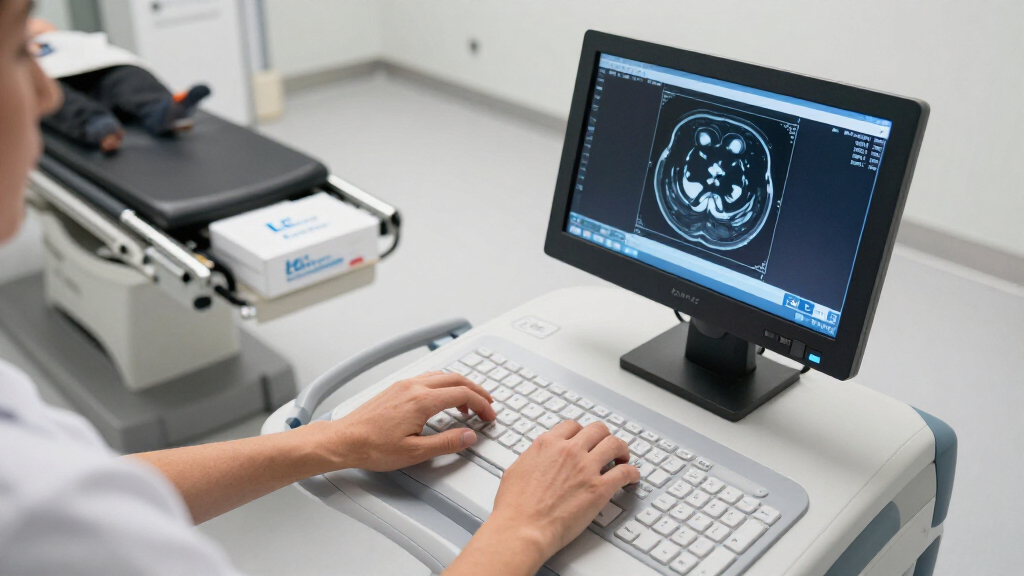
Leo Cancer Care has moved upright radiotherapy from concept to clinical reality following the first patient treatment with its Marie upright positioning and imaging system in June 2026. The platform is beam-agnostic, 510(k) cleared and CE marked for integration with any fixed radiation beam, including photon therapy.
Leo Cancer Care has brought upright radiotherapy into clinical use, marking what the company calls a “defining moment” for radiation oncology after the first patient was treated with its Marie® upright patient positioning and imaging system in June 2026. The company said its Upright Platform is beam-agnostic — cleared for integration with both particle- and photon-compatible fixed-beam technologies — giving health networks a choice of beam manufacturers rather than tying them to a single treatment configuration.
The first clinical treatment was enabled by a partnership with Mevion Medical Systems, using the company’s compact, fixed-beam proton accelerator, and was powered by RayStation®, the treatment planning system from RaySearch Laboratories. According to Leo Cancer Care, patients can now receive radiotherapy in an upright position at the site where the first treatment took place.
The company’s initial product, the Marie solution, is 510(k) cleared and CE marked to be integrated with any fixed beam, including conventional photon therapy. Beyond this first installation, Leo Cancer Care revealed at ASTRO 2025 that it is developing a dedicated fixed-beam photon platform of its own, which the company said would integrate upright patient positioning, imaging and a fixed photon beam. That platform remains subject to regulatory clearance.
The company’s approach keeps the radiation beam fixed while the patient is positioned upright and slowly rotated to multiple beam angles, so radiation can be delivered around the target area to deliver a personalised treatment plan. Fan beam imaging, planning, positioning and treatment delivery are connected around a single upright patient position. Because the patient is imaged in the same position in which they are treated, every stage of the pathway works from the same geometry, providing the clinical team one reference point for planning and verification.
Why Beam-Agnostic Upright Treatment Matters
The beam-agnostic design is the platform’s most consequential feature for health networks. Rather than being restricted to one beam manufacturer or treatment configuration, providers can pair the upright positioning and imaging system with compatible fixed-beam technologies that fit their existing infrastructure and patient needs. According to the company, this flexibility could help reduce the infrastructure traditionally associated with advanced radiotherapy, which has historically limited where cutting-edge treatment can be offered.
The company argues that treating with photons in the upright position could enable more compact radiotherapy solutions and expand access to high-quality cancer care, while bringing upright positioning into conventional radiotherapy delivery. For patients, the company says upright treatment offers a more natural experience with eye-to-eye interaction with clinical staff, and may be particularly valuable for people who find lying flat difficult due to breathing difficulties, pain, mobility challenges or anxiety. The company notes that international research suggests upright positioning may support more consistent anatomical positioning and reduce organ motion for certain treatment sites, though these potential benefits are still being investigated.
From Widely Questioned Idea to Clinical Reality
Upright radiotherapy was, according to the company’s account, “not so long ago widely questioned” as a treatment delivery approach, but it is already being used in new proton therapy installations where health networks are adopting the method. The June 2026 treatment represents the first clinical use of Leo Cancer Care’s technology in patients.
The announcement fits a broader industry trajectory: compact proton systems such as Mevion’s fixed-beam accelerator were developed to lower the cost and footprint of particle therapy, and upright patient positioning complements that goal by removing the need for a rotating gantry around a lying patient. Leo Cancer Care’s dedicated photon platform, announced at ASTRO 2025, would extend the upright concept to conventional radiotherapy, though it has not yet received regulatory clearance.
“The first clinical treatment using our technology proved that upright radiotherapy is no longer simply an idea for the future. It is now a clinical reality. This milestone is only the beginning.”
— Stephen Towe, Co-Founder and CEO of Leo Cancer Care
Evidence Gaps and Pending Regulatory Steps
Several elements of the announcement remain unproven or pending. The dedicated fixed-beam photon platform is subject to regulatory clearance and no timeline for approval has been given. The number of patients treated to date, the treatment site involved in the June 2026 procedure, and the identity of the treating institution were not disclosed in the announcement.
The claimed patient benefits — greater comfort, more consistent anatomical positioning and reduced organ motion — are described by the company as potential advantages supported by international research for certain treatment sites, and the company itself states these benefits “will continue to be investigated as more upright systems enter research and clinical use.” No long-term clinical outcome data comparing upright treatment with conventional lying-position radiotherapy was presented.
Clinical Evidence Push and ASTRO 2026
Leo Cancer Care said it will share its clinical progress and future vision at the American Society for Radiation Oncology’s 2026 Annual Meeting in Boston. The company’s stated next phase focuses on three priorities: building clinical evidence, supporting further installations, and collaborating with healthcare and technology partners. The company also says it will continue exploring compliant image-guided radiotherapy (IGRT) system combinations with clinicians and technology partners, tailored to individual networks’ patient populations, infrastructure and services.
Key Questions
What is upright radiotherapy?
It is a treatment approach in which the patient sits or stands in an upright position and is slowly rotated while a fixed radiation beam delivers treatment from multiple angles. Conventional radiotherapy typically has the patient lying down while a gantry rotates around them.
Has anyone actually been treated with the system?
Yes. According to Leo Cancer Care, the first clinical treatment using the Marie upright patient positioning and imaging system took place in June 2026, using a Mevion compact fixed-beam proton accelerator and RaySearch’s RayStation planning system.
What does ‘beam-agnostic’ mean in this context?
The platform is designed and cleared to integrate with any compatible fixed radiation beam — including proton, other particle beams, and conventional photon therapy — rather than being locked to one beam manufacturer or treatment configuration.
Is the upright approach proven to be better for patients?
Not yet definitively. The company says international research suggests upright positioning may support more consistent anatomical positioning and reduce organ motion for certain treatment sites, and may help patients who cannot lie flat comfortably, but it acknowledges these potential benefits require further investigation.
When will Leo Cancer Care’s dedicated photon platform be available?
No timeline has been given. The platform, announced at ASTRO 2025, remains subject to regulatory clearance, meaning availability depends on future approvals from regulators such as the FDA and, in Europe, CE marking processes.
Source: primary
Fall Picks
fall essentials
As an affiliate, we earn on qualifying purchases.