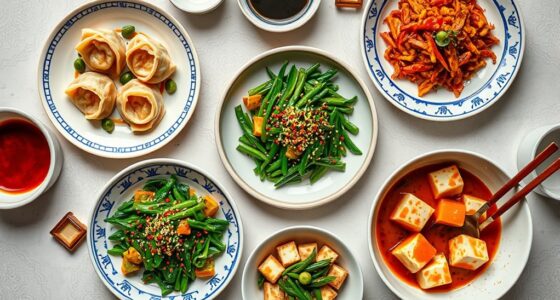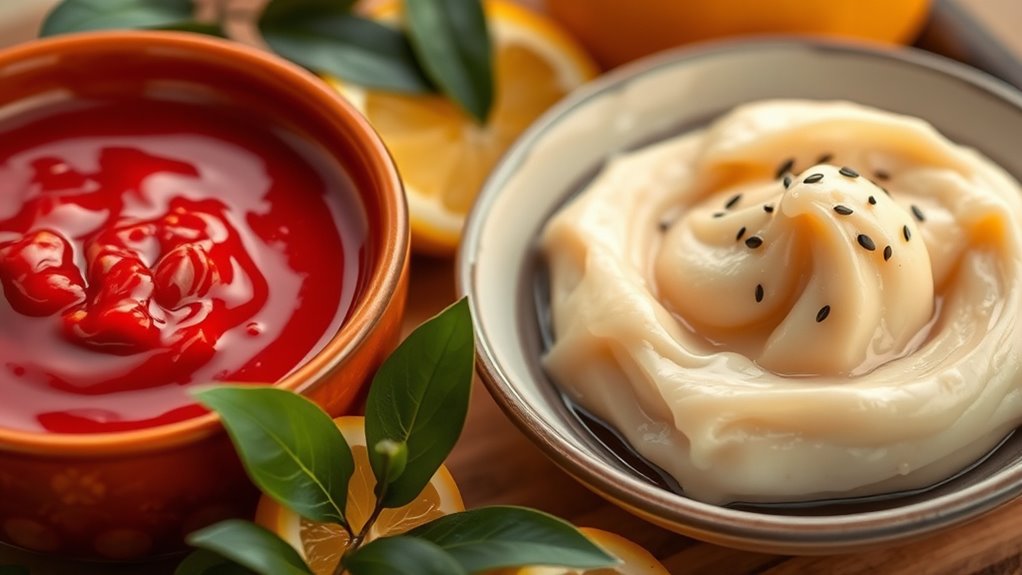

Miso, yuzu, and gochujang are fantastic ingredients that can transform your meals. Miso adds a rich umami depth, perfect for soups and marinades. Yuzu brings a zesty brightness to dressings and desserts, while gochujang adds a spicy, sweet kick to stews and dips. These flavors not only elevate dishes but also introduce vibrant textures. Discover how to incorporate these amazing ingredients into your cooking and reveal a world of authentic Asian flavors.
Key Takeaways
- Miso is a fermented soybean paste that adds rich umami flavor and probiotics to dishes like soups and marinades.
- Yuzu is a citrus fruit that combines lemon, lime, and grapefruit flavors, enhancing dressings and desserts with its zesty brightness.
- Gochujang is a Korean red chili paste known for its spicy, sweet, and savory profile, perfect for marinades and stews.
- Each ingredient contributes unique flavor profiles: miso offers depth, yuzu brings brightness, and gochujang adds heat and sweetness.
- These ingredients can easily be incorporated into home cooking, providing vibrant and authentic flavors in Asian dishes.
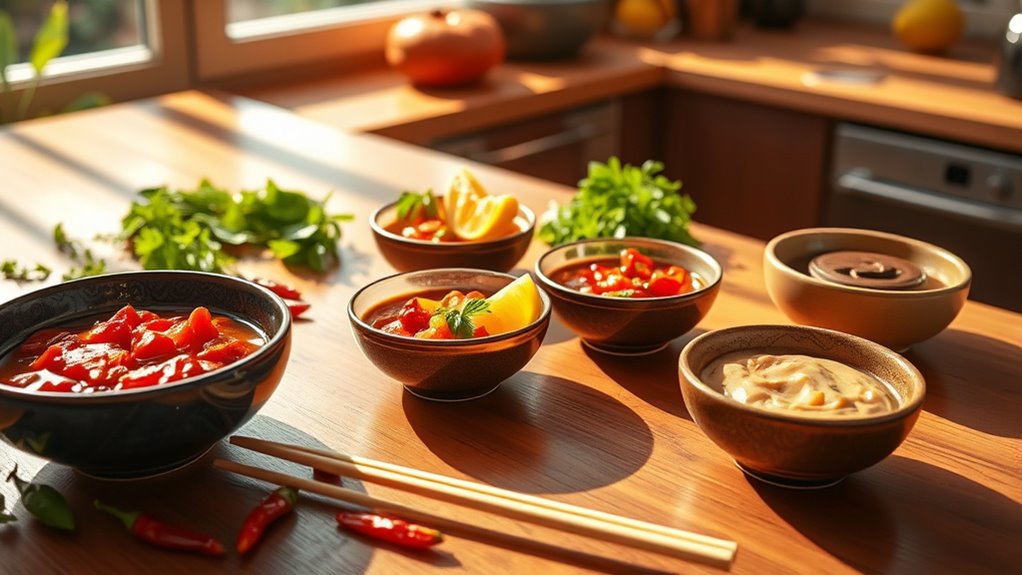
Have you ever wondered what makes Asian cuisine so vibrant and flavorful? It’s all about the ingredients, and three standouts are miso, yuzu, and gochujang. Each of these components brings unique flavors and textures that can elevate your cooking to new heights. Let’s explore these flavorful treasures and see how you can incorporate them into your meals.
Miso, a fermented soybean paste, is a staple in Japanese kitchens. With its rich umami flavor, it can enhance everything from soups to marinades. When you use miso, you’re not just adding taste; you’re also infusing your dishes with probiotics and nutrients. You can easily create a savory miso soup as a comforting starter. Just whisk some miso paste into warm water, add tofu and seaweed, and you’ve got a quick, nourishing dish. Or, try mixing miso with a bit of honey and sesame oil to create a delicious glaze for grilled vegetables or fish. You’ll find that miso adds depth and complexity that you didn’t know your dishes were missing.
Then there’s yuzu, a citrus fruit that’s popular in Japanese cuisine. It has a unique flavor that combines elements of lemon, lime, and grapefruit, making it incredibly versatile. If you haven’t tried yuzu juice yet, you’re missing out. A splash of yuzu can brighten up dressings, adding a lively zing to salads or marinades. You might want to experiment with yuzu in desserts too; its floral notes work wonders in sorbets and cakes. Just a few drops can transform a simple dish into something extraordinary.
Finally, let’s talk about gochujang, a Korean red chili paste that’s both spicy and sweet. This ingredient is a game changer if you enjoy a bit of heat in your meals. When you mix gochujang with soy sauce and sesame oil, you create a fantastic marinade for meats or tofu. You can even stir it into stews or soups for a rich depth of flavor. Plus, it’s perfect for dipping sauces. A little goes a long way in bringing that Korean kick to your dishes.
Frequently Asked Questions
What Are the Health Benefits of Consuming Miso?
Consuming miso offers several health benefits. It’s rich in probiotics, which support gut health and digestion. Miso’s high antioxidant content can help combat oxidative stress, while its nutrients, like vitamins B and K, promote overall wellness. The fermentation process also makes it easier for your body to absorb nutrients. Plus, miso can boost your immune system, potentially lowering the risk of infections. Incorporating it into your diet can enhance both flavor and nutrition!
How Can I Substitute Yuzu in Recipes?
You can substitute yuzu in recipes by using a mix of lemon and lime juice, which mimics its bright, citrusy flavor. Try a 2:1 ratio of lemon juice to lime juice for a closer match. If you have access to yuzu juice or yuzu-flavored products, those can work too. For a unique twist, consider using a splash of grapefruit juice, adding depth while still capturing that zesty essence yuzu brings.
Is Gochujang Gluten-Free?
Gochujang’s gluten-free goodness gets you excited! Typically, gochujang is made from fermented soybeans, red chili powder, and salt, so it can be gluten-free. However, some brands might add wheat for extra texture, so you’ll want to check the label to be sure. If you’re aiming for a gluten-free diet, look for certified gluten-free varieties. Enjoy that spicy kick without the worry! Your taste buds will thank you.
Where Can I Buy Authentic Asian Ingredients?
You can buy authentic Asian ingredients at local Asian grocery stores or markets. They often carry a wide variety of products, from spices to sauces. If you prefer shopping online, websites like Amazon, or specialized retailers like Asian Food Grocer or H-Mart offer a great selection. Just make sure to check customer reviews to guarantee quality. Don’t forget to explore local farmer’s markets too; they sometimes have unique, fresh ingredients!
How Should I Store Miso, Yuzu, and Gochujang?
When it comes to storing these ingredients, you’ll want to keep them in the fridge to keep them fresh as a daisy. Miso should be sealed tightly in an airtight container, while yuzu juice should also be refrigerated and used within a few weeks. Gochujang can sit in the fridge too, but it’s best kept in a cool, dark place. Remember, proper storage helps maintain their rich flavors!
Conclusion
Incorporating miso, yuzu, and gochujang into your cooking is like adding vibrant brushstrokes to a blank canvas. These ingredients not only elevate your dishes but also invite a symphony of flavors to dance on your palate. Don’t hesitate to experiment; let your creativity flow as you explore the rich culinary traditions of Asia. With each bite, you’ll discover a world of taste that brings warmth and excitement to your kitchen. Immerse yourself and relish the adventure!