You should keep your child rear-facing as long as possible within their seat’s height and weight limits because it offers the safest protection for their head, neck, and spine in crashes. Most safety guidelines recommend rear-facing until age 2 or beyond, depending on their size. Factors like growth, developmental milestones, and seat specifications influence when to switch. To guarantee your child’s safety, it’s important to follow these guidelines and check proper installation—learn more to keep them protected best.
Listen free for 30 days with Audible
Thousands of audiobooks and originals — cancel anytime.
As an affiliate, we earn on qualifying purchases.
Key Takeaways
- Keep children rear-facing as long as they are within the seat’s height and weight limits for maximum crash protection.
- Transition to forward-facing only after exceeding the rear-facing seat’s specified age, height, or weight limits.
- Proper installation and snug harness fit are crucial during both rear-facing and forward-facing stages for safety.
- Current guidelines recommend children remain rear-facing until at least age 2, or longer if possible.
- Rushing the transition increases injury risk; delay until child meets all safety and size criteria.
rear-facing car seat for infants
As an affiliate, we earn on qualifying purchases.
As an affiliate, we earn on qualifying purchases.
Why Rear-Facing Car Seats Are Safer for Infants and Toddlers

Because infants and toddlers have weaker neck and spinal muscles, rear-facing car seats provide essential protection in a crash. In a collision, airbags can deploy suddenly, which may cause severe injury to a forward-facing child’s head or neck. Rear-facing seats help distribute crash forces across the back, reducing injury risk. Additionally, a proper seat belt fit is critical; rear-facing seats ensure your child’s body is better supported and secured, minimizing slack that could cause injury. They keep your child’s head, neck, and spine aligned, even if airbags deploy unexpectedly. This position limits the movement of fragile body parts during impact, making rear-facing seats the safest choice for infants and toddlers until they outgrow the height and weight limits. Supporting safe development is also important, as a properly restrained position promotes comfort and confidence during travel. Moreover, using a rear-facing seat until the maximum weight or height limit is reached aligns with current safety guidelines and best practices for child passenger safety.
As an affiliate, we earn on qualifying purchases.
How Long Should Your Child Remain Rear-Facing? Current Guidelines
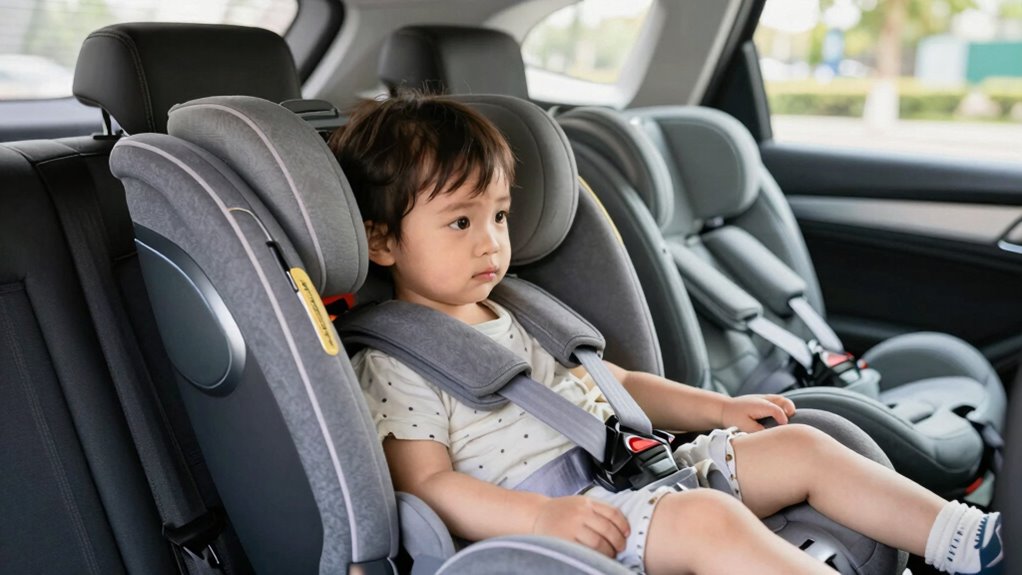
It’s recommended that you keep your child rear-facing for as long as possible within the weight and height limits set by the car seat manufacturer. This guarantees maximum safety and proper protection during travel. To maintain correct positioning, focus on proper car seat installation, making sure the seat is tightly secured and the harness fits snugly. When your child outgrows the rear-facing limits, consider switching to a forward-facing seat with a harness. Remember, choosing the right booster seat is essential once your child surpasses these limits and is ready for a booster. Staying informed about current guidelines helps you make the best decision. Patience and attention to these details greatly reduce your child’s risk of injury during a crash. Additionally, understanding piercing care and hygiene can help prevent infections if your child gets any body piercings in the future. Proper car seat maintenance also ensures continued safety and effectiveness over time.
As an affiliate, we earn on qualifying purchases.
What Factors Affect When to Transition to Forward-Facing?
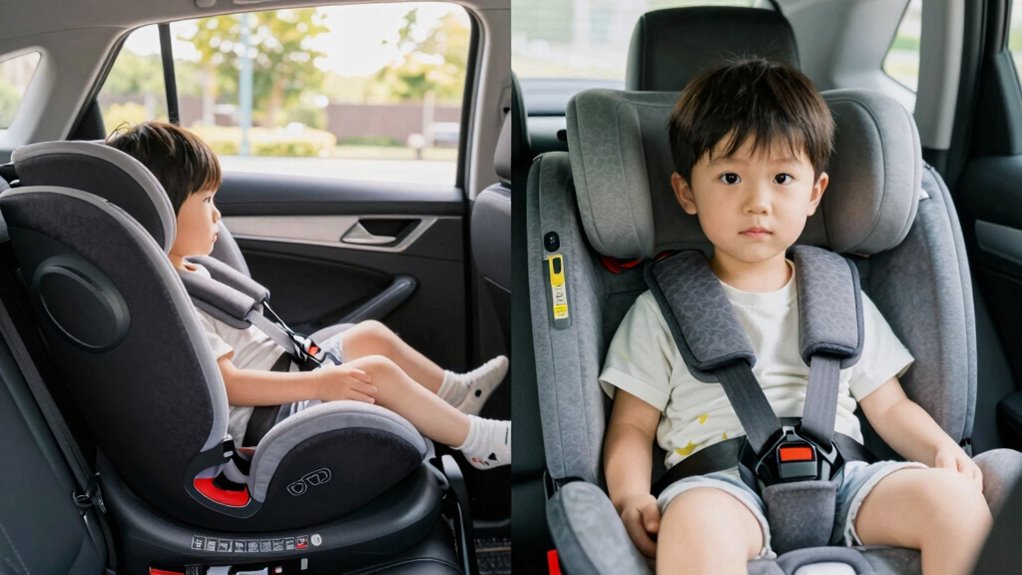
Your child’s age and size are key factors in deciding when to switch to forward-facing. You should also watch for developmental readiness signs, like sitting steadily and holding their head up. These cues can help you determine the best time for the changeover. Additionally, understanding everyday materials and how to adapt them for safety can support your child’s development and well-being.
Age and Size Guidelines
Age and size are key factors in determining when to switch your child from a rear-facing to a forward-facing car seat. You should consider these guidelines:
- Your child is at least 2 years old, as recommended for prolonged rear-facing use.
- They meet the maximum height and weight limits specified by the car seat manufacturer.
- Their shoulders are at or just below the seat’s top slot.
- You’ve successfully completed proper car seat installation, ensuring child safety.
- Monitoring your child’s growth with home theatre projectors can help you better understand their developing needs and safety considerations as they grow.
- Keeping track of car seat safety standards can ensure you’re up-to-date with the latest recommendations and regulations.
Developmental Readiness Signs
Once your child has reached the age and size guidelines, you should also observe their developmental readiness before moving to a forward-facing seat. Look for signs like sitting steadily without support and showing interest in sitting upright, which indicate they’re ready. Sensor technology in some car seats can help monitor your child’s posture and alert you if they’re not properly positioned. Compatibility with your vehicle is also essential; verify the seat fits well and allows proper installation. If your child can maintain a sitting position and demonstrates awareness of their body movement, it’s a good sign they’re developmentally prepared. Recognizing nail growth patterns and physical development signs can also provide additional reassurance during this transition. These signs help assure a safer transition, reducing the risk of injury and making sure your child’s comfort and safety are prioritized.
best rear-facing toddler car seat
As an affiliate, we earn on qualifying purchases.
As an affiliate, we earn on qualifying purchases.
How Do You Know When It’s Safe to Switch to Forward-Facing?

You’ll want to check if your child has reached the recommended age and size for switching to forward-facing. Look for developmental milestones, like sitting steadily and holding up their head, which indicate they’re ready. When these guidelines are met, it’s usually safe to contemplate moving to forward-facing. Additionally, ensuring your child’s safety can be complemented by understanding proper rear-facing vs forward-facing guidelines and timelines. Recognizing appropriate safety measures can further help you make informed decisions about your child’s car seat transition.
Age and Size Guidelines
Knowing when it’s safe to switch from rear-facing to forward-facing depends largely on your child’s size and development rather than just their age. You should look for signs that they meet specific size and weight guidelines, such as:
- Their shoulders are at or just above the top harness slot.
- They weigh at least 40 pounds, or as specified by your car seat manufacturer.
- They can sit comfortably with their back flat against the seat.
- When using a booster seat later, their seat belt fits properly across the chest and hips.
- Always ensure your child’s safety harness is properly adjusted and fits snugly for optimal protection.
Developmental Milestones Achieved
Understanding your child’s developmental milestones can help determine if they’re ready to shift to forward-facing car seats. Typically, a child with developing sensory skills shows improved awareness of their environment, making it easier to sit comfortably and stay alert during travel. Additionally, advances in motor skills, such as better head control, sitting steadily without support, and the ability to turn their head independently, indicate readiness. If your child can sit upright for extended periods and has good neck strength, they’re likely prepared for the forward-facing position. Keep in mind that every child’s development varies, so use these milestones as guidelines rather than strict rules. Monitoring visual perception development can also provide insights into your child’s readiness. Recognizing sensorimotor skills is essential for assessing overall development and ensuring safety during transitions. Consulting your pediatrician can offer personalized insights about your child’s readiness for this progression.
Common Mistakes to Avoid When Changing Car Seat Orientation
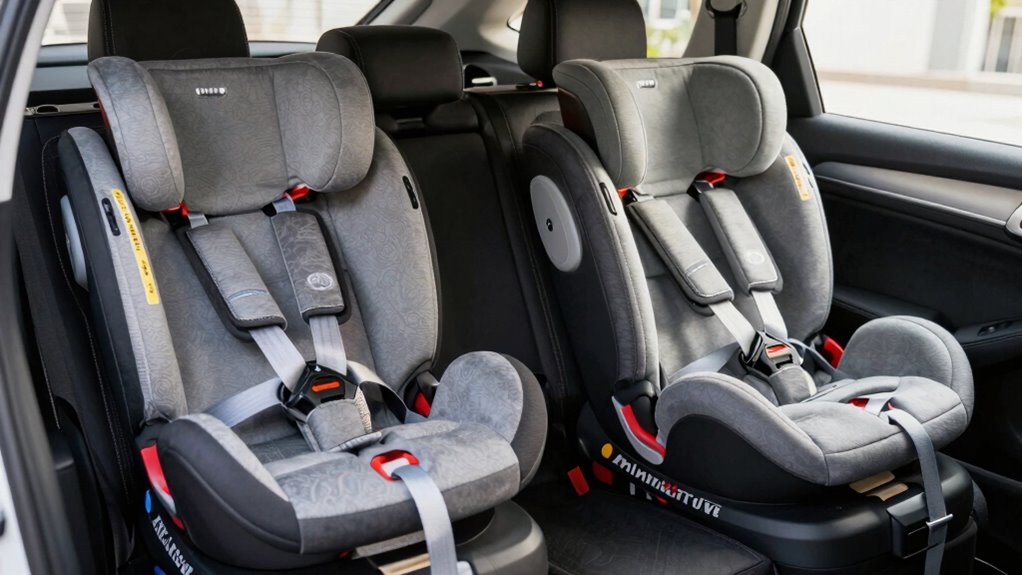
Changing your child’s car seat from rear-facing to forward-facing is an important step, but it’s also easy to make mistakes that compromise safety. First, make sure the seat is installed tightly, without excessive movement. Second, avoid using the seat belt alone if your seat requires a lower anchor system; improper installation can reduce protection. Third, don’t rush the transition; wait until your child meets weight and height limits. Fourth, skip the booster seat once your child outgrows the forward-facing seat; using a booster seat with a seat belt ensures better safety. Remember, an incorrectly installed seat or hastening the change can increase injury risk. Take your time to follow instructions carefully, ensuring your child’s safety at every stage. Additionally, choosing a seat with features like vetted safety standards can further enhance protection.
Tips for a Safe and Smooth Car Seat Transition

Changing your child’s car seat smoothly and safely requires careful preparation and attention to detail. First, ensure your vehicle is well-maintained, with properly functioning seat belts and anchors, to support a secure installation. Before you switch, review the car seat manufacturer’s instructions and check for any recalls or updates. Planning your travel in advance helps minimize stress during the shift, so choose a time when you’re not rushed. Keep all necessary tools, like a level or measuring tape, nearby to confirm correct positioning. Double-check the seat’s angle and tightness after installation. Proper vehicle maintenance and thoughtful travel planning ensure your child’s seat is secure and comfortable, reducing the risk of accidents and making the transition safer and more straightforward. Additionally, stain removal techniques can help keep your vehicle’s interior clean after busy trips. Being aware of safety guidelines and current recommendations can further enhance your confidence during the transition. Regularly reviewing car seat safety updates helps you stay informed about the best practices for your child’s protection. Incorporating knowledge about auditory processing and its challenges can also promote safer transportation options for older children and teens.
Understanding Car Seat Labels and Safety Regulations
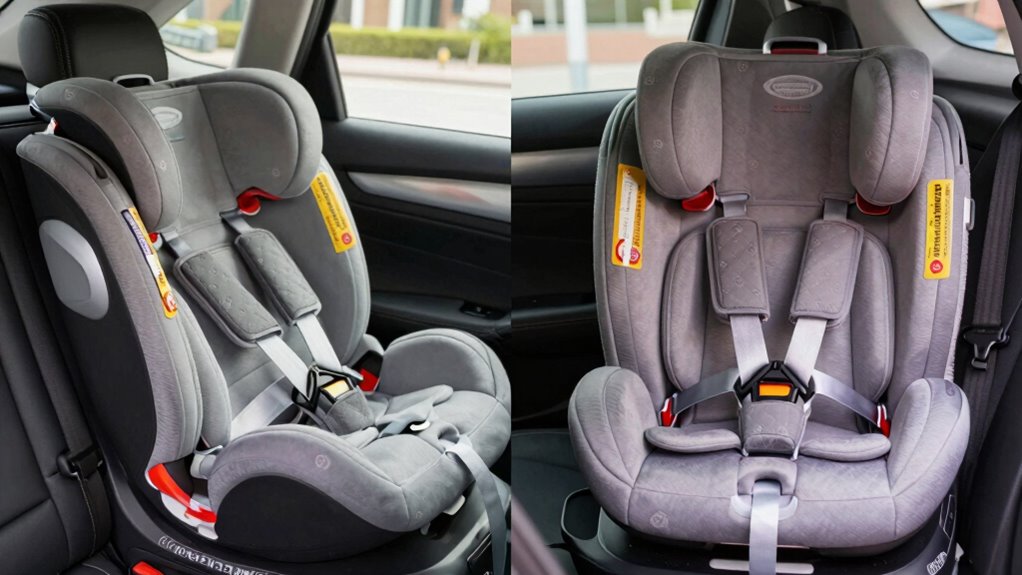
Before installing or switching your child’s car seat, it’s important to familiarize yourself with the labels and safety regulations that guide proper use. These labels provide essential information for correct car seat installation and guarantee safety certification standards are met. Ensuring compliance with safety standards is crucial for your child’s protection. Here’s what to look for: 1. Age and weight limits, indicating when to switch from rear-facing to forward-facing. 2. Safety certification labels, confirming the seat meets federal safety standards. 3. Instructions for proper installation, including tether and belt placement. 4. Manufacturer warnings and expiration dates, guaranteeing the seat remains effective. 5. Understanding Tooth Fairy’s Tale related to safety and timing can help interpret your child’s needs or anxieties.
Frequently Asked Questions
Are There Any Specific Vehicle Types Better Suited for Rear-Facing Seats?
You’ll find that most vehicles with full-size rear seats and proper seatbelt or LATCH system compatibility are suitable for rear-facing seats. SUVs, minivans, and larger sedans often provide better vehicle compatibility for secure seat installation. Check your vehicle’s manual to confirm seatbelt or LATCH anchor availability, ensuring safe installation. Avoid smaller cars with limited space or awkward seatbelt placements, as they can make securing rear-facing seats more challenging and less safe.
How Do Weather Conditions Influence Rear-Facing Versus Forward-Facing Safety?
Weather hazards are like unpredictable storms, making road conditions more dangerous. When you face rain, snow, or fog, rear-facing seats offer extra protection by absorbing impact and reducing injury risk. Forward-facing seats can be more vulnerable in slick conditions. So, during bad weather, it’s safer to keep your child rear-facing longer, especially on icy or wet roads, to minimize injury and guarantee better safety in challenging weather.
Can a Child Be Safely Transitioned if They Reach the Weight Limit Early?
If your child reaches the weight limit early, you shouldn’t rush the changeover based solely on age milestones. Instead, wait until they meet the specific weight limits for their current car seat, ensuring they’re safe. Always follow the manufacturer’s instructions and local safety guidelines. Keep your child rear-facing as long as possible until they hit those weight limits, which provides the best protection during car rides.
Are There Recommended Practices for Car Seat Installation During Long Trips?
Think of your car seat as a trusted co-pilot during long trips. To guarantee travel safety, check your seat installation regularly to prevent looseness, and use tether straps for extra stability. Secure your child in the right harness position, and consider a travel-friendly booster or harnessed seat for comfort. Keep essentials accessible, and take breaks to adjust the seat if needed, helping your little co-pilot stay safe and comfortable.
How Does Booster Seat Use Relate to Forward-Facing Car Seat Guidelines?
You should use a booster seat once your child outgrows the forward-facing car seat, following the forward-facing guidelines which recommend shifting at the right height and weight. Booster seats help guarantee the seat belt fits properly across your child’s chest and hips, reducing injury risk. Keep in mind, your child should stay in a forward-facing seat with a harness until they meet the height and weight limits specified by the manufacturer before moving to a booster seat.
Conclusion
Think of your child’s safety as a delicate seedling, thriving best when kept protected and supported. Staying rear-facing longer is like shielding that seed from harsh winds, giving it time to grow strong. When you’re ready to shift, it’s like planting that seed in a bigger, sturdier pot—ready to face the world. By following guidelines and avoiding mistakes, you nurture their safety, helping your little one flourish in every journey ahead.
NFL season / tailgating Picks
team gear
As an affiliate, we earn on qualifying purchases.