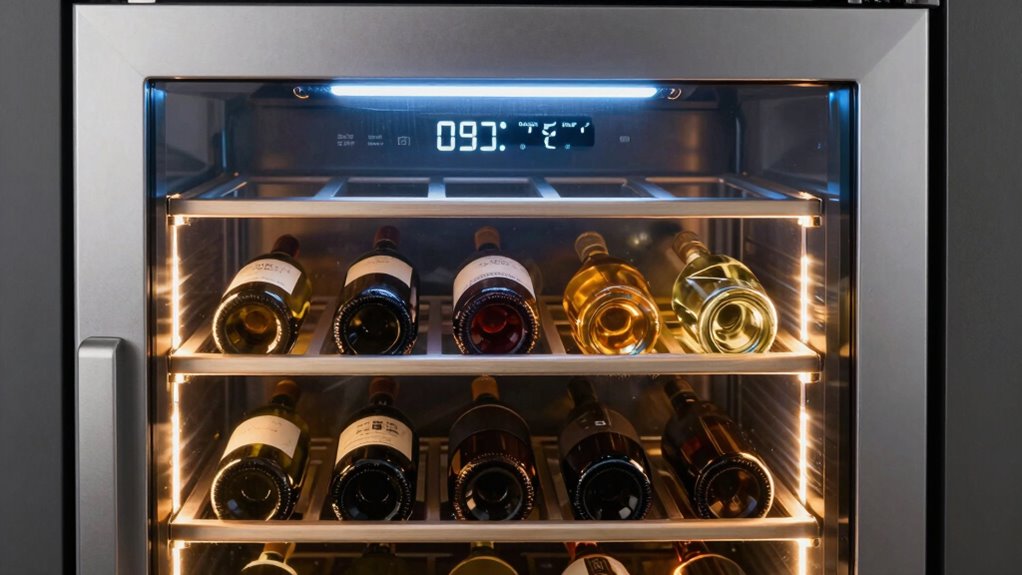
A wine fridge typically has different temperature zones to keep various wines in their perfect conditions. Red wines are stored around 55-65°F for ideal flavor, while whites and sparkling wines prefer a cooler 45-50°F. Having separate zones helps you organize and preserve each wine type properly, ensuring they taste their best when served. Understanding these zones allows you to master wine storage effortlessly—if you keep exploring, you’ll uncover even more tips to optimize your wine collection.

Get your next haul delivered free with Prime
- Fast, free delivery on millions of items
- Prime Video, Amazon Music and more included
- Member-only deals all year
Key Takeaways
- Different wine types require specific temperature ranges for optimal preservation and flavor development.
- Multiple temperature zones allow tailored storage for reds, whites, and sparkling wines.
- Maintaining stable temperatures prevents spoilage and preserves wine quality over time.
- Proper zoning enhances the tasting experience by serving wines at their ideal temperatures.
- Digital controls enable precise adjustments to ensure consistent and ideal storage conditions.
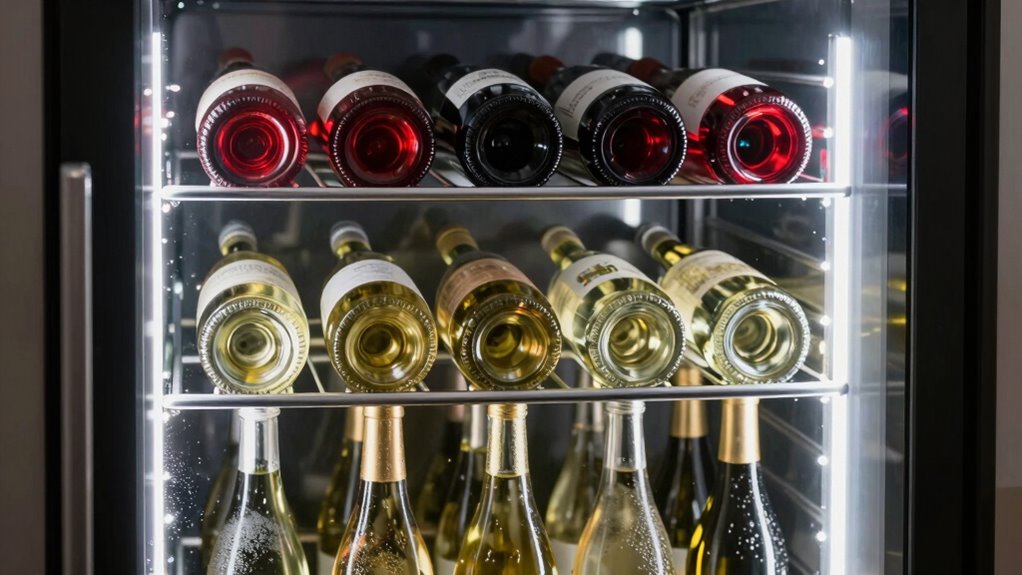
Wine fridge is designed to keep your bottles at ideal temperatures, but understanding its different temperature zones can make a significant difference in preserving and enhancing your wine. Proper wine storage depends heavily on temperature control, which varies depending on the type of wine you’re storing. Most wine fridges have multiple zones, each set to specific temperatures that serve different purposes. Recognizing these zones helps you maximize your wine’s potential, whether you’re aging a vintage or enjoying a bottle now.
The primary goal of a wine fridge’s temperature control is to maintain ideal conditions for different wine styles. For red wines, a slightly warmer zone—usually between 55°F and 65°F—is best. Reds benefit from a bit more warmth because it helps release their full aroma and flavor profile. White wines, on the other hand, should be stored at cooler temperatures, generally between 45°F and 55°F. A dedicated white wine zone ensures that these more delicate wines stay crisp and invigorating. If your wine fridge has multiple zones, you can set one to red wine temperatures and another to white wine, guaranteeing each type is stored at its best.
Some wine fridges even include a third zone, tailored for sparkling wines or rosés, typically kept at around 45°F to 50°F. These wines are best served chilled but not frozen, so a specific zone prevents over-chilling. When you’re actively storing a variety of wines, having these distinct zones makes it easier to serve each at its perfect temperature, heightening the tasting experience. Additionally, temperature stability is crucial for preserving wine quality over time, especially for long-term storage. Maintaining consistent temperatures prevents temperature fluctuations, which can negatively impact the wine’s aging process. Proper temperature regulation also helps avoid the formation of wine faults caused by inconsistent storage conditions.
Temperature control within your wine fridge isn’t just about setting the right temperature; it’s about maintaining it consistently. Fluctuations can negatively impact the wine, causing it to age prematurely or lose its flavor. Many fridges feature digital controls that allow precise adjustments, giving you peace of mind that your wine is always stored under ideal conditions. This consistent temperature regulation is essential for long-term wine storage, especially if you’re aging bottles over years. Proper temperature regulation plays a vital role in preventing wine spoilage and maintaining optimal flavor.
Understanding these zones empowers you to organize your collection effectively. You can keep reds and whites at their perfect temps, ready for any occasion. It also helps in maintaining the quality of your wine over time, making sure each bottle is stored properly until you’re ready to enjoy it. In short, knowing how to utilize your wine fridge’s temperature zones is vital for proper wine storage and achieving the best possible taste when you open a bottle.
Products Worth Considering

Withings Body Scan Smart Scale with Segmental Body Composition and ECG, Black

Theragun Mini 3rd Generation Massage Gun – Travel Essential (Black)

Coway Airmega 250 Air Purifier for Large Rooms
As an affiliate, we earn on qualifying purchases.
Frequently Asked Questions
Can I Store Non-Wine Items in a Wine Fridge?
Yes, you can store non-wine items in a wine fridge, but you should consider temperature compatibility. Many wine fridges maintain a specific range ideal for wine, usually around 45-65°F. If you’re storing items like beer or certain beverages, check if the temperature zone suits their needs. Keep in mind, storing other items might affect your wine’s quality, so choose carefully to avoid temperature fluctuations that could spoil your wine or other items.
How Often Should I Calibrate My Wine Fridge’s Temperature?
You should calibrate your wine fridge’s temperature every six months to guarantee ideal wine preservation. For example, a collector noticed inconsistent wine quality and found her fridge’s accuracy drifted over time. Regular calibration maintains temperature consistency, preventing spoilage. Following recommended calibration frequency helps you catch discrepancies early, safeguarding your collection. Use a reliable thermometer to verify and adjust your fridge’s settings, ensuring your wine stays at the perfect temperature.
What Is the Ideal Humidity Level for Wine Storage?
The ideal humidity level for wine storage is between 50-70%. Proper humidity control helps prevent mold growth on corks and keeps your wine in great condition. Too low, and corks can dry out, letting air spoil your wine. Too high, and mold can develop. Regularly check and adjust your fridge’s humidity to maintain this balance, ensuring your wine stays fresh and protected over time.
Are Wine Fridge Temperature Zones Adjustable?
Yes, wine fridge temperature zones are adjustable. You can easily control the temperature for different zones to optimize wine storage. Most wine fridges come with adjustable shelves or digital controls, allowing you to set precise temperatures for reds, whites, or sparkling wines. This temperature control helps preserve your wine’s quality and flavor, giving you the flexibility to customize your wine storage environment according to your collection’s needs.
How Does Ambient Room Temperature Affect Wine Fridge Zones?
Room temperature impact greatly affects your wine fridge zones, especially if the ambient temperature fluctuates often. If your room gets too hot or cold, it can cause the zone temperature stability to decline, making it harder to keep your wines at ideal conditions. To maintain consistent temperatures, guarantee your fridge is placed in a stable environment, away from heat sources or direct sunlight, so your wine stays perfectly preserved.
Conclusion
Now that you understand the different wine fridge temperature zones, you’re equipped to keep your wines perfectly preserved. Think of your wine fridge as a fortress of flavor, safeguarding each bottle like a priceless treasure. By setting the right temperatures, you’ll guarantee every sip is as exquisite as the first. With this knowledge, your wine collection will stay fresher and more vibrant than a summer sunrise, turning you into the ultimate wine connoisseur in no time!