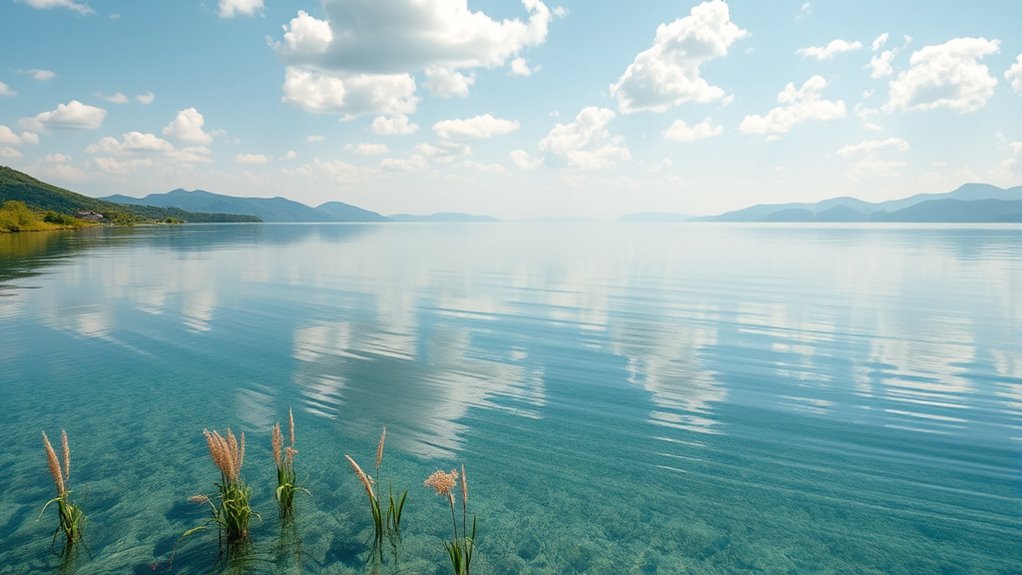

Blue Mind Theory explains why water has such a calming effect on your brain. When you’re near water, your sensory system responds to rhythmic sounds, shimmer, and tactile sensations, activating neural pathways that promote relaxation. Water triggers the parasympathetic nervous system, lowering stress hormones, blood pressure, and heart rate. This biological response helps clear your mind and boost resilience. Keep exploring to discover how incorporating water into your life can enhance your mental well-being.
Key Takeaways
- Water activates calming neural pathways and stimulates the parasympathetic nervous system, promoting relaxation and reducing stress.
- Sensory cues like rhythmic waves and shimmering surfaces evoke feelings of safety and tranquility in the brain.
- Time spent near water lowers stress hormones, blood pressure, and heart rate, supporting mental calmness.
- Aquatic environments foster awe and mindfulness, shifting perspectives and decreasing rumination.
- Regular water exposure enhances mood regulation, resilience, and overall mental health through biological and emotional benefits.

Imagine feeling calmer and more centered every time you’re near water—that’s the core idea behind Blue Mind Theory. This concept suggests that being close to aquatic environments has a profound, calming effect on your brain. When you spend time near the ocean, lakes, or rivers, your body responds by lowering stress hormones, reducing anxiety, and promoting feelings of well-being. Marine therapy, which often involves immersing oneself in these aquatic environments, harnesses this natural connection to improve mental health. Whether you’re swimming, kayaking, or simply sitting by the water, you’re engaging with a powerful biological and psychological stimulus that helps you relax and recharge.
Your brain is wired to respond positively to water. The rhythmic sounds of waves, the sight of shimmering surfaces, and the tactile sensation of water all contribute to a sense of tranquility. These sensory experiences activate neural pathways associated with safety and calmness. Scientific research supports this, showing that aquatic environments can decrease blood pressure and heart rate, making you feel less stressed and more relaxed. Marine therapy takes this a step further by intentionally utilizing water-based activities to treat mental health issues like depression and anxiety. It’s not just about leisure; it’s about harnessing the therapeutic potential of water to promote healing and resilience.
Water’s sensory cues activate calming neural pathways and support mental health through therapeutic, water-based activities.
When you’re surrounded by aquatic environments, your brain enters a state of relaxation that’s difficult to achieve elsewhere. The natural beauty and serenity of water bodies help you detach from everyday worries and mental clutter. This is partly because water has a unique ability to evoke a sense of awe and wonder, which can shift your perspective and reduce rumination. Scientific studies also reveal that exposure to water can stimulate the parasympathetic nervous system, which helps your body recover from stress and supports overall mental health**. The calming influence of water isn’t just psychological; it’s also biological. The gentle, repetitive movements of water and the soothing sounds activate the parasympathetic nervous system—the part of your nervous system responsible for rest and recovery**. As a result, your stress levels decrease, and your mind becomes clearer.
Engaging with water through activities like marine therapy or simply spending time in aquatic environments can transform your mental state. It encourages mindfulness and presence, grounding you in the moment. This connection to water taps into deep-seated biological responses that promote relaxation. Over time, frequent exposure can help regulate your mood, decrease anxiety, and improve overall mental health. The calming influence of water isn’t just a fleeting feeling; it’s a natural, scientifically supported way to nurture your brain and spirit. So next time you’re near water, remember—you’re tapping into a powerful tool for wellness that your brain naturally craves.
Frequently Asked Questions
How Does Water Influence Mental Health Beyond Relaxation?
Water influences your mental health beyond relaxation by engaging marine psychology principles, which highlight its emotional and cognitive benefits. Through aquatic therapy, you can reduce stress, improve mood, and boost mental clarity. Being near or in water helps regulate your emotions, enhances mindfulness, and promotes overall well-being. You might find that water not only calms you but also strengthens your resilience and supports mental health recovery in powerful, tangible ways.
Can Blue Environments Improve Cognitive Function Long-Term?
Imagine your mind as a garden, and ocean exposure as a gentle rain that nurtures growth. Blue environments, like lakes or oceans, can boost cognitive function long-term by reducing stress and increasing focus. Aquatic therapy offers physical and mental benefits, while regular exposure to water helps sharpen your thinking. Embracing these blue spaces can lead to sustained mental clarity and resilience, transforming your brain into a thriving, vibrant landscape.
What Scientific Studies Support Blue Mind Theory?
You’ll find several studies supporting the idea that water environments promote relaxation and focus. Research highlights neuroplasticity benefits, showing how aquatic mindfulness practices can reduce stress and enhance mood. For example, functional MRI scans reveal calming effects on the brain when exposed to water scenes. These findings suggest that engaging with blue spaces not only calms your mind but also fosters long-term mental resilience and cognitive improvements.
How Does Water Therapy Compare to Other Stress Reduction Methods?
Water therapy is a revitalizing change compared to other stress relief methods. You might find aquatic exercise and swimming therapy more effective because they combine physical activity with water’s calming effects. Unlike meditation or deep breathing alone, immersing yourself in water can quickly reduce tension and clear your mind. It’s like hitting two birds with one stone, making water therapy a versatile and powerful tool for stress relief.
Are There Specific Types of Water Environments More Effective?
You might find freshwater lakes or saltwater beaches more effective for relaxation. Freshwater lakes tend to offer quiet, calm surroundings, helping you unwind and clear your mind. Saltwater beaches provide a sensory experience with waves and salty air, which can boost your mood and reduce stress. Ultimately, your preference depends on whether you seek tranquility or invigorating energy; both environments can deeply soothe your mind.
Conclusion
So, here you are, seeking calm in the chaos, yet it’s water that’s quietly holding the key. Ironically, what we often see as a source of stress—waves crashing, storms brewing—can actually soothe your mind. The Blue Mind Theory shows that in embracing water’s gentle presence, you find peace. Sometimes, the very thing we avoid or fear is the one thing that truly calms us. Who knew serenity was just a splash away?