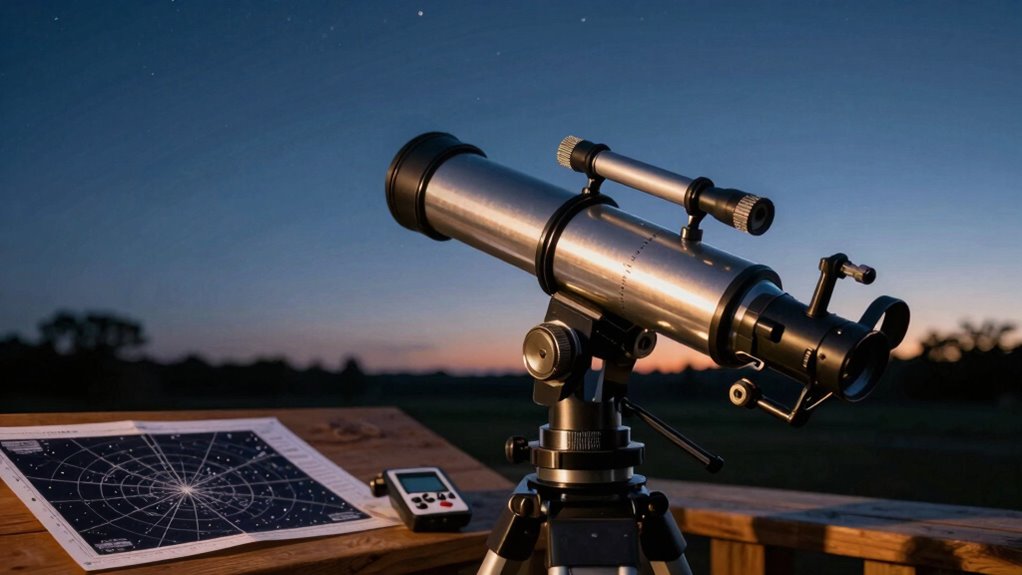

When choosing a telescope, understanding key terms like aperture size and lens coatings helps you make a smarter buy. Aperture size is the diameter of the main lens or mirror, which determines how much light it can gather—bigger means brighter, clearer views of faint objects. Lens coatings are thin layers that reduce reflections and glare, improving image clarity. If you want to explore more about these essential features, keep exploring further to find the perfect telescope for your stargazing adventures.

Get your next haul delivered free with Prime
- Fast, free delivery on millions of items
- Prime Video, Amazon Music and more included
- Member-only deals all year
Key Takeaways
- Aperture is the diameter of the main lens or mirror, determining how much light the telescope can collect for better viewing.
- Lens Coatings are special layers that reduce reflections and glare, enhancing image clarity and protecting optical surfaces.
- Multi-coated or Fully Coated labels indicate the quality and effectiveness of the lens coatings.
- Larger apertures allow you to see fainter objects and more detail in planets and deep-sky objects.
- Combining a suitable aperture with quality coatings provides brighter, clearer, and more detailed astronomical views.
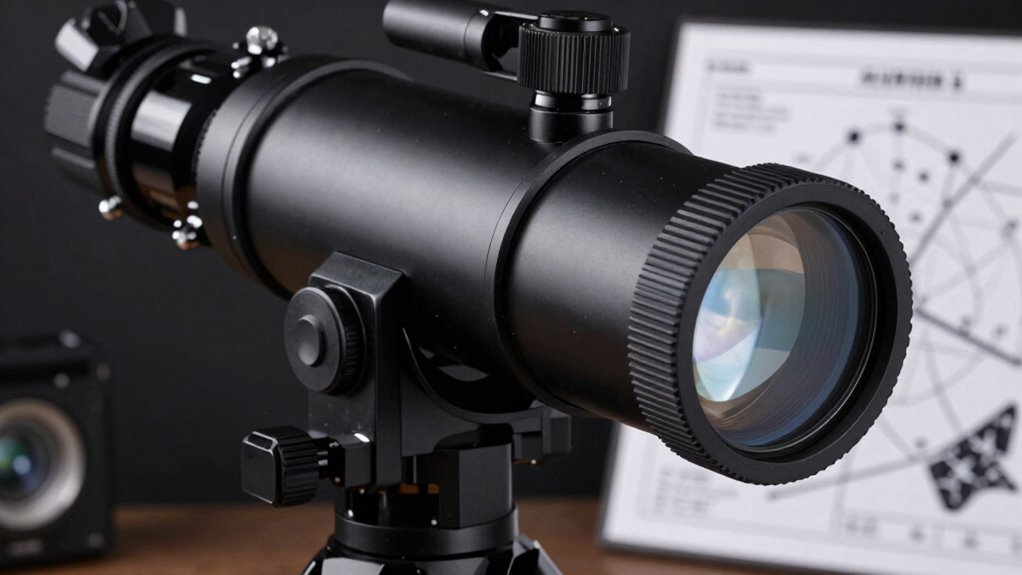
Have you ever looked through a telescope and wondered what all those technical terms mean? If you’re new to astronomy, it’s common to feel overwhelmed by the jargon. Let’s start with some basics to help you understand what to look for when choosing your first telescope. One of the key factors is lens coatings. These are special layers applied to the telescope’s lenses or mirrors to improve image quality. Think of lens coatings as a kind of protective shield that reduces reflections and glare, allowing more light to pass through. This results in brighter, clearer images with better contrast. When shopping, look for telescopes with high-quality lens coatings, often labeled as multi-coated or fully coated. These coatings make a noticeable difference in the clarity of your views, especially when observing faint objects like distant galaxies or nebulae. Additionally, understanding the importance of lens coatings can help you make more informed buying decisions.
Another critical aspect is the aperture size, which refers to the diameter of the telescope’s main lens or mirror. It’s a crucial factor because it determines how much light your telescope can gather. The larger the aperture, the more light it captures, which means you can see dimmer objects and enjoy sharper images. For beginner telescopes, an aperture size between 70mm and 130mm is usually ideal—big enough to reveal interesting details without being unwieldy or too costly. As you gain experience, you might opt for larger apertures to explore more faint objects or to get a better view of planets and deep-sky objects. Keep in mind that a bigger aperture often means a heavier and more expensive telescope, so balance your budget and portability needs. aperture size also affects the telescope’s overall capabilities and viewing potential, making it an essential consideration for newcomers.
Understanding aperture size also helps you grasp the scope’s overall capabilities, but don’t overlook lens coatings, which enhance image quality regardless of size. When you’re choosing your first telescope, consider both: a good aperture size to gather enough light and quality lens coatings to ensure the images are crisp and bright. These elements work together to give you the best possible viewing experience, especially as you start exploring the night sky. Remember, the right combination of features depends on what you want to observe and how much you’re willing to invest. By understanding these terms, you’re already taking a big step toward confidently selecting a telescope that will inspire your curiosity and fuel your passion for astronomy.
best beginner telescope with high aperture
As an affiliate, we earn on qualifying purchases.
As an affiliate, we earn on qualifying purchases.
Frequently Asked Questions
How Do I Choose the Right Telescope for My Budget?
To choose the right telescope for your budget, start by setting a realistic price range based on your interest level. Consider portable options for easy skywatching tips and avoid overly complex features if you’re a beginner. Look for good reviews and basic features. Remember, a quality telescope requires regular cleaning, so pick one with accessible telescope cleaning options. This way, you’ll enjoy stargazing without overspending or frustration.
What Accessories Are Essential for Beginner Telescopes?
To avoid turning your telescope into a fancy paperweight, focus on essential accessories. Prioritize a good eyepiece selection for clearer views and a sturdy tripod for stability—because wobbly views are the universe’s way of saying, “Nope.” Skip the gimmicks and invest in these basics; they’ll keep your starry nights smooth, not shaky. Remember, a stable setup makes all the celestial difference.
How Do I Transport and Store My Telescope Safely?
To transport and store your telescope safely, always secure it in a padded case to prevent damage during moves. Confirm mounting stability by tightening all screws and locks before transporting. When not in use, protect your telescope from weather damage by storing it in a dry, dust-free space, ideally with a cover. Avoid extreme temperatures and humidity to maintain the best condition, and handle it gently to preserve its precision.
What Is the Best Way to Learn to Use a Telescope?
A good way to learn to use a telescope is to start with patience—Rome wasn’t built in a day. Begin by studying a star chart to identify constellations, then practice during clear sky conditions. Use your telescope’s manual and online tutorials for guidance. Observing regularly helps you understand how to locate objects, and over time, your confidence and skills will grow. Remember, practice makes perfect!
How Often Should I Calibrate or Maintain My Telescope?
You should calibrate and maintain your telescope regularly, ideally after each use or every few months, especially if you’re into astrophotography techniques. Unlike mountaintop observatories, which undergo stringent upkeep, your setup needs routine checks for alignment, cleaning lenses, and tightening screws. Proper maintenance ensures clear images and smooth operation, so stay consistent. This way, you’ll enjoy peak performance and capture stunning celestial shots without frustration.
As an affiliate, we earn on qualifying purchases.
Conclusion
Understanding telescope terms helps you pick the perfect instrument for your stargazing adventures. Did you know that the global amateur astronomy market is expected to grow at a compound annual rate of 7.2% through 2027? With this knowledge, you’re now better equipped to navigate the options and make an informed choice. So, get ready to explore the night sky — your celestial journey awaits!
telescope with large aperture for deep-sky viewing
As an affiliate, we earn on qualifying purchases.
As an affiliate, we earn on qualifying purchases.
compact telescope with quality lens coatings
As an affiliate, we earn on qualifying purchases.
As an affiliate, we earn on qualifying purchases.
Fall Picks
fall essentials
As an affiliate, we earn on qualifying purchases.