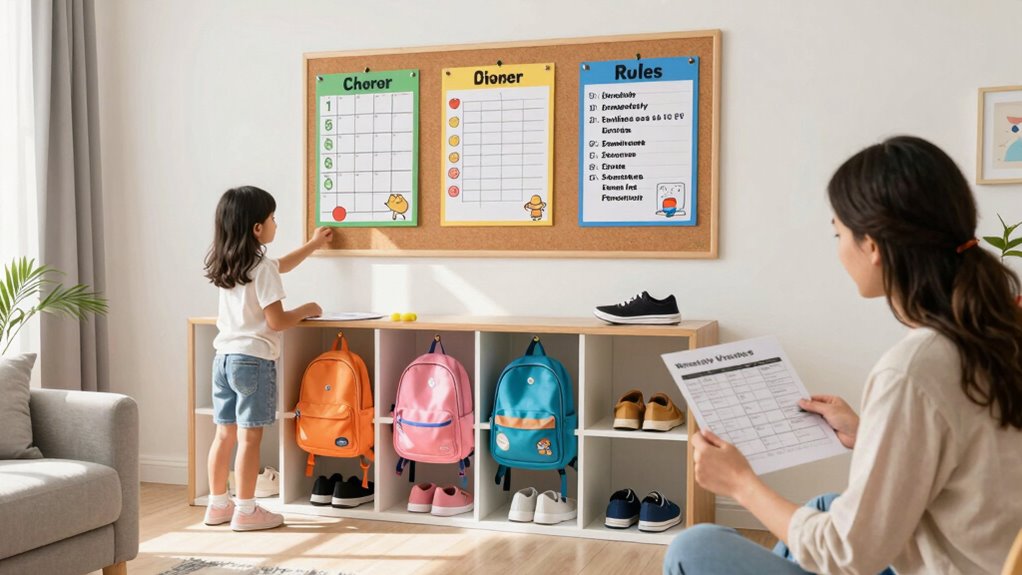

To make household expectations clear without nagging, start with an open discussion about responsibilities and routines. Use visual tools like charts or shared calendars to keep everyone accountable and make tasks concrete. Clearly define what “clean” means and set measurable goals. Reinforce norms and boundaries regularly, and emphasize why these routines matter for household harmony. Consistent, positive communication helps everyone understand their role, reducing the need for continual reminders. Keep exploring for even more effective strategies.
Key Takeaways
- Have open, honest discussions to set shared expectations and clarify responsibilities upfront.
- Use visual tools like chore charts and schedules to make tasks and deadlines clear.
- Define specific, measurable standards for tasks to reduce misunderstandings.
- Reinforce norms and boundaries consistently to promote household harmony.
- Regularly check-in and use positive reinforcement to motivate cooperation without nagging.
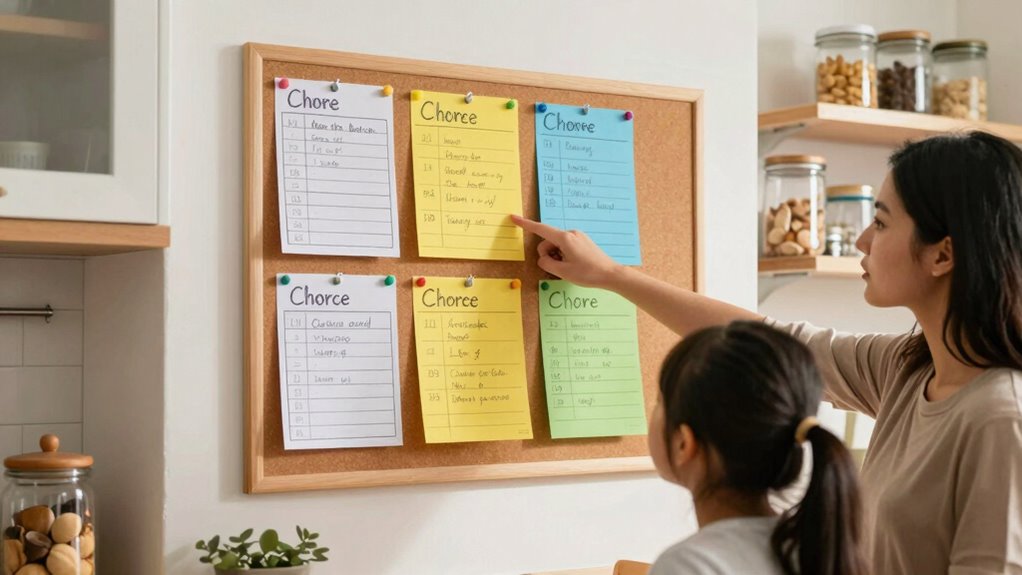
Ever wonder how to set household expectations without constantly nagging? It’s a common challenge, but it’s entirely possible to create a harmonious environment through effective communication and smart planning. The key lies in establishing clear, shared expectations upfront and using time management techniques that keep everyone on track without the need for repeated reminders. When everyone understands what’s expected and when it’s due, you reduce the chances of misunderstandings and frustration.
Start by having a sit-down with your household members to discuss responsibilities and routines. Be open and straightforward—this is where communication strategies come into play. Clearly articulate what needs to be done, why it’s important, and how it benefits everyone. Instead of issuing vague commands like “Clean your room,” specify what “clean” means, such as “Please make your bed, put away your clothes, and vacuum the floor by 7 p.m.” This clarity minimizes confusion and sets concrete expectations. When everyone’s on the same page, you won’t have to repeat yourself or feel like you’re nagging.
Set clear expectations by explaining tasks, their importance, and specific actions needed to avoid confusion.
Incorporate time management into your household routines by creating shared schedules or visual charts. Placing a chore chart or calendar in a common area helps household members see their responsibilities at a glance. Use these tools to assign tasks and set deadlines, which encourages accountability. When responsibilities are scheduled and visible, it becomes a natural part of daily life rather than an ongoing verbal reminder. This approach empowers everyone to manage their own tasks, reducing stress for you and fostering independence. Additionally, understanding the importance of household norms can guide you in establishing boundaries and expectations that resonate with everyone. Clear routines and expectations are essential components of healthy household dynamics, which contribute to a more peaceful living environment. Incorporating effective communication strategies can further enhance understanding and cooperation among household members. Regular check-ins and positive reinforcement can also motivate household members to maintain their routines without feeling pressured, helping to create a respectful and cooperative atmosphere.
As an affiliate, we earn on qualifying purchases.
Frequently Asked Questions
How Can I Motivate Children to Follow Household Rules?
To motivate children to follow household rules, focus on effective family communication and motivation strategies. Clearly explain why rules matter and involve them in setting some boundaries, making them feel responsible. Use positive reinforcement, like praise or small rewards, to encourage good behavior. Consistently acknowledge their efforts and listen to their concerns, helping them understand that following rules benefits everyone and fosters a respectful, cooperative home environment.
What Are Effective Ways to Handle Resistance to Household Expectations?
You can handle resistance by employing effective communication strategies and conflict resolution techniques. Start by listening actively to understand their concerns, then calmly explain the reasons behind household expectations. Use positive reinforcement and collaborative problem-solving to foster cooperation. When conflicts arise, stay patient and avoid escalation. This approach helps build mutual respect, making it easier for everyone to accept and adhere to household rules without constant nagging.
How Do I Set Realistic Household Expectations for Teenagers?
To set realistic household expectations for teenagers, focus on fostering teenage independence through open communication strategies. Clearly explain your expectations, listen to their perspective, and involve them in creating rules to promote ownership. Be specific about responsibilities and consequences, and maintain consistency. This approach helps your teen understand boundaries while respecting their growing independence, reducing frustration and the need for constant reminders or nagging.
How Often Should Household Expectations Be Reviewed or Changed?
You should review household expectations at least once every few months, or when you notice changes in your family’s routines or behavior. Regular household communication keeps everyone on the same page and allows for expectation adjustments as needed. By scheduling these check-ins, you prevent misunderstandings and guarantee expectations stay realistic and clear. This proactive approach helps maintain harmony and encourages cooperation without constant nagging.
What Role Does Positive Reinforcement Play in Household Discipline?
Imagine your child’s behavior as a garden; positive reinforcement acts as sunlight, encouraging growth. It plays an essential role in behavior management by highlighting good choices through praise strategies. When you acknowledge their efforts with specific praise, you reinforce desirable behaviors, making them more likely to repeat. This nurturing approach creates a positive atmosphere, fostering cooperation and trust, and reducing the need for constant nagging.
As an affiliate, we earn on qualifying purchases.
Conclusion
Setting clear household expectations is like planting a garden—you need to lay down good soil, water regularly, and give it time to grow. When you communicate openly and calmly, your family understands their roles better, much like a well-tended garden produces vibrant blooms. Remember, consistency is key; even if progress seems slow, patience and clarity will ultimately cultivate a harmonious home. Keep nurturing those expectations, and watch your household flourish without constant nagging.
As an affiliate, we earn on qualifying purchases.
As an affiliate, we earn on qualifying purchases.